
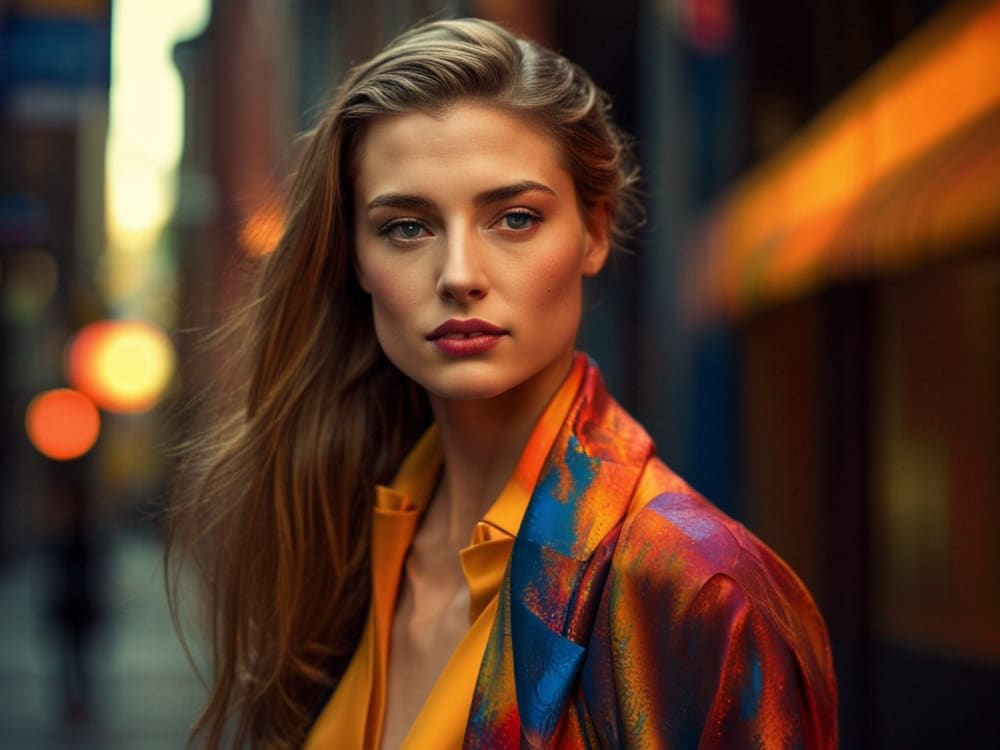
The fashion world, often a trendsetter, recently found itself at the heart of a viral storm. It all began with a seemingly innocuous campaign – a collaboration between Vogue and Guess, featuring a striking model. The controversy wasn’t about the clothes or the pose, but the model herself. Buried in tiny print, a subtle disclosure revealed the truth: she was AI-generated. This moment, though seemingly minor, quickly became a flashpoint, igniting a wider debate over the burgeoning use of AI-generated models and the very nature of influencer culture in a digitally evolving world.
TL;DR
- AI-generated Instagram models are now signing brand deals, stealing attention from real influencers.
- The internet is divided: Is it innovation or digital deception?
- This article breaks down the controversy, the players, the ethics—and what it means for you.
The Vogue Guess Ad That Broke the Internet
The specific incident that sent shockwaves through the industry involved a Guess ad published in Vogue Italia. The image featured a glamorous model, seemingly indistinguishable from her human counterparts. However, upon closer inspection, or perhaps thanks to eagle-eyed social media users, it was revealed that the model, named “Seraphina Vallora,” was entirely a product of artificial intelligence.
The backlash was swift and fierce. Social media platforms, particularly Twitter, became a hotbed of outrage. Users lambasted Vogue and Guess for a perceived lack of transparency and for further contributing to unrealistic beauty standards. News reports from outlets like PetaPixel, Indiatimes, and The Times of India quickly picked up on the controversy, highlighting public dismay and raising questions about the future of human models in the industry. Critics pointed to the subtle disclosure as an attempt to obfuscate, rather than genuinely inform, the audience.
Why It Matters?
The uproar surrounding the Vogue Guess ad is not an isolated incident; it’s a symptom of larger, underlying trends in the marketing and fashion industries. Brands are increasingly exploring and adopting AI models for their marketing campaigns, driven by factors such as cost-efficiency, speed, and the ability to perfectly control aesthetics. This shift, while offering operational advantages, has triggered significant public scrutiny.
Consumers are reacting strongly to the proliferation of these AI-generated figures, particularly concerning the perpetuation of unrealistic beauty standards. Many feel that the lack of clear disclosure blurs the lines between reality and simulation, making it harder for viewers to distinguish between authentic human representation and digitally manufactured ideals. Agencies like Guess and those behind Seraphina Vallora have found themselves on the defensive, responding to criticisms about ethics and the impact of their campaigns. As reported by Fast Company, the debate extends to the very essence of authenticity in advertising.
What happened?
The Vogue Guess ad, while prominent, is merely one example in a rapidly expanding landscape of AI models and virtual influencers. Beyond traditional advertising, virtual personas like Aitana López and Mia Zelu have garnered massive followings on social media platforms, blurring the lines between fictional characters and genuine influencers. These AI creations, with their meticulously curated lives and aspirational content, raise questions about the nature of influence and the potential for parasocial relationships with non-existent entities. BreezyScroll and the New York Post have extensively covered the rise and impact of these widely-followed virtual personas.
The implications extend beyond just marketing. Getty Images, a leading stock photo agency, has already issued warnings about the potential for AI-created images to contribute to misinformation, highlighting a critical concern about the trustworthiness of visual content in the digital age.
Why Most People Can’t Tell?
One of the most unsettling aspects of the AI model phenomenon is the difficulty many people face in distinguishing between human and AI-generated faces. Studies and informal experiments, such as a “Times Square experiment” referenced by the New York Post, have shown that participants often struggle to correctly identify whether an influencer is real or AI-generated. This uncanny valley effect, where AI creations become almost indistinguishable from humans, raises significant questions about trust, perception, and the potential for manipulation in an increasingly visual and digitally-driven world.
Ethical, Legal, and Social Issues
The rise of AI-generated models brings with it a complex web of ethical, legal, and social issues:
- Lack of Labeling and Disclosure: The most immediate concern is the absence of clear, consistent labeling from brands. The subtle disclosures, if present at all, are often seen as insufficient, leading to accusations of deception.
- Reinforcing Idealized Beauty Norms: Many AI models are designed to embody conventionally attractive features, often reinforcing Eurocentric and other idealized beauty norms. This perpetuates unrealistic standards, potentially impacting body image and self-esteem among human consumers.
- Copyright and Attribution Concerns: A significant legal hurdle lies in the training data used for AI models. Questions arise about the copyright of the images and artworks used to train these models, as well as the attribution to the original creators. This area is a legal minefield, as highlighted by Fast Company and ABC.
- Labor Displacement: There are growing concerns among human models, photographers, and other creative professionals about potential job displacement as brands increasingly turn to AI for cost and efficiency reasons.
How Brands Respond (and What Comes Next)
In the wake of public outcry, some companies have issued apologies or attempted to clarify their positions, while others have doubled down on their use of AI models, emphasizing their benefits. This varied response underscores the nascent stage of this technology’s integration into mainstream marketing.
The controversy has fueled urgent calls for regulation and greater transparency in the use of AI-generated content. Legislators and advocacy groups are beginning to explore frameworks that would mandate clear disclosure and address ethical concerns.
Looking ahead, the potential for disinformation and deepfake abuse, particularly with increasingly sophisticated AI, remains a significant threat. The impact on creative labor displacement is also a looming concern, prompting industry-wide discussions about the future of human artistry in a world where AI can generate content at scale.
Real Reactions from the Internet
- It’s honestly creepy. I followed her thinking she was real. – Reddit user
- As a model, I’ve lost two gigs to an AI render this year. It sucks. – Anonymous model via Twitter
- I love it. She looks perfect every time. No drama. – Instagram comment on Aitana’s page
Related Reads
- These AI-Generated Instagram Models Are More Famous Than You – Here’s Why
- Top 5 AI Instagram Model Generators You Can Try in 2025
- How to Create an AI Instagram Model (No Coding Needed)
Final Thought
The AI-generated model controversy is just the beginning of a bigger question:
What happens when the digital world becomes more desirable – and more profitable – than the real one?
You don’t have to love it. But you’d better understand it because this isn’t going away.