
Disclosure: BreezyScroll uses Anthropic’s Claude to help draft articles.
Anthropic stock closed at $87.64 on Monday, Nov. 23, three trading days after the company’s record Nasdaq debut. That is 5.6% above the $83 IPO price. It is also 21% below the $111.50 first trade on Thursday, Nov. 19.
The first-day pop has mostly gone. Anthropic’s final prospectus, filed with the SEC on Nov. 19, shows what comes next. It sets out the dates on which insiders’ shares become free to sell. The first is Tuesday, Dec. 15.
Three trading days, from $111.50 to $87.64
Anthropic priced its offering at $83 on Wednesday, Nov. 18, above the $70 to $78 range it had marketed. It also sold more stock than planned.
The amended filing we read on Nov. 18 offered 825 million shares; the final prospectus sold 980 million, which raised $81.34 billion. Of those, 956.4 million were new shares from the company. The other 23.6 million came from the seven co-founders, who each sold an equal slice.
The stock opened at $111.50 on Thursday, 34% above the offer price, CBS News reported. It touched about $115 before fading to close at $97.17, up 17%, on a day the Nasdaq fell about 2.3%.
Friday was worse. Shares fell 8.5% to $88.91 as a broader US selloff hit tech, according to Yahoo Finance. The intraday low was $83.05, a nickel above the IPO price, in StockAnalysis’s price history.
Monday brought a premarket bounce of more than 4%, which faded during regular trading. Chip stocks rallied that day after Nvidia reinstated Jensen Huang as CEO, and 24/7 Wall St. noted that compute sellers such as Oracle and CoreWeave led the AI gains. The newest model developer was left out.
At Monday’s close, the 13.2 billion Class A and Class N shares the prospectus lists after the offering are worth about $1.16 trillion. That is our arithmetic. CBS put the valuation at roughly $1.5 trillion at the offer price, which implies a larger share count than the prospectus’s Class A and Class N total.
Employee shares could be sold from the first day
Most IPOs lock insiders up for about six months. Anthropic’s does too, with exceptions that the prospectus spells out in a table.
The first exception took effect on the first trading day. From Nov. 19, non-founder directors, officers and current and former staff could sell up to 10% of their locked-up holdings. The filing puts that at up to 315 million shares. That is equal to almost a third of the 980 million shares sold to the public.
The scheduled releases that follow:
- Dec. 15: up to 303 million shares
- Jan. 5, 2027: up to 303 million shares
- Jan. 19, 2027: up to 353 million shares
- Feb. 2, 2027: up to 353 million shares
Add the day-one allowance and up to 1.63 billion shares could be eligible for sale by Feb. 2. That is 1.66 times the size of the entire IPO. These are ceilings, not forecasts, and nobody has to sell.
The bigger blocks come later. Up to 1.7 billion shares unlock two trading days after Anthropic reports full-year 2026 results. Then about 3 billion more free up after first-quarter 2027 results or on the 180th day, whichever comes first. The co-founders and anyone who held more than 0.5% of the company before the IPO face lockups of up to 365 days.
The $26 billion side deal sits outside the lockups
Alongside the IPO, seven companies agreed to buy $26 billion of non-voting Class N stock at $83. They are AMD, Broadcom, Google, Micron, Microsoft, Nvidia and TSMC. The prospectus puts that at about 313 million shares.
Those shares are not covered by any lockup. They are “restricted securities”, though, so the buyers cannot simply sell them on Nasdaq. Under the SEC’s Rule 144 a non-affiliate generally has to hold them for six months.
Google also has registration rights that would let it sell through a registered offering later. At Monday’s price these strategic buyers were sitting on a gain of about 5.6%, the same as anyone who bought at $83.
One more number from the cover page is worth a look. The banks’ underwriting discount was 56 cents a share, or $550 million in all. That is under 0.7% of the offer price. Fees on US IPOs are commonly a few percent of the raise, so Anthropic got its record deal done unusually cheaply.
Protests, and the bigger questions about the business
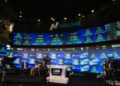
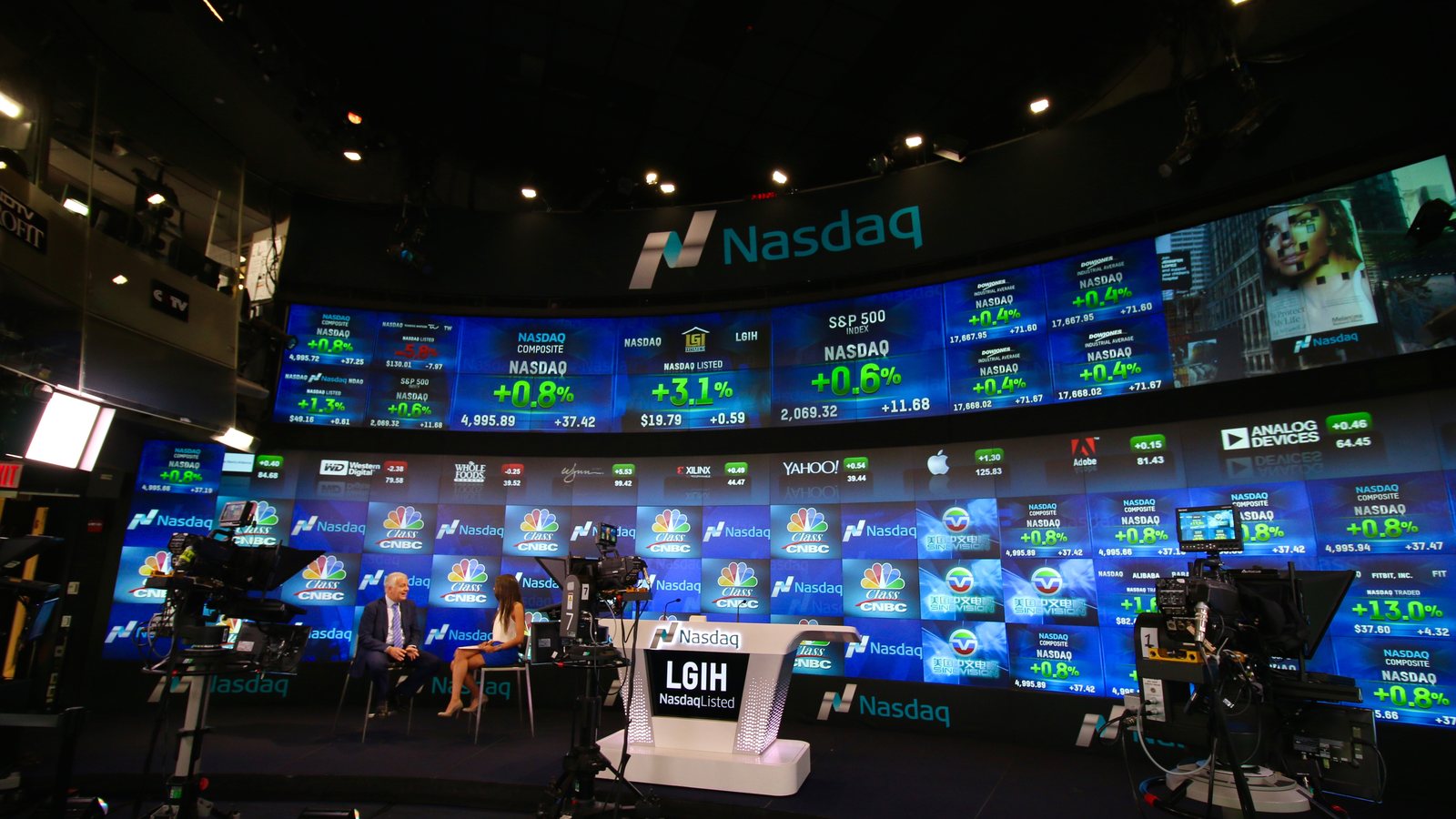
The debut drew demonstrators to the Nasdaq entrance in Times Square. Police arrested four people there after several warnings, amNewYork reported. The groups involved included Climate Defiance, Sunrise NYC and ACT UP NYC.
Speakers raised AI’s energy and water use and its role in health care and policing. Some warned that pension and index funds would end up holding a speculative stock.
The financial case for and against the stock has not changed since the filing. Anthropic reported $33.2 billion of revenue in the nine months to Sept. 30 and a $104.0 billion net loss. Of that loss, $94.3 billion reflected the rising fair value of its convertible notes and similar instruments. That is an accounting effect of its own soaring valuation.
We broke those numbers down in our IPO-in-numbers piece.
Governance hasn’t changed either. A single Class F share held by the co-founders carries 50.1% of the vote, and the Long-Term Benefit Trust elects a majority of the board. Public buyers get one vote per Class A share, but the founders’ single share outvotes all of them combined.
Analysts at Needham, quoted by Yahoo Finance, framed the debate. They called Anthropic “clearly revered” for platform usage and long-term opportunity, but said “the dispersion for company performance over the near-term is much wider.”
CBS cited a Truist study of 32 of the largest IPOs. More than half fell at least 50% at some point in their first year.
The next fixed date is Dec. 15, when the first scheduled tranche of up to 303 million shares becomes eligible for sale.