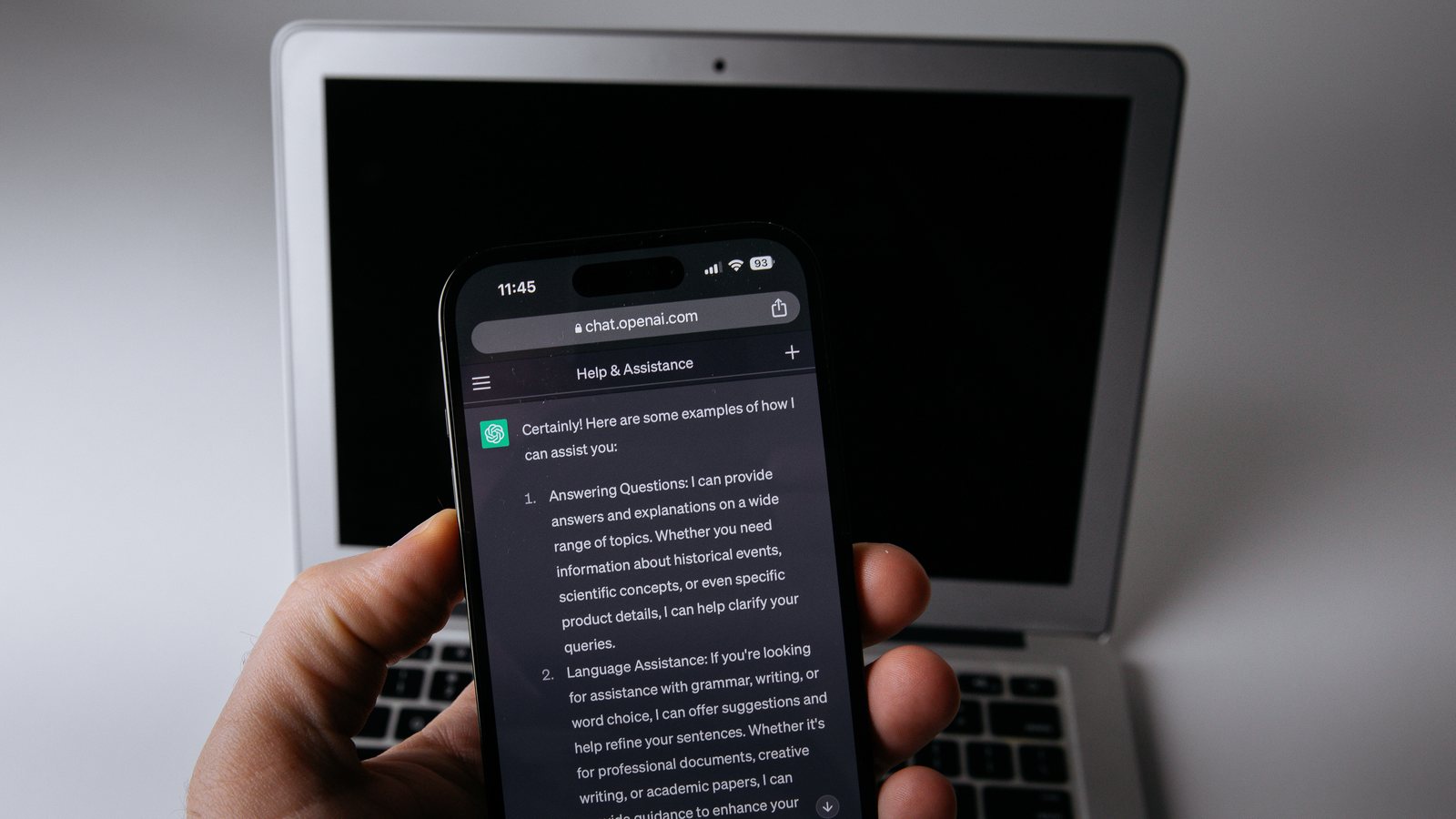
Using ChatGPT at work can cost you some of your manager’s trust, according to six studies in The Leadership Quarterly. In the headline experiment, supervisors took a worker’s word 68% of the time for solo work. That fell to 24% when an AI detector flagged the work.
The finding has a catch that matters more than the headline. When the employer openly encouraged AI, the penalty shrank until it was no longer statistically significant. Gallup’s latest numbers suggest three in four American workers lack that kind of clarity.
What the researchers actually tested
The paper is “Psychological Reactions to Subordinates’ LLM Use at Work.” Samuel Meyers and Yochanan Bigman of the Hebrew University of Jerusalem wrote it with Roman Briker of Germany’s WHU – Otto Beisheim School of Management.
It went online on Sept. 30 and is free to read. The university’s press release came out on Nov. 4, which is why it is in the news now.
These were not surveys of real offices. The abstract describes “five incentivized economic games and one field setting.” In each game, a participant acted as a supervisor. They could accept a worker’s self-reported time on a task or pay to check it, and real bonus money rode on the choice.
The first experiment recruited 392 people with full-time leadership jobs in the US, UK or Canada. That detail comes from StudyFinds, which went through the full paper.
Participants saw only a detector result for a social media post. It showed whether the worker wrote the post alone, used AI or copied someone else. They never judged its quality.
Trust in the solo worker was 68%, against 24% for the AI user and 11% for the copier. Supervisors placed AI help between honest work and plagiarism, and closer to plagiarism.
Company policy did most of the work
The second experiment, with 601 participants, told supervisors where the worker’s company stood on AI. Per StudyFinds, supervisors trusted a solo worker 58% of the time. They trusted an AI user 19% of the time under a ban and 33% when the company said nothing. Under encouragement, that rose to 47%.
By our arithmetic, that is a 39-point gap under a ban, 25 points under silence and 11 points under encouragement. The authors write that only policy “meaningfully moderated the effect.” The task’s importance and the supervisor’s own chatbot experience made no consistent difference.
That is the part of the paper with the most bearing on American workers. As of May 2026, 52% of US employees used AI at work at least a few times a year, according to Gallup’s AI tracker. About 15% used it daily. But only 25% said their organization had “communicated a clear plan for integrating AI.”
A plan is not the same as the explicit encouragement in the study, so the match is loose. Still, most workers who use AI seem to lack the cover that erased the penalty in the experiment. Gallup’s other numbers point the same way. At organizations bringing in AI, only 36% of employees strongly agreed their manager supported the team’s use of it.
Does it really hurt your career?
Several write-ups say ChatGPT could hurt your career. The evidence for that is real but indirect, and the chain has two links. One experiment tied AI use to lower trust.
A separate one, with 204 participants, left AI out entirely. Supervisors read a note saying a previous boss had double-checked a worker. They then rated that worker lower on performance, good citizenship and promotability.
The abstract calls these downstream effects “via supervisory trust.” Nobody tracked anyone’s actual pay, review or promotion.
The sixth study came closest to real life. In it, 321 academic supervisors read introductions from real 2024 conference papers by graduate students, each shown with a Turnitin AI score. The broader the AI use, the lower the trust.
The authors flag the limits themselves, StudyFinds notes. The papers differed in ways beyond their AI scores.
In the first four studies, the detector read only 0% or 100%, which may blur using AI with hiding it. The tasks covered only marketing and academic writing. And the “workers” were strangers in a one-off game, not colleagues with a track record.
The study also skipped a common real-world case: telling your boss up front that you used AI. So the honest reading is narrower than the headlines. A supervisor who knows little about you and learns of AI use through a detector will second-guess you more. A company that openly backs the tools mostly removes that effect.
What this means if you use AI at work
The first step the study supports is finding out where your employer stands, in writing. Encouragement was the only condition that closed most of the gap, while silence left a 25-point penalty in place.
If your company has no stated position, ask your manager. Gallup finds workers whose managers actively back AI are 1.7 times as likely to use it a few times a week or more.
The researchers also warn that a penalty like this can push people toward “shadow AI,” meaning use they keep quiet. That carries its own risk if it comes out later. Employer expectations are moving fast in both directions. One University of Kentucky administrator even won a religious exemption from using AI at work.
The trust gap also lands while companies still argue about the payoff. Futurism noted that the productivity gains bosses expected have been hard to find. That doubt runs through our AI bubble explainer too.
The paper will appear in the December issue of The Leadership Quarterly, Vol. 37. The authors preregistered the studies and posted their materials on the Open Science Framework, StudyFinds reports.
Disclosure: BreezyScroll uses Anthropic’s Claude, a competitor of OpenAI, to help draft articles.