
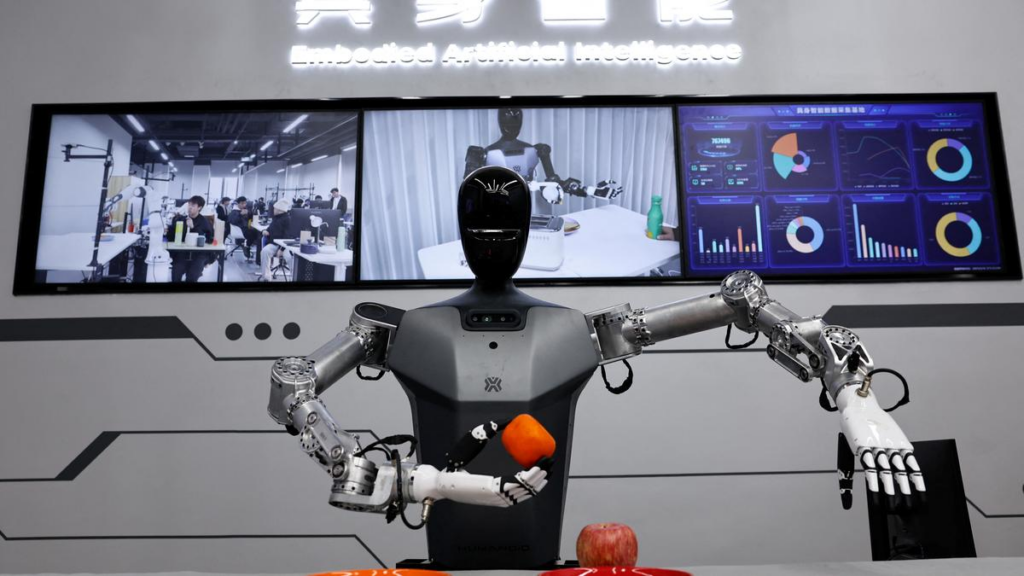
China is preparing to assign a unique digital identity to every humanoid robot manufactured in the country, signalling a major step toward regulating what could become one of the world’s fastest-growing AI industries.
The initiative is part of a broader government-backed system called the Humanoid Full Lifecycle Management Service Platform, overseen by China’s Ministry of Industry and Information Technology through the Humanoid Robotics and Embodied Intelligence Standardisation (HEIS) committee.
At its core, the plan sounds straightforward: every humanoid robot gets a unique code. But the implications stretch far beyond inventory management.
China is effectively building the infrastructure for tracking, regulating, and standardising intelligent machines from the moment they are manufactured to the day they are recycled.
TL;DR
- China plans to assign digital IDs to all domestically manufactured humanoid robots.
- The IDs will track robots through their entire lifecycle, including production, sale, use, maintenance, and recycling.
- The initiative is part of a larger push to regulate the country’s fast-growing robotics and AI sector.
- New guidelines apply to manufacturers, sellers, users, service providers, and recycling facilities.
- The move could help China set global standards for humanoid robotics before Western regulators catch up.
What Is China’s Humanoid Robot Digital Identity Program?
China’s new initiative centers on creating a traceable digital record for humanoid robots — especially AI-powered bipedal machines designed to resemble and interact like humans.
Under the proposed system, each robot would receive:
- A unique identification code
- A lifecycle record
- Standardized regulatory documentation
The tracking system would follow the robot through:
- Manufacturing
- Distribution
- Commercial or personal use
- Maintenance and upgrades
- End-of-life disposal or recycling
The government says the goal is to improve safety oversight, strengthen accountability, and create unified standards across the industry.
Why Is China Introducing Robot IDs Now?
Timing matters here.
China is aggressively positioning itself as a global leader in:
- Artificial intelligence
- Industrial automation
- Robotics manufacturing
- Embodied AI systems
Humanoid robots have quickly moved from research labs into real-world testing environments, including:
- Warehouses
- Elder care
- Manufacturing
- Hospitality
- Security applications
As the technology accelerates, Beijing appears determined to avoid the fragmented regulatory landscape that often accompanies emerging tech sectors.
Instead of waiting for problems to emerge, regulators are attempting to build oversight mechanisms early.
That approach mirrors China’s broader strategy in areas like:
- Electric vehicles
- Facial recognition
- Drone regulation
- Digital payment ecosystems
In each case, the government has pushed for centralised standards alongside rapid industrial expansion.
What Is “Lifecycle Management” for Humanoid Robots?
The phrase “full lifecycle management” may sound bureaucratic, but it reflects a significant shift in how governments think about intelligent machines.
Traditionally, industrial products are regulated mainly during manufacturing and sale. China’s framework suggests humanoid robots could be monitored continuously throughout their operational existence.
The system could potentially track:
- Ownership changes
- Software updates
- Safety incidents
- Repairs and maintenance
- Hardware modifications
- Retirement and recycling
That creates a traceable chain of accountability — something regulators increasingly want as robots become more autonomous and capable.
Why regulators care
Humanoid robots combine:
- Physical mobility
- AI decision-making
- Sensor systems
- Human interaction
That mix creates unique risks compared with traditional industrial machines.
A malfunctioning robot is not just a software issue. It can become a real-world safety issue.
Could This Become the “License Plate” System for Robots?
One useful comparison is vehicle registration.
Cars have:
- VIN numbers
- Registration databases
- Ownership histories
- Recall systems
China’s robot identity initiative appears to move humanoid robots toward a similar framework.
The difference is that robots may also:
- Learn from data
- Receive AI model upgrades
- Interact independently with humans
- Operate semi-autonomously
That raises larger questions around liability and accountability.
For example:
- Who is responsible if a humanoid robot injures someone?
- How are software modifications tracked?
- What happens when AI systems are upgraded after purchase?
- Can authorities remotely identify malfunctioning units?
A standardized identity system could eventually help answer those questions.
Why China May Gain an Advantage in Global Robotics Standards
One of the most important aspects of this story is not technological — it’s geopolitical.
Countries that define early technical standards often gain long-term influence over global industries.
China has already pursued this strategy in:
- 5G infrastructure
- EV battery manufacturing
- Smart city technology
- Renewable energy supply chains
Humanoid robotics may be next.
If China establishes widely adopted manufacturing and compliance standards early, global companies may eventually need to align with Chinese frameworks to access supply chains or markets.
That matters because the humanoid robotics market is expected to become highly competitive over the next decade.
Major players already investing heavily include:
- Tesla
- Boston Dynamics
- Figure AI
- Agility Robotics
- UBTECH Robotics
China’s regulatory head start could shape how these systems are certified, deployed, and monitored globally.
What the New Chinese Guidelines Actually Cover
China has also released new operational guidelines tied to the digital ID initiative.
According to officials, the rules apply across the humanoid robotics ecosystem, including:
- Manufacturers
- Service providers
- Retailers
- Users
- Maintenance operators
- Recycling facilities
Yu Xiuming of the China Electronics Standardization Institute (CESI) reportedly emphasized that the framework is designed for broad industry-wide participation.
That signals the government is thinking beyond factories and focusing on the entire commercial environment surrounding humanoid robots.
Potential compliance areas may include:
- Safety inspections
- Product registration
- Maintenance logging
- Data reporting
- Disposal procedures
- Software traceability
Privacy and Surveillance Questions Are Inevitable
Any system involving centralized digital identities naturally raises concerns about surveillance and data governance.
While Chinese authorities frame the initiative as a safety and standards effort, critics will likely question:
- How much data robots could collect
- Whether usage information could be monitored centrally
- How ownership and behavioral data may be stored
- Whether similar systems could expand internationally
These concerns become more significant as humanoid robots increasingly enter homes, workplaces, hospitals, and public-facing environments.
The debate resembles earlier concerns surrounding:
- Internet-connected devices
- Smart home ecosystems
- Facial recognition cameras
- Autonomous vehicles
The difference is that humanoid robots combine physical presence with AI-driven interaction.
Why This Matters Beyond China
This is not just a China story.
It is an early signal of how governments worldwide may eventually regulate embodied AI systems.
The United States and Europe are still developing broader AI regulatory frameworks, but humanoid robots introduce additional complications because they exist both digitally and physically.
Future regulations in other countries could eventually include:
- Mandatory robot registration
- Safety certifications
- AI audit trails
- Usage restrictions
- Digital identity requirements
China’s initiative may become one of the first large-scale real-world tests of that model.
The Bigger Picture: Robots Are Moving From Novelty to Infrastructure
For years, humanoid robots were largely viewed as futuristic demonstrations or viral internet content.
That is changing.
As AI models improve and robotics hardware becomes cheaper, governments are beginning to treat humanoid systems less like experimental gadgets and more like infrastructure requiring oversight.
China’s digital ID system reflects that shift.
The message is clear: if humanoid robots are going to become part of everyday life, regulators want a way to identify, track, and manage them at scale.