
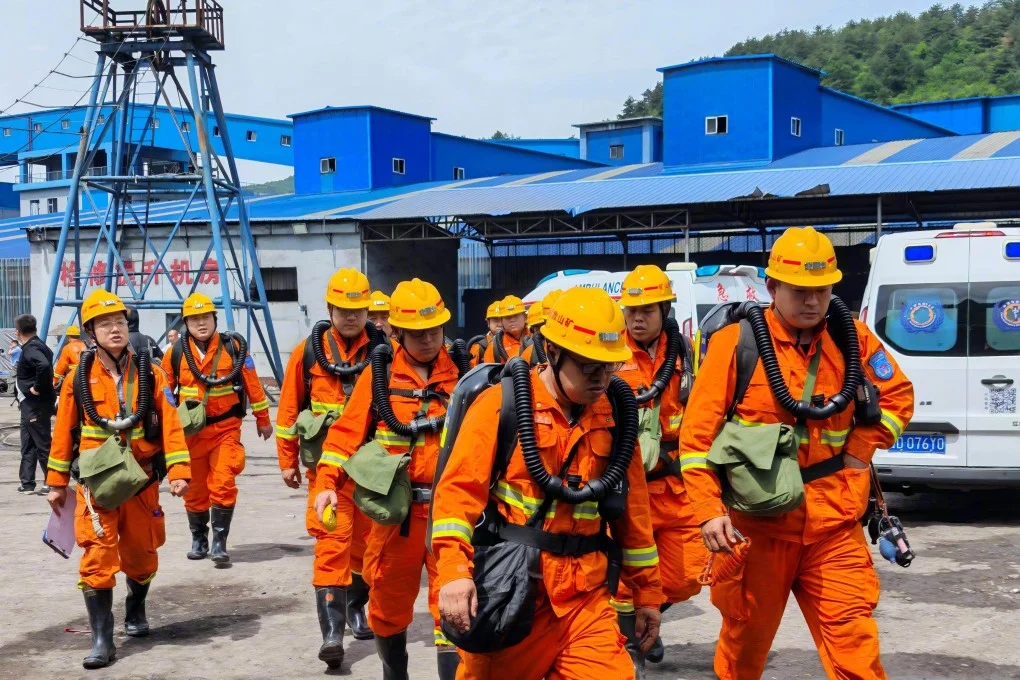
A deadly gas explosion at a coal mine in northern China has killed at least 90 workers, making it one of the country’s worst mining disasters in recent years.
The blast occurred late Friday at the Liushenyu coal mine in Qinyuan County, located in Shanxi, a major coal-producing region often referred to as the backbone of China’s mining industry.
According to state-run media outlet Xinhua, 247 workers were underground at the time of the explosion. Rescue crews and emergency responders continue search and recovery operations as authorities investigate what triggered the blast.
What Happened at the Liushenyu Coal Mine?
Preliminary reports indicate the explosion was caused by underground gas accumulation, one of the most persistent dangers in coal mining.
Methane gas can build up rapidly inside mine shafts. If ventilation systems fail or sparks ignite trapped gas, the result can be catastrophic explosions capable of collapsing tunnels and trapping workers underground.
Chinese authorities have not yet released a detailed technical explanation of the accident. However, officials say emergency management teams were deployed immediately after the blast.
President Xi Jinping Orders Full Investigation
Chinese President Xi Jinping directed authorities to “spare no effort” in rescue operations and medical treatment for the injured.
He also ordered a comprehensive investigation into the cause of the disaster and called for stronger workplace safety enforcement.
Chinese Premier Li Qiang emphasized the need for:
- Timely public communication
- Accountability for those responsible
- Measures to prevent similar accidents
Authorities have already detained executives connected to the mining company as investigators begin examining whether safety violations or negligence contributed to the explosion.
Why Shanxi Province Matters to China’s Coal Industry
Shanxi sits at the center of China’s coal economy.
The province holds some of the country’s largest coal reserves and supplies power plants, steel manufacturers, and industrial facilities across China. Despite Beijing’s investments in renewable energy, coal remains a major pillar of the country’s energy system.
That dependence has historically come with a human cost.
For decades, Chinese coal mines were known for poor safety standards, weak oversight, and deadly accidents. Thousands of miners died annually during the peak of China’s industrial expansion in the late 1990s and early 2000s.
China Reduced Mining Deaths — But Risks Remain
China has significantly improved coal mine safety over the past two decades through:
- Stricter national regulations
- Closure of smaller illegal mines
- Better ventilation systems
- Increased automation
- Enhanced worker safety training
Official statistics show coal mining fatalities have declined sharply compared to earlier decades.
Still, accidents continue to occur, particularly in regions where mines operate under intense production pressure.
Why Gas Explosions Are Especially Dangerous
Gas explosions remain among the deadliest forms of mining accidents because they can:
- Spread rapidly through underground tunnels
- Trigger secondary explosions
- Cause fires and toxic smoke buildup
- Destroy communication and escape systems
In many cases, survivors face limited escape routes once tunnels collapse.
The Bigger Picture for China’s Energy Sector
The explosion comes as China continues balancing economic growth, energy security, and industrial demand.
While the country is the world’s largest investor in renewable energy, it also remains the largest consumer and producer of coal globally. Rising electricity demand and industrial recovery have kept coal production levels high.
That tension creates ongoing pressure on mining operations to maintain output while meeting increasingly strict safety standards.
Analysts say the Liushenyu disaster could lead to:
- Nationwide mine safety inspections
- Temporary production slowdowns
- New regulatory crackdowns
- Increased scrutiny of local enforcement agencies
What Happens Next?
Investigators are expected to examine:
- Ventilation system performance
- Gas monitoring records
- Emergency response protocols
- Possible regulatory violations
- Management oversight failures
The detained company executives may face criminal or administrative penalties if authorities determine negligence played a role.
Meanwhile, rescue and recovery operations remain ongoing at the site.
TL;DR
- A gas explosion at the Liushenyu coal mine in Shanxi killed at least 90 workers.
- The blast occurred while 247 miners were underground.
- Chinese President Xi Jinping ordered a full investigation and rescue effort.
- Company executives have reportedly been detained.
- The disaster highlights ongoing safety risks in China’s coal mining sector despite years of reforms.