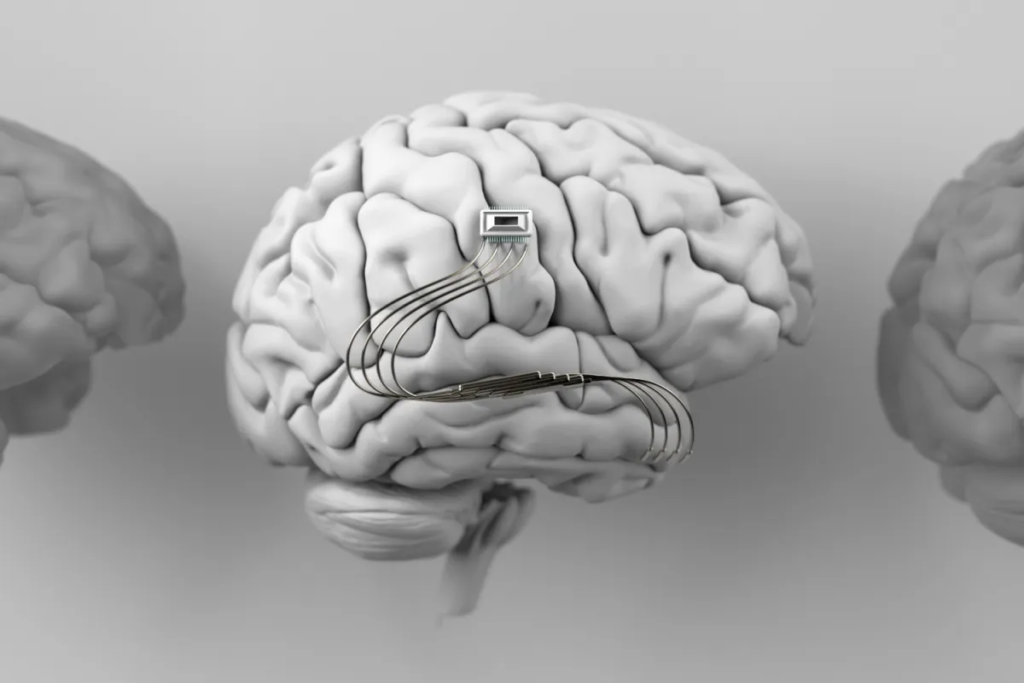
China has achieved a significant milestone in brain-computer interface (BCI) technology by completing the first successful implantation of its commercially approved invasive brain chip in a human patient. The breakthrough marks a new phase in the global race to develop brain implants that could help people with paralysis regain movement and communication.
The device, known as the NEO brain chip, was implanted in a patient with a long-term spinal cord injury. By translating brain signals into commands for a robotic glove, the implant is designed to help restore hand movement without relying on damaged nerves.
The achievement also places China at the forefront of BCI commercialisation. While companies in the United States, including Elon Musk’s Neuralink, have made significant progress in clinical trials, China has become the first country to commercially approve an invasive brain-computer interface for medical use.
TL;DR
- China has completed the first implantation of its commercially approved NEO brain chip.
- The device helps people with spinal cord injuries control a robotic glove using brain signals.
- China is the first country to approve an invasive BCI for commercial medical use.
- The implant uses a minimally invasive extradural technique and wireless communication.
- Neuralink remains ahead in human clinical trials, while China’s next-generation Beinao-2 system is still under development.
- The breakthrough intensifies the technological competition between China and the United States in neurotechnology.
What Is China’s NEO Brain Chip?
The NEO brain chip is an invasive brain-computer interface designed to restore movement in people living with severe paralysis caused by spinal cord injuries.
Unlike wearable brain-monitoring devices, invasive BCIs are implanted directly inside or adjacent to the brain, allowing them to capture neural signals with much greater precision.
The implanted chip interprets brain activity and converts it into commands that can control external assistive devices such as robotic limbs or rehabilitation equipment.
In its first commercial use, the patient successfully operated a robotic glove through thought alone, allowing movement despite the spinal cord injury.
Consider adding an infographic illustrating how a brain-computer interface converts neural signals into movement.
How Does the NEO Brain Chip Work?
The NEO system relies on electrodes positioned close to the brain to detect electrical activity generated by neurons.
Unlike traditional rehabilitation therapies that depend on functioning nerve pathways, the BCI creates an alternative communication channel between the brain and an external device.
Key features include:
- Wireless communication
- Coin-sized implant
- Minimally invasive extradural implantation
- Brain-controlled robotic glove
- Designed specifically for spinal cord injury rehabilitation
The implant sits on the brain’s outer membrane rather than penetrating deep into brain tissue, making the procedure less invasive than some competing technologies.
Who Can Receive the NEO Brain Chip?
The device is currently intended for a specific group of patients.
According to eligibility requirements, candidates must:
- Be between 18 and 60 years old.
- Have suffered a spinal cord injury at least one year earlier.
- Have remained medically stable for at least six months following standard treatment.
- Have lost the ability to grasp objects with their hands.
- Still retain some upper-arm movement.
These criteria are designed to ensure patients can safely participate in rehabilitation using the brain-controlled robotic glove.
How Does NEO Compare With Elon Musk’s Neuralink?
Although both technologies aim to restore lost neurological function, they differ significantly in design, implantation methods and development stage.
| Feature | China’s NEO Brain Chip | Neuralink N1 |
|---|---|---|
| Developer | Neuracle (China) | Neuralink (United States) |
| Approval status | Commercially approved in China | Human clinical trials |
| Implant method | Minimally invasive extradural implant | Implanted using a robotic surgical system |
| Connectivity | Wireless | Wireless |
| Primary use | Controls robotic glove for rehabilitation | Multiple neurological applications under study |
| Human implants | First commercial implantation completed | 21 clinical trial participants reported |
Perhaps the biggest difference lies in implantation.
Neuralink’s robotic surgical system inserts hundreds of ultra-thin electrode threads directly into the brain within minutes, allowing high-resolution recording of neural activity.
The NEO chip, by comparison, uses electrodes positioned on the brain’s outer membrane, reducing surgical complexity while still enabling patients to control assistive devices.
What Is Beinao-2?
While the NEO chip has already reached commercial approval, China is simultaneously developing a more advanced invasive brain-computer interface known as Beinao-2.
Developed by NeuCyber, a startup linked to the Beijing-based Chinese Institute for Brain Research (CIBR), Beinao-2 uses flexible electrodes that are fully implanted into the brain.
The system is currently undergoing extensive animal testing before progressing to human clinical trials.
According to NeuCyber’s rotating CEO, Li Yuan, Beinao-2 is being developed with Neuralink as its primary benchmark.
Is China Catching Up to Neuralink?
China has made rapid progress, but industry leaders acknowledge that Neuralink currently maintains an advantage.
Li Yuan estimated that China’s Beinao-2 program trails Neuralink by roughly three years.
The timeline reflects differences in clinical development.
Neuralink’s progress
Neuralink announced in January that:
- 21 participants worldwide have enrolled in its human clinical trials.
- Multiple patients have demonstrated the ability to control computers using only their thoughts.
- Research continues into broader neurological applications.
China’s roadmap
NeuCyber expects its next-generation products to require several additional stages before widespread use.
These include:
- Completion of animal studies
- Early feasibility clinical trials
- Larger human clinical trials
- Regulatory approvals
- Medical insurance approval
Li estimates it could take another two to three years before these products become broadly available in China.
Why Is Commercial Approval a Major Milestone?
Many brain-computer interface technologies remain confined to research laboratories or early clinical trials.
Commercial approval means regulators have determined that the device meets specific safety and effectiveness standards for its intended medical application.
This allows hospitals to begin offering the treatment to eligible patients under approved medical guidelines rather than only through experimental studies.
For China’s neurotechnology industry, this represents an important transition from research to real-world healthcare.
Why Brain-Computer Interfaces Matter
Brain-computer interfaces have the potential to transform treatment for millions of people living with neurological disorders.
Researchers hope future BCIs could help individuals with:
- Spinal cord injuries
- Stroke-related paralysis
- Amyotrophic lateral sclerosis (ALS)
- Parkinson’s disease
- Severe communication disorders
- Certain forms of blindness or hearing loss
Scientists are also exploring whether future systems could restore speech, improve rehabilitation or even assist memory disorders.
Many of these applications remain experimental, but recent advances suggest the technology is progressing rapidly.
The Global Race for Brain-Computer Interfaces
The latest implantation highlights an increasingly competitive landscape between the United States and China.
Both countries are investing heavily in neurotechnology, artificial intelligence and biomedical engineering to develop next-generation brain implants.
While Neuralink has attracted global attention through its robotic surgery platform and clinical trials, China’s commercial approval demonstrates that regulatory progress can take different paths depending on national healthcare systems.
Rather than a winner-takes-all competition, experts expect multiple companies and research institutions to contribute to the future of brain-computer interfaces.
What Comes Next?
The first commercial implantation of the NEO brain chip is an important milestone, but it represents only the beginning of broader clinical adoption.
Researchers will continue monitoring patients to evaluate long-term safety, reliability and improvements in motor function.
At the same time, companies in both China and the United States are working toward more advanced brain implants capable of restoring additional neurological functions.
The coming years are likely to determine whether brain-computer interfaces become a specialized therapy for paralysis or evolve into a widely available medical technology with applications across neurology and rehabilitation.