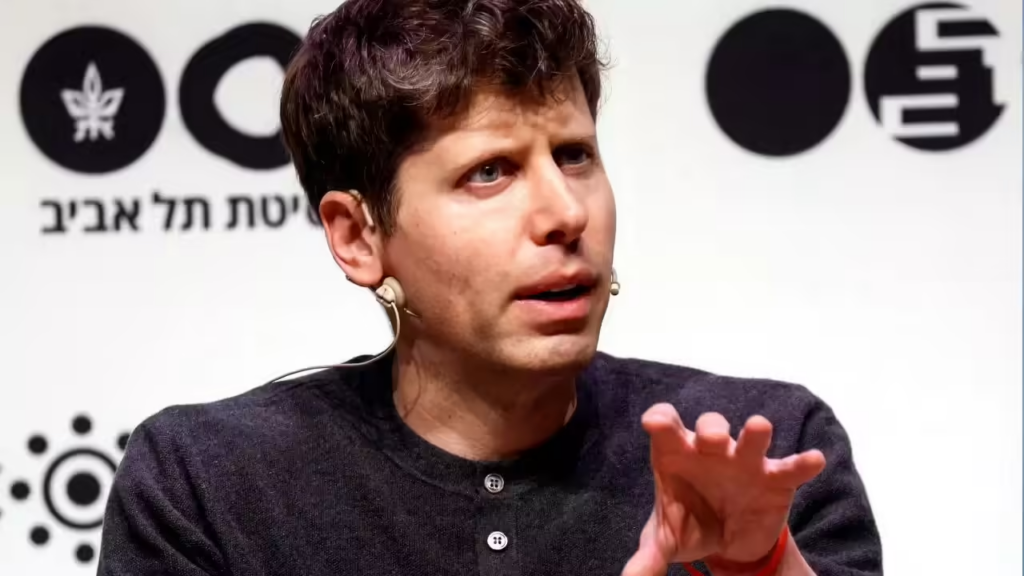
The fallout from the Canada mass shooting in Tumbler Ridge has taken a sharp turn toward the tech industry, after Sam Altman publicly acknowledged that OpenAI failed to alert authorities about a user later identified as the attacker. The admission has intensified a broader debate about how companies behind tools like ChatGPT should handle potential real-world threats flagged within their systems. Altman’s apology, issued in a letter dated April 23, comes months after the February shooting that left eight people dead and 25 injured in Tumbler Ridge. While the company had internally flagged and banned the account months earlier, it did not notify law enforcement, a decision now under scrutiny.
What did Sam Altman say in his apology?
Altman’s message was direct and unusually personal for a tech CEO addressing a crisis of this magnitude.
He expressed “deepest condolences” to the victims and acknowledged what he called an “irreversible loss” for the community. More significantly, he admitted a failure that is now central to the controversy: OpenAI did not escalate concerning user behavior to authorities, even after internal teams flagged the account.
Key points from the letter
- OpenAI identified and banned the account in June, months before the attack
- No alert was sent to law enforcement agencies
- The company is now committing to closer coordination with governments
- Altman framed the failure as both procedural and moral
The apology was shared publicly by David Eby, who described it as necessary but insufficient given the scale of the tragedy.
What happened in the Canada mass shooting?
The incident itself remains one of the deadliest school-related shootings in recent Canadian history.
On February 10, an 18-year-old attacker carried out a series of violent acts:
- Killed two family members at home
- Opened fire at Tumbler Ridge Secondary School
- Killed five children and one educator
- Injured 25 others before dying by suicide
The scale and sequence of the attack have led investigators and policymakers to examine warning signs that may have been missed, including digital activity.
Why is OpenAI’s response under scrutiny?
At the heart of the controversy is a difficult question: what responsibility do AI companies have when users exhibit potentially dangerous behavior?
The core issue: detection vs. action
Modern AI systems are designed to:
- Flag harmful or suspicious content
- Restrict or ban users who violate policies
- Prevent the generation of dangerous instructions
But escalation to law enforcement is far less standardized.
In this case, OpenAI took the first two steps but not the third. That gap is now being examined by policymakers, legal experts, and the public.
The policy gray zone
There is no universal rule requiring tech companies to report users unless the following are true:
- There is a clear, imminent threat
- Legal thresholds for reporting are met
- Jurisdiction-specific laws mandate disclosure
This creates a gray zone where companies must balance the following:
- User privacy rights
- Legal liability
- Ethical responsibility
- Risk of overreporting
How do other tech platforms handle similar threats?
OpenAI is not alone in facing this dilemma. Major platforms have wrestled with similar issues for years.
Industry comparisons
- Social media platforms often report credible threats to law enforcement
- Messaging apps face stricter privacy constraints, limiting intervention
- Gaming platforms typically rely on moderation and bans, not escalation
What sets AI systems apart is their interactive nature. Tools like ChatGPT can simulate conversation, making it easier to detect patterns but harder to interpret intent.
What changes could follow this incident?
Altman’s statement suggests that OpenAI is already reconsidering its approach. But broader changes may extend beyond a single company.
Possible policy shifts
- Clearer escalation protocols for flagged users
- Dedicated threat assessment teams within AI companies
- Formal partnerships with law enforcement agencies
- Regulatory frameworks requiring reporting in high-risk cases
Governments may also step in. Incidents like this often accelerate legislation, especially in areas where technology outpaces policy
Why this moment matters for the future of AI
This is not just about one company or one tragic event. It’s about defining the boundaries of responsibility in an era where AI systems are deeply embedded in daily life.
The bigger questions
- Should AI companies act as passive tools or active gatekeepers?
- How much user privacy should be sacrificed for public safety?
- Who decides when a digital signal becomes a real-world threat?
There are no easy answers, but the stakes are rising.
The Tumbler Ridge tragedy has effectively turned a theoretical debate into a real-world test case. And the outcome could shape how AI is governed for years to come.
TL;DR
- Sam Altman offered apology for OpenAI’s failure to alert authorities about a flagged ChatGPT user linked to a Canada mass shooting
- The attacker killed eight people and injured 25 in Tumbler Ridge in February
- OpenAI had banned the account months earlier but did not escalate the case
- The incident highlights a major gap in how AI companies handle potential threats
- It may lead to stricter policies, industry changes, and new regulations