
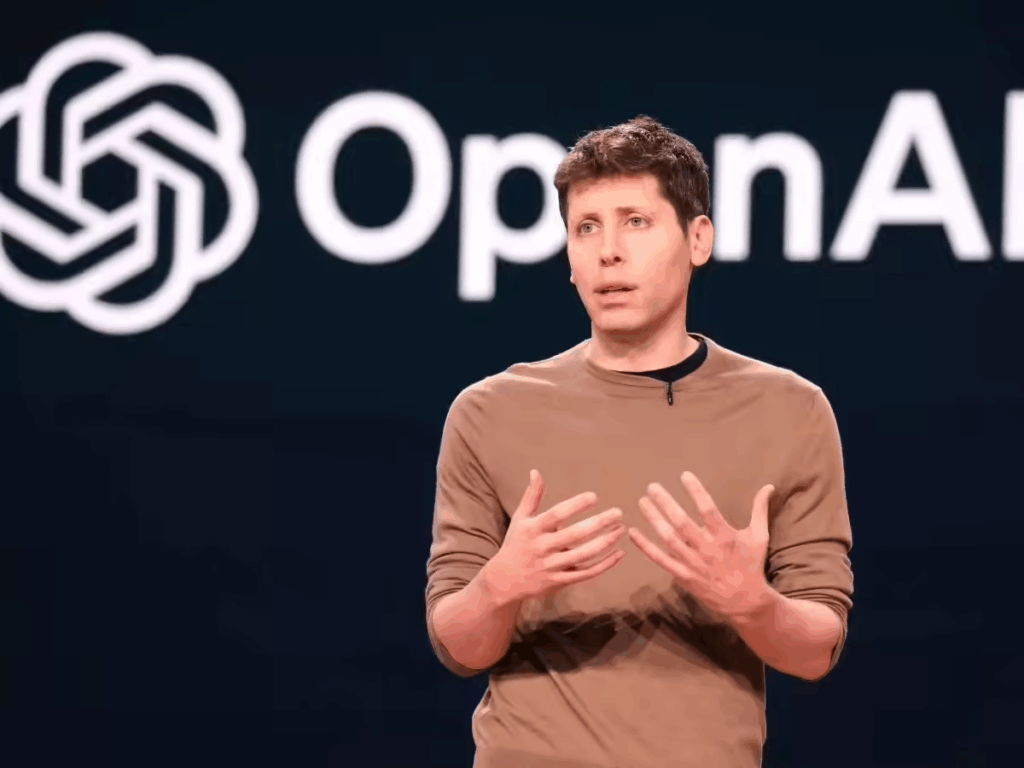
AI to Disrupt Traditional Employment, Create New Forms of Purposeful Work: Sam Altman
San Francisco – With artificial intelligence rapidly reshaping industries, OpenAI CEO Sam Altman has predicted a seismic shift in the global job market by 2030. In a recent blog post, Altman said while AI will create new opportunities, it will also render many traditional jobs obsolete, prompting a redefinition of work and value in society.
“The shift won’t happen overnight,” Altman wrote. “But when we look back in a few decades, the gradual changes will have amounted to something big.”
A Wealthier, Yet Different World
Altman acknowledged the disruptive challenges posed by job displacement but emphasized that AI advancements would likely make the world “significantly wealthier,” opening new pathways for innovation and human achievement.
He pointed to examples from history to explain this evolution. A farmer from 100 years ago, he said, might view modern occupations—such as software engineering or graphic design—as “fake jobs” due to the absence of manual labor. Yet, these professions are widely accepted today as meaningful and essential.
“To them, it might look like we are just playing games to entertain ourselves since we have plenty of food and unimaginable luxuries,” Altman noted. “But these jobs are meaningful and valuable to people today.”
A New Definition of Work
According to Altman, as AI takes over repetitive or process-driven tasks, humans will shift to roles that may seem unconventional by today’s standards—but will feel deeply important and fulfilling to those performing them.
“Those jobs may not look very much like the jobs of today,” he wrote. “I hope we will look at the jobs a thousand years in the future and think they are very fake jobs, and I have no doubt they will feel incredibly important and satisfying to the people doing them.”
The Human Advantage
Despite AI’s growing capabilities, Altman underscored that machines cannot replicate human empathy and the capacity to care for others, which he sees as a defining and enduring strength.
Looking ahead, he suggested a future where breakthroughs happen at a previously unimaginable pace. By 2035, society might leap from solving high-energy physics problems to initiating space colonization or advancing from a new materials science discovery to brain-computer interfaces in just a year’s span.
Conclusion
Altman’s message is ultimately one of adaptation and optimism: While AI will transform the nature of work, humans will continue to redefine purpose and find new ways to thrive.