
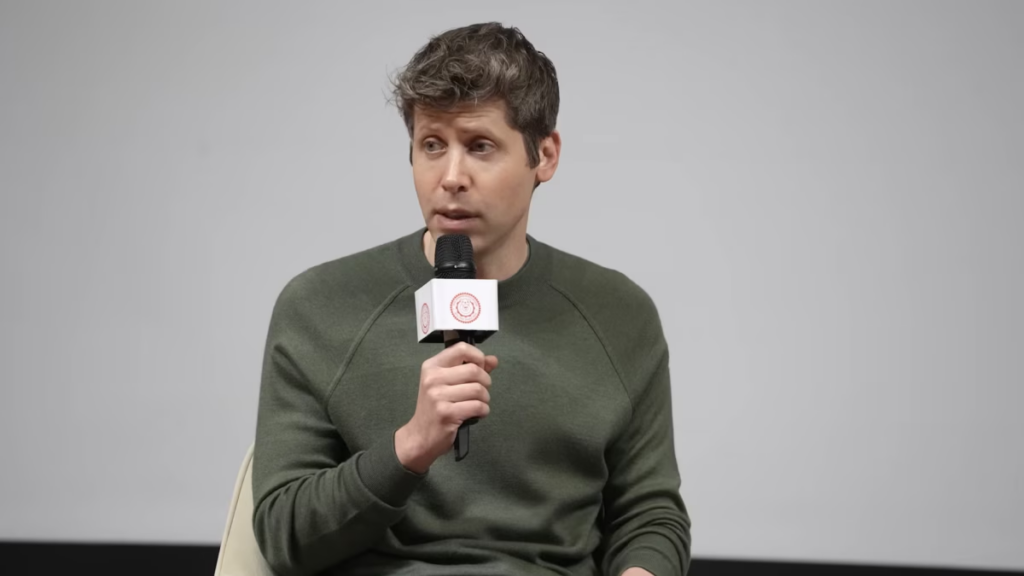
Sam Altman has outlined a vision of the future in which artificial intelligence becomes a utility people consume the same way they use electricity, water, or internet access.
Speaking at an event in Washington, DC, Altman suggested that intelligence itself may eventually be delivered “on a meter,” with individuals and businesses paying based on how much AI capability they use.
The comments have triggered intense debate—not just about technology, but about who might control increasingly powerful AI systems if intelligence becomes a foundational service woven into daily life.
What did Sam Altman actually say?
Sam Altman’s vision for AI as a utility
Sam Altman described a future where AI functions similarly to public infrastructure.
The core idea
According to his remarks:
- Intelligence could become continuously available
- People would “plug into” AI systems as needed
- Usage would be measured and billed like utilities
He compared the concept to:
- Electricity
- Running water
- Wi-Fi networks
What “on a meter” means
The phrase refers to:
- Charging customers based on consumption
For example:
- More AI usage would cost more
- Less usage would cost less
This model already exists in parts of cloud computing and enterprise AI services today.
Why are people reacting strongly to this idea?
The strongest reactions are not about billing itself—but about the implications of treating intelligence as infrastructure controlled by corporations.
Why critics are uneasy
Some fear a future where:
- A handful of companies control advanced AI systems
- Access to high-level reasoning becomes commercialized
- Human decision-making increasingly depends on private platforms
Critics argue intelligence is fundamentally different from utilities like electricity because it directly influences:
- Education
- Creativity
- Work
- Political discourse
- Human cognition itself
Is AI already moving toward a utility model?
In many ways, yes.
AI infrastructure and cloud-based intelligence
Modern AI systems already resemble utility infrastructure in several respects.
How AI is currently delivered
Most advanced AI models today run through:
- Cloud servers
- Subscription platforms
- API access systems
Users increasingly access AI as:
- A service rather than standalone software
Why do companies like this model
Utility-style AI allows companies to:
- Continuously update systems
- Scale computing power dynamically
- Charge recurring usage fees
- Centralize control of infrastructure
This mirrors how cloud computing transformed software distribution over the past decade.
What did Sam Altman mean by “too cheap to meter”?
Altman referenced a famous historical phrase from the nuclear energy industry.
Origin of the phrase
The expression:
- “Too cheap to meter”
was popularized by Lewis Strauss in the 1950s.
The original idea
At the time, some believed nuclear energy would become so abundant and inexpensive that:
- Measuring individual electricity consumption would barely matter
That prediction ultimately proved unrealistic because of:
- Infrastructure costs
- Regulation
- Safety concerns
Why Altman referenced it
He appeared to suggest that AI intelligence could eventually become:
- Extremely abundant
- Widely accessible
- Cheap enough for near-universal use
Though he also simultaneously described it as metered infrastructure.
Why AI is increasingly being compared to electricity
The comparison has become common among tech executives.
Artificial intelligence and industrial transformation
Why the analogy exists
Electricity transformed civilization because it became
- General-purpose infrastructure
It powered:
- Factories
- Homes
- Transportation
- Communication systems
AI advocates argue advanced intelligence systems could similarly reshape:
- Knowledge work
- Healthcare
- Education
- Scientific research
- Business operations
The key difference critics point out
Electricity powers machines.
AI increasingly influences:
- Human thinking
- Decision-making
- Information access
- Cognitive processes
That makes questions about ownership and control far more sensitive.
What are the fears around centralized AI control?
Many concerns revolve around the concentration of power.
Questions critics are raising
- Who controls the most powerful AI systems?
- Will access become unequal?
- Could corporations influence public reasoning at scale?
- What happens if societies become dependent on privately owned intelligence infrastructure?
Why these fears are growing
A small number of companies currently dominate frontier AI development, including the following:
This concentration has fueled concerns about long-term technological power.
Could AI eventually become as essential as electricity?
Possibly—but experts remain divided on how quickly that transition might happen.
Areas where AI is already becoming embedded
AI tools increasingly support the following:
- Search engines
- Customer service
- Coding
- Office productivity
- Scientific analysis
Some analysts believe advanced AI could eventually become background infrastructure across nearly every industry.
Others urge caution
Critics argue AI hype sometimes overstates near-term capabilities and underestimates the following:
- Technical limitations
- Energy demands
- Regulation
- Economic disruption
- Ethical risks
The bigger question: should intelligence be treated like infrastructure?
Altman’s comments ultimately touch on a profound philosophical and economic issue:
If machine intelligence becomes essential to society, should it operate like public infrastructure—or private commercial software?
That debate may shape the next era of technology policy.
TL;DR
- Sam Altman said AI could eventually become a metered utility like electricity or water
- He envisions people paying for intelligence usage through centralized AI infrastructure
- Critics worry about corporations controlling advanced reasoning systems
- The comments reflect a broader shift toward AI-as-a-service models
- The debate raises major questions about power, access, and the future role of AI in society