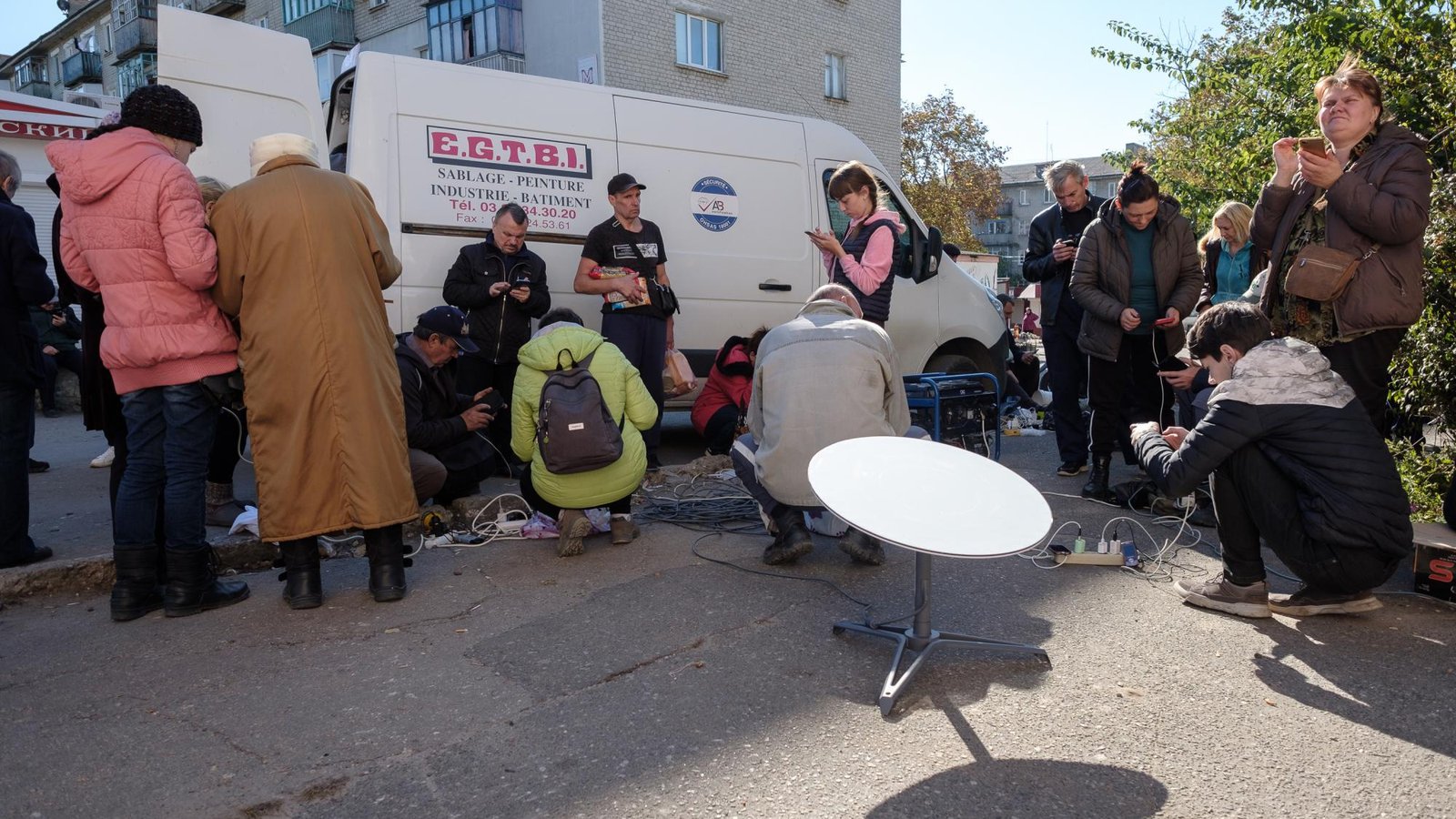
Elon Musk says Ukraine’s military “violated Starlink terms of service” by using the network for drone strikes. He says the “loophole” closed last week. We read the Starlink terms he is pointing to. They do ban piloting drones over the service, in plain words. But the ban dates from early 2026. It carries an exception for customers with a SpaceX contract, and none of SpaceX’s published legal documents changed last week.
That matters because Musk’s post on X on Saturday, Oct. 24, recasts the two-week fight over Ukraine’s Starlink speed cap. Until now he had blamed Washington. Now he is citing his own company’s rules.
What Musk said on Saturday
Musk drew a line between two products. “Using Starlink, a civilian commercial service, for offensive drone strikes to kill people has never been allowed, nor should it be,” he wrote. Starshield, the military version, belongs to Washington in his telling: “What they decide to do is up to them.”
He also wrote that without Starlink, “the Ukrainian front line would collapse immediately,” and added, “This is NOT a threat.”
The Hill reported that the post alluded to Musk being behind the slowdown. The post itself doesn’t say who imposed the cap. It also doesn’t say what “the loophole” was.
It came hours after Ukraine said the problem was over. President Volodymyr Zelenskyy said on Saturday that “the speeds are now where they need to be,” The Hill reported. Defense Minister Yevhenii Khmara said the ministry was recording stable links above 400 km/h (about 250 mph), according to Reuters, as cited by The Hill.
The usage policy bans drones, with one exception
Starlink customers sign the terms of service, which pull in a separate Acceptable Use Policy. The policy is the same document for the US and Ukraine. Its list of banned conduct opens with drones.
Customers agree not to engage in “remotely controlling or piloting any aerial drone or unmanned vehicle, unless otherwise contractually permitted by SpaceX.” The second item bans “any military activity” except morale and recreation programs for troops that SpaceX approves.
SpaceX can respond with anything from “a warning to a suspension or termination of Services,” the policy says. It can also act “immediately and without notice.”
That exception is the part Musk’s post skips. The rule bars drone use unless SpaceX has agreed otherwise in a contract. The published documents don’t say which customers hold such contracts, or what Ukraine’s military terminals were bought under.
The terms of service: weapons and aircraft
The US terms of service carry the weapons line most often quoted in this dispute. “Starlink is not designed or intended for use with or in offensive or defensive weaponry or other comparable end-uses,” it reads. The version for Ukraine uses the same words.
Read closely, that sentence is a product disclaimer, not a ban. It sits in a section on export controls. The next sentence warns that custom changes for “military end-uses or military end-users” may bring US arms-export rules into play.
A firmer rule sits in the installation section. Both versions say, in capital letters, that using a kit “on an aircraft of any kind is prohibited in all cases” without Starlink’s prior written consent. A drone is an aircraft. So a Starlink dish strapped to a drone breaks the terms unless SpaceX signed off.
Neither document uses the word “drone” outside the usage policy. Neither mentions a speed limit.
The drone ban arrived in early 2026
The drone clause has not always been there. Archived copies of the usage policy from December 2025 and January 2026 contain no mention of drones or military activity. Their list of banned conduct opened with breaking into other people’s accounts and computers.
By an April 7, 2026 capture, both clauses were in. That version went further than today’s, covering drones “of any kind,” from aerial and ground to underwater and space. By September the wording had narrowed to “any aerial drone or unmanned vehicle.”
That window includes SpaceX’s crackdown on Russian use of Starlink. In early February, Ukraine said SpaceX had shut off terminals used by Russian troops and that only verified terminals could now connect, The Guardian reported. Ukraine said Russian units had been fitting Starlink terminals to drones. We couldn’t find a SpaceX statement explaining when or why the drone clause went in.
Nothing in the published terms changed last week
Starlink’s legal site lists when each document was last published. The usage policy’s current version went up on Oct. 2. Its text matches the archived Sept. 8 copy word for word. The US terms of service date from Aug. 6, and the Ukrainian terms from March 31.
No document listed for the US or Ukraine shows a date after Oct. 9. The speed cap appeared on Oct. 14.
So whatever Musk means by the loophole closing “last week,” it was not a rewrite of the published rules. The one restriction reported that week was the roughly 100 mph cap, which cut the link for fast-moving drones, as we explained in our report on Rubio’s comments. That fits enforcement on the network, though Musk hasn’t said so.
His account has also shifted. When the cap appeared on Oct. 14, he said the US military “and ultimately POTUS” decided limits on Starshield. On Oct. 20, The Wall Street Journal reported that Musk himself had ordered the slowdown, citing US officials. Two days later, the Journal reported that Trump had called Musk to ask him to lift it.
Saturday’s post moves the argument to civilian Starlink and its terms. It doesn’t explain why a rule about the civilian service would slow Starshield, the system Ukraine says lost speed.
Sen. Richard Blumenthal has asked the Pentagon to say by Nov. 5 whether the White House, the Pentagon or SpaceX directed the change, Reuters reported. He also wants a briefing from SpaceX officials by Nov. 12. Those answers would show whether the cap rested on these terms, on a government contract, or on Musk’s own call.