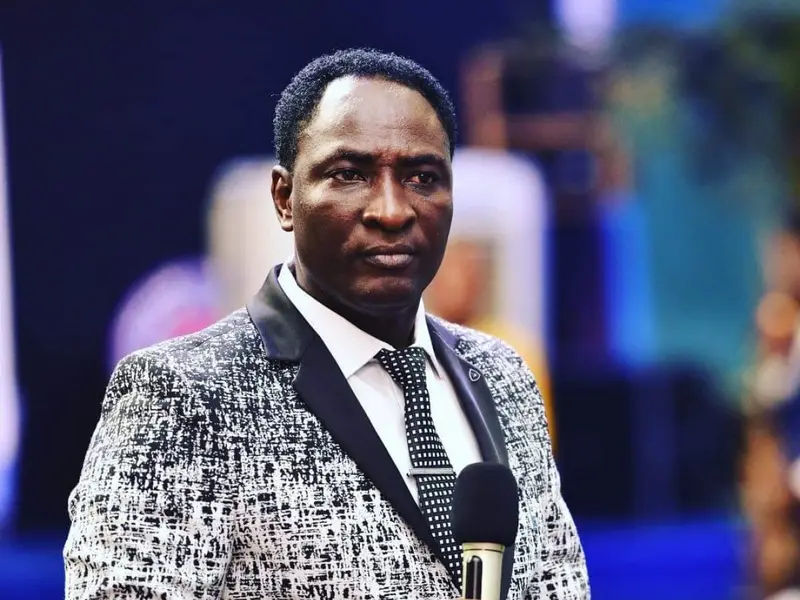
A lavish funeral in southern Nigeria has ignited a fierce debate about wealth, faith, and inequality after a prominent religious leader buried his mother in a $105,000 gold-plated casket. The event, captured on video and widely shared online, has drawn both condemnation and uncomfortable questions about the role of prosperity-driven Christianity in a deeply unequal society.
At the center of the controversy is Prophet Jeremiah Fufeyin, founder of the Christ Mercyland Deliverance Ministry, whose extravagant farewell for his late mother, Mama Asetu, has gone viral—prompting reactions that range from dark humor to moral outrage.
What Happened at Prophet Jeremiah Fufeyin’s Mother’s Funeral?
Mama Asetu reportedly passed away in May, but her burial took place months later in December, allowing time for elaborate preparations. The funeral drew attention not only for its scale but also for one striking detail: a gold-plated casket reportedly worth $105,000.
Footage circulating on social media shows the ornate coffin gleaming amid a crowd of mourners, quickly becoming a symbol of excess for critics.
The backlash was swift.
One user wrote:
“If the coffin is not excavated between 24 and 48 hours… it didn’t happen in Nigeria.”
Another added:
“Hopefully, she was eating out of golden utensils when she was alive!!”
The comments reflect both Nigeria’s biting online satire and a deeper frustration with displays of wealth by religious leaders.
Why Did the Funeral Go Viral?
A Collision of Faith and Flash
Funerals in Nigeria are often elaborate, but this one crossed into viral territory because it tapped into a familiar tension:
- Pastors preaching humility and sacrifice
- Mega-church leaders living visibly opulent lives
- Widespread poverty alongside extreme religious wealth
For many viewers, the gold-plated casket was not just about honoring a parent—it became a statement about priorities.
According to coverage, the funeral reignited debate over whether religious leadership in Nigeria has drifted too far toward spectacle and materialism.
Who Is Prophet Jeremiah Fufeyin?
From Poverty to Private Jets
Prophet Jeremiah Fufeyin, 46, is a well-known figure in Nigeria’s charismatic Christian space. His personal story is often cited by supporters as proof of divine transformation.
According to multiple reports:
- He once lived in extreme poverty
- He has spoken publicly about attempting suicide during that period
- He credits divine intervention for his survival and success
Today, he is the founder of the Christ Mercyland Deliverance Ministry, known for dramatic deliverance services, exorcisms, and sermons centered on spiritual warfare and material blessings.
A Lifestyle Under Scrutiny
Fufeyin’s wealth has long attracted attention. He reportedly owns a Bombardier Challenger 601-3R private jet, estimated to be worth around $3 million.
While supporters see this as evidence of God’s favor, critics argue it contradicts Christian teachings on modesty and stewardship.
Why the Backlash Runs Deeper Than One Funeral
Nigeria’s Stark Economic Reality
The anger surrounding the gold-plated casket cannot be separated from Nigeria’s broader economic context.
Key realities often cited by critics include
- Many Nigerians live on a few dollars a day
- Youth unemployment remains high
- Average lifetime earnings for many citizens are estimated to be around $20,000
Against that backdrop, spending over $100,000 on a coffin feels jarring, especially when done by a religious leader whose followers often include the poor and desperate.
This contrast fuels a perception that churches are absorbing resources that could otherwise support education, healthcare, or social welfare.
The Prosperity Gospel Debate in Nigeria
Faith as Aspiration
Nigeria’s brand of charismatic Christianity is deeply aspirational. Churches promise:
- Financial breakthroughs
- Miraculous healing
- Escape from generational poverty
For millions, these messages offer hope in a system that often fails them.
But critics argue that prosperity theology has evolved into something more transactional—where displays of wealth by pastors become marketing tools rather than spiritual testimonies.
Public Reaction: Humor, Anger, and Reflection
Online reactions to the funeral reveal a complex mix of emotions:
- Humor as a coping mechanism for inequality
- Anger at perceived exploitation of faith
- Reflection on what religion should represent
Some users questioned whether the same generosity was shown to the deceased while she was alive, not just in death. Others wondered how many congregants’ offerings contributed—directly or indirectly—to such extravagance.
Is This About One Pastor or a System?
While Prophet Jeremiah Fufeyin is the focus of this controversy, many commentators say the issue is structural, not personal.
Questions being asked include:
- Should religious organizations face stricter financial oversight?
- Where is the line between personal wealth and institutional responsibility?
- Can churches in developing countries justify extreme luxury?
These are not new debates but viral moments like this push them back into the spotlight.
Why This Story Resonates Beyond Nigeria
International coverage, including by WION, highlights how the story resonates globally. Similar debates exist in the US, Latin America, and parts of Asia, where faith-based institutions wield immense financial power.
The gold-plated casket becomes more than a local scandal—it’s a symbol of how religion, money, and inequality intersect worldwide.
TL;DR
- Nigerian pastor Jeremiah Fufeyin buried his mother in a $105,000 gold-plated casket
- The funeral video went viral, sparking outrage and satire online
- Critics say the display reflects excess amid widespread poverty
- Fufeyin is known for wealth, including a reported $3M private jet
- The controversy reignites debate over the prosperity gospel and resource allocation
- The issue raises broader questions about faith, wealth, and responsibility