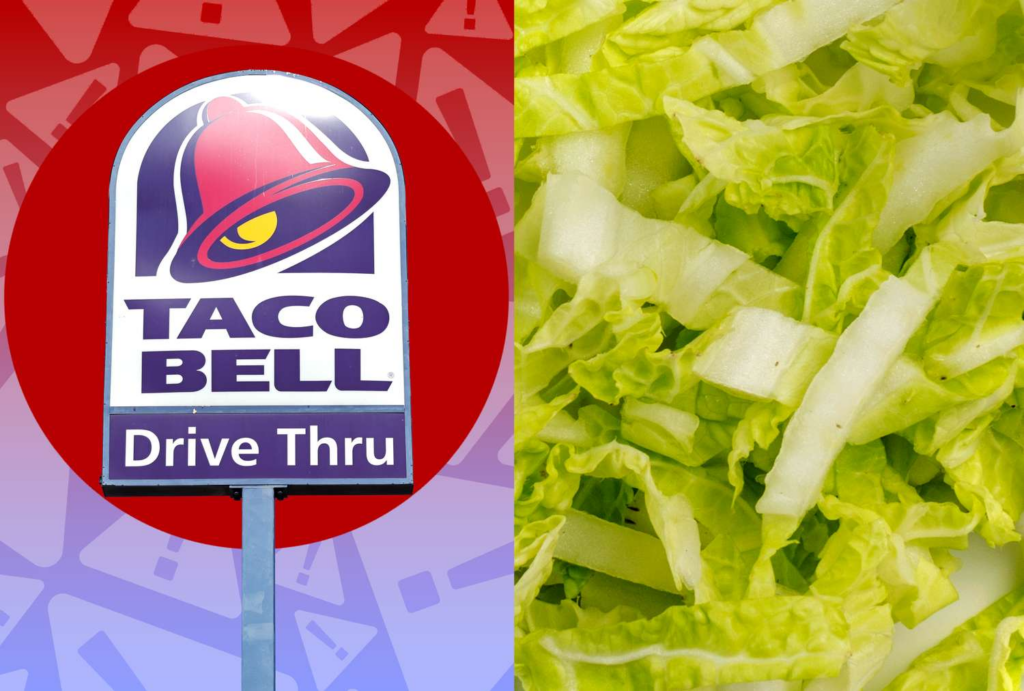
U.S. health officials have traced a multistate Cyclospora outbreak that sickened more than 1,600 people to shredded iceberg lettuce served at select Taco Bell restaurants, according to findings from the U.S. Food and Drug Administration (FDA).
The investigation identified a single supplier in Mexico as the source of the contaminated lettuce, marking one of the largest foodborne parasite outbreaks in the United States in recent years. While no deaths have been reported, nearly 100 people have been hospitalised, underscoring the seriousness of the outbreak.
TL;DR
- The FDA linked a Cyclospora outbreak to shredded iceberg lettuce supplied to Taco Bell.
- More than 1,600 people have been infected across Indiana, Kentucky, Michigan, Ohio, and West Virginia.
- The contaminated lettuce was traced to one supplier in Mexico.
- The CDC has confirmed 1,644 cases and 94 hospitalisations.
- No deaths have been reported.
What Happened?
Federal investigators determined that shredded iceberg lettuce used in certain Taco Bell restaurants was contaminated with Cyclospora cayetanensis, a microscopic parasite that causes the intestinal illness cyclosporiasis.
According to the FDA, the contaminated lettuce originated from a single supplier in Mexico before being distributed to Taco Bell locations in five states:
- Indiana
- Kentucky
- Michigan
- Ohio
- West Virginia
The investigation involved tracing the lettuce supply chain after hundreds of customers reported gastrointestinal illness.
How Many People Have Been Affected?
The U.S. Centers for Disease Control and Prevention (CDC) has confirmed:
- 1,644 illnesses
- 94 hospitalizations
- No reported deaths
Health officials continue to monitor for additional cases, as Cyclospora infections can take days or even weeks to be diagnosed.
What Is Cyclospora?
Cyclospora is a parasite that infects the small intestine after people consume contaminated food or water.
Unlike bacteria such as Salmonella or E. coli, Cyclospora is a protozoan parasite. Fresh produce—including leafy greens, herbs, berries, and salad ingredients—is among the foods most commonly linked to outbreaks because the parasite can survive on raw produce that is not cooked before consumption.
The parasite does not spread directly from one person to another immediately after infection because it requires time outside the human body to become infectious.
What Are the Symptoms?
Symptoms typically appear about one week after exposure, although the incubation period can vary.
Common symptoms include:
- Frequent watery diarrhea
- Severe or “explosive” diarrhoea
- Stomach cramps
- Nausea
- Loss of appetite
- Fatigue
- Bloating
- Weight loss
- Low-grade fever
Without treatment, symptoms may persist for several weeks and can sometimes recur.
People with weakened immune systems may experience more severe illness.
How Is Cyclospora Treated?
Cyclospora infection is generally treated with prescription antibiotics, most commonly trimethoprim-sulfamethoxazole (TMP-SMX).
Patients are also advised to:
- Stay well hydrated.
- Replace lost electrolytes if diarrhea is severe.
- Seek medical attention if symptoms persist or worsen.
- Avoid preparing food for others while experiencing active diarrhea.
Anyone who recently ate at affected Taco Bell locations and develops prolonged diarrhea should contact a healthcare provider.
Why Fresh Lettuce Is Often Linked to Outbreaks
Fresh leafy vegetables can become contaminated at several points before reaching consumers.
Possible sources include:
- Contaminated irrigation water
- Poor sanitation during harvesting
- Cross-contamination during processing
- Unsanitary handling during packaging or transportation
Because lettuce is typically eaten raw, washing may reduce—but does not always eliminate—the risk of contamination.
Food safety experts emphasize the importance of strong agricultural hygiene practices throughout the supply chain.
What Happens Next?
The FDA and CDC are continuing to investigate the outbreak and assess whether additional food products or suppliers may be involved.
Public health officials typically use findings from such investigations to strengthen food safety protocols, improve traceability, and reduce the risk of future outbreaks involving imported produce.
Consumers are encouraged to stay informed through official public health updates and seek medical care if they experience symptoms consistent with Cyclospora infection after consuming potentially affected food.