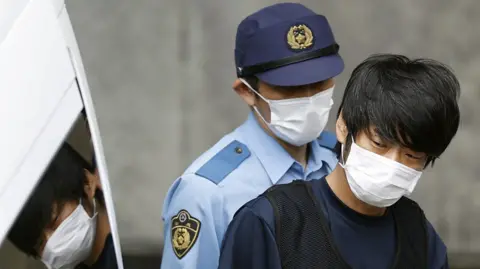
More than three years after the assassination of former Japanese prime minister Shinzo Abe stunned the world, a court in Nara has delivered its verdict. Tetsuya Yamagami, 45, was sentenced to life in prison on Wednesday for murder and violations of Japan’s firearms laws, closing one of the most closely watched criminal trials in modern Japanese history.
The ruling marks a legal endpoint to a case that reshaped Japanese politics, exposed long-hidden ties between lawmakers and a controversial religious group, and forced a national reckoning in a country where gun violence is extraordinarily rare.
What did the court decide?
A district court in Nara found Yamagami guilty of murdering Shinzo Abe during a campaign speech in July 2022 using a homemade firearm, an act prosecutors described as unprecedented in Japan’s post-war history.
The sentence
- Life imprisonment for murder
- Additional convictions for firearms violations under Japan’s strict gun laws
- Judicial agreement with prosecutors that the crime was carefully planned and premeditated
Judge Shinichi Tanaka handed down the sentence after months of testimony detailing how Yamagami built and tested the weapon over time. Although Yamagami admitted to the shooting when the trial opened, Japan’s legal system requires full proceedings regardless of confessions.
Public interest remained intense throughout. Long queues formed outside the courthouse as people sought limited seats inside, reflecting how deeply the case continues to resonate across the country.
Why did Yamagami kill Shinzo Abe?
The central issue at trial was not whether Yamagami fired the fatal shots, but why he chose Abe as his target.
The Unification Church connection
Prosecutors argued that Yamagami’s motive was rooted in anger toward the Unification Church, a controversial religious group founded in South Korea in 1954.
According to court testimony:
- Yamagami believed the Church financially ruined his family
- His mother reportedly donated around 100 million yen, roughly $1 million at the time
- He believed influential Japanese politicians were helping the Church gain legitimacy and political protection
Shinzo Abe’s appearances at events linked to organizations associated with the Church convinced Yamagami that killing such a prominent figure would draw public attention to the group and provoke criticism.
How the assassination changed Japanese politics
The impact of Shinzo Abe’s killing extended far beyond the courtroom and into the heart of Japan’s political system.
Fallout within the ruling party
Subsequent investigations revealed extensive links between the Unification Church and lawmakers from the ruling Liberal Democratic Party.
As a result:
- Four cabinet ministers resigned
- Political parties conducted internal reviews of religious affiliations
- Public debate intensified around transparency and influence in government
How rare is gun violence in Japan?
The assassination shocked Japan precisely because it ran counter to everyday reality.
Japan’s gun laws in context
Japan maintains some of the strictest firearms regulations in the world:
- Civilian gun ownership is highly restricted
- Annual gun-related deaths are typically in single digits
- Homemade firearms are extremely rare and difficult to construct
Yamagami’s use of a homemade weapon exposed a vulnerability even in tightly regulated systems, highlighting the limits of gun control when improvised weapons are involved.
The defense argument and the court’s response
Yamagami’s lawyers urged the court to show leniency, describing a life shaped by hardship and trauma.
Defense claims
- A childhood marked by what they called religious abuse
- Family bankruptcy caused by church donations
- Abandoned higher education plans
- A suicide attempt in 2005
- The later suicide of his brother
The defense argued these experiences contributed to emotional distress and long-term instability.
Why the court rejected leniency
Prosecutors emphasized the scale of preparation involved:
- Weapon construction beginning around 2020
- Repeated test-firing in remote areas
- Careful selection of target, timing, and location
The court concluded that the level of planning demonstrated full criminal responsibility, regardless of Yamagami’s personal history.
Why this case still matters
Even with a life sentence imposed, the Shinzo Abe assassination remains a defining moment for Japan.
Its broader implications include heightened security for political campaigns, increased scrutiny of religious organizations’ political access, and renewed public demands for transparency in governance.
The case also carries lessons for other democracies about how personal grievance, political symbolism, and extremism can intersect with devastating consequences.
TL;DR
- Japan sentenced Tetsuya Yamagami to life in prison for assassinating Shinzo Abe
- Prosecutors said the motive was to expose the Unification Church, not Abe’s policies
- The killing revealed political links to the Church and led to cabinet resignations
- The case reshaped debates on political transparency, security, and religious influence