
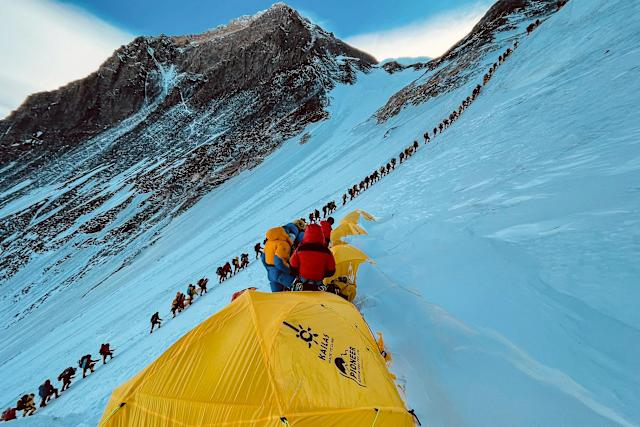
The 2026 climbing season on Mount Everest has opened under an unusual cloud. While thousands of climbers and trekkers continue to arrive in Nepal for one of the world’s most iconic adventures, authorities are grappling with a sprawling $20 million insurance fraud scheme tied to fake helicopter rescues.
At the center of the controversy is a coordinated network—allegedly involving guides, travel operators, helicopter companies, and even medical personnel—accused of manipulating rescue systems designed to save lives in extreme conditions.
This isn’t just a story about fraud. It raises deeper questions about the commercialization of high-altitude tourism, weak oversight, and how safety systems can be exploited when money enters the equation.
What is the Mount Everest insurance scam?
The Mount Everest insurance scam refers to a multi-year fraud operation in Nepal where fake medical emergencies were created, or exaggerated to trigger costly helicopter evacuations reimbursed by international insurers.
Between 2022 and 2025, Nepal Police recorded:
- Over 300 fake helicopter rescues
- Nearly $20 million in fraudulent insurance claims
- 33 criminal cases, including organized crime charges
How the scam worked
Authorities say the scheme followed a repeatable playbook:
- Target tourists and climbers
Foreign trekkers—often unfamiliar with altitude symptoms—were persuaded they were seriously ill. - Induce or exaggerate sickness
In some cases, individuals were reportedly encouraged to claim symptoms like altitude sickness even when not medically necessary. - Trigger emergency evacuation
Helicopters were dispatched under the guise of urgent rescue. - Submit inflated or fake documentation
Operators allegedly filed falsified documents:- Medical reports
- Flight manifests
- Hospital invoices
- Collect insurance payouts
Claims were submitted to global insurers, who paid out large sums, assuming the emergencies were legitimate.
This structure turned what should be a last-resort lifesaving service into a profit-generating system.
Why helicopter rescues are so easy to exploit
Helicopter evacuations in the Himalayas are both essential and expensive. In many cases, they are the only viable way to transport sick or injured climbers from remote high-altitude regions to hospitals in Kathmandu.
The reality of Everest rescues
- Limited road access in mountainous terrain
- Sparse medical infrastructure at altitude
- Harsh weather and unpredictable conditions
- High risk of altitude-related illnesses like AMS (Acute Mountain Sickness)
Because of these risks, Nepal requires climbers to carry insurance that covers helicopter evacuation before issuing permits.
Where the system breaks down
The fraud exploited several structural weaknesses:
- Trust-based documentation
Insurers often rely on paperwork submitted by local operators. - Lack of real-time verification
No universal system exists to confirm whether a rescue was medically necessary. - High reimbursement amounts
Evacuations can cost thousands of dollars per flight, creating strong financial incentives. - Information asymmetry
Foreign climbers often depend entirely on local guides for medical advice.
This combination created an environment where abuse could go undetected for years.
What authorities have uncovered so far
Nepal’s Central Investigation Bureau has taken significant steps in recent months.
Key findings from the investigation
- Six arrests linked to travel and rescue companies
- Evidence of systematic falsification of rescue records
- Multiple companies implicated in large-scale fraud
Breakdown of alleged fraudulent activity:
- One company:
- 171 fake rescues out of 1,248 claims
- Over $10 million in payouts
- Second company:
- 75 fake rescues
- Around $8 million claimed
- Third company:
- 71 fake rescues
- Over $1 million collected
These numbers suggest the scam was not isolated but industrial in scale.
Why this matters for climbers and insurers
The Mount Everest insurance scam has implications far beyond Nepal.
For climbers
- Increased insurance premiums
Insurers may raise prices to offset losses. - Stricter claim scrutiny
Legitimate rescue claims could face delays. - Erosion of trust
Travelers may become more cautious about local operators.
For insurers
- Financial losses
Millions already paid out in fraudulent claims. - Policy redesign
Companies may introduce:- Mandatory second medical opinions
- GPS tracking verification
- Approved rescue provider networks
For Nepal’s tourism industry
Tourism is a major economic pillar for Nepal. Incidents like this risk:
- Damaging international credibility
- Reducing traveler confidence
- Inviting stricter global oversight
Is Everest becoming too commercialized?
The scandal also feeds into a broader debate: has Everest tourism become too commercial?
Signs of over-commercialization
- Increasing number of climbers each season
- Heavy reliance on guiding companies
- Financial pressure on operators to maximize revenue
- Growing infrastructure around base camps
While commercialization has made Everest accessible to more people, it has also introduced profit-driven behavior into a high-risk environment.
What reforms could prevent future scams?
Experts suggest several measures to reduce fraud and restore trust.
Potential solutions
- Independent medical verification
Third-party doctors to confirm the necessity of the evacuation - Digital tracking systems
Real-time logging of helicopter movements and rescue cases - Centralized rescue database
Shared between insurers and the Nepal authorities - Stronger regulation of operators
Licensing, audits, and penalties for violations - Climber awareness programs
Educating tourists about genuine altitude sickness symptoms
The bigger picture: Safety vs. profit
At its core, the Mount Everest insurance scam highlights a tension between safety systems and financial incentives.
Helicopter rescues exist to save lives in one of the world’s most dangerous environments. When those systems are misused, the consequences extend beyond financial loss—they risk undermining trust in emergency response itself.
As Nepal moves forward with the 2026 climbing season, the challenge is clear: preserve the integrity of rescue operations while maintaining the accessibility that has made Everest a global symbol of adventure.
TL;DR
- Nepal uncovered a $20 million insurance fraud linked to fake Everest rescues
- Over 300 fraudulent evacuations were staged between 2022 and 2025
- A network of operators allegedly induced or exaggerated illness
- Insurers paid millions based on falsified documents
- The scandal may lead to stricter rules, higher premiums, and industry reforms