


What triggered Nepal’s latest political crisis?
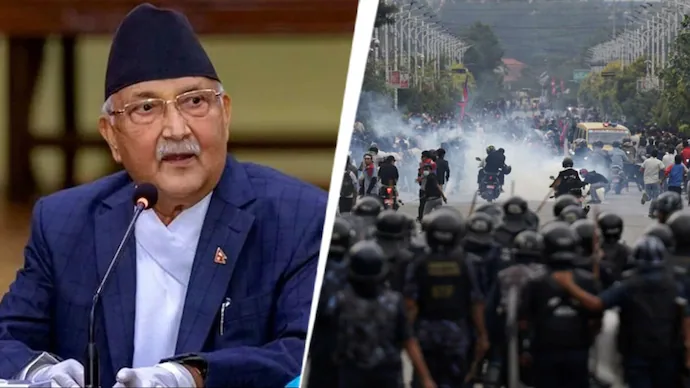
Nepal is in the grip of its most significant political upheaval in recent years, with finance minister chased by a mob on the street. On Tuesday, September 9, Prime Minister KP Sharma Oli resigned after weeks of mounting protests, violent clashes, and public outrage over corruption and restrictions on free expression.
The flashpoint was the Oli government’s decision to block major social media platforms such as Facebook, Instagram, and WhatsApp. Officials argued the ban was meant to curb misinformation and unregistered platforms, but for a digitally active population—especially the Gen Z demographic—the move was seen as an attack on free speech.
Even though the government reversed the ban on September 8, anger had already spread across the country. What began as youth-led demonstrations quickly escalated into widespread riots, arson attacks, and the collapse of the ruling coalition.
Finance minister chased and beaten on the street
A shocking video circulating online shows Finance Minister Bishnu Prasad Paudel running for his life while being chased by dozens of protesters. In the clip, demonstrators can be seen kicking and beating him as he attempted to escape.
The attack occurred just hours after Oli tendered his resignation. Protesters accused Paudel, a key figure in Oli’s cabinet, of enabling corruption and failing to address economic challenges while attempting to restrict civil liberties.
Such direct assaults on top government officials highlight both the rage and desperation felt by ordinary Nepalis. Analysts warn that it also underscores the collapse of state authority in the face of youth-led mobilization.
How the Gen Z movement took center stage
Unlike past political uprisings in Nepal, this protest wave has been driven primarily by young Nepalis—many born after the 2006 democratic revolution. Dubbed the “Gen Z protests,” demonstrations have been fueled by frustration over unemployment, lack of accountability, and a widening disconnect between the political elite and ordinary citizens.
Key characteristics of the movement include:
- Digital-first organizing: Despite the social media ban, young Nepalis used VPNs, Telegram, and offline networks to coordinate marches.
- Anti-establishment sentiment: From chanting against corruption to calling for a new generation of leadership, slogans have rejected traditional political parties.
- Emerging leaders: Figures like rapper-turned-mayor Balen Shah are gaining traction as symbols of the change Gen Z wants to see in governance.
The toll of the protests so far
The protests have come at a heavy cost. According to local reports:
- At least 19 people have been killed in clashes across Kathmandu, Pokhara, Itahari, and other cities.
- Over 200 protesters and security personnel have been injured.
- Government buildings, ministerial residences, and party offices have been torched by angry crowds.
- Hospitals are overwhelmed, with emergency wards in Kathmandu struggling to treat the influx of casualties.
Curfews remain in place in several districts, while the army has been deployed to restore order.
Why Oli resigned and what comes next
Facing both violent unrest and the collapse of his cabinet—at least four ministers resigned alongside him—Prime Minister KP Oli stepped down on Tuesday. Shortly after, he was seen leaving his residence in an army helicopter, signaling security concerns for the former leader.
While protesters celebrated his resignation, the bigger question looms: what next for Nepal?
- Leadership vacuum: Oli’s exit leaves uncertainty about who will lead the next government. Rival factions within the ruling coalition are scrambling for influence.
- Youth demands: Protesters are calling for fresh elections, new leadership, and systemic reforms to address corruption and economic stagnation.
- Rising stars: The popularity of independent leaders like Balen Shah could reshape Nepal’s political landscape if the movement translates into formal power.
Why this crisis matters beyond Nepal
Nepal’s turmoil comes at a time when South Asia is already grappling with political instability and economic uncertainty. For international observers, the crisis is significant because:
- Regional security risks: Prolonged unrest in Nepal could spill over into border tensions with India and China, both of which have deep political stakes in the country.
- Democratic backsliding concerns: The attempt to silence dissent by banning social media is part of a wider global trend, raising alarms about freedom of expression in fragile democracies.
- Youth-led movements: Similar to recent uprisings in Sri Lanka and Hong Kong, Nepal’s Gen Z protests signal the rising power of younger generations in shaping political outcomes.
TL;DR
Nepal’s KP Sharma Oli government has collapsed following mass youth-led protests over corruption and a controversial social media ban. Finance Minister Bishnu Prasad Paudel was physically attacked by demonstrators in Kathmandu, underscoring the depth of public rage. With at least 19 dead, 200 injured, and curfews imposed across major cities, Nepal now faces a leadership vacuum. Protesters, led by Gen Z activists, demand accountability and new leadership, signaling a potential shift in the country’s political trajectory.