
Why did KP Sharma Oli resign?
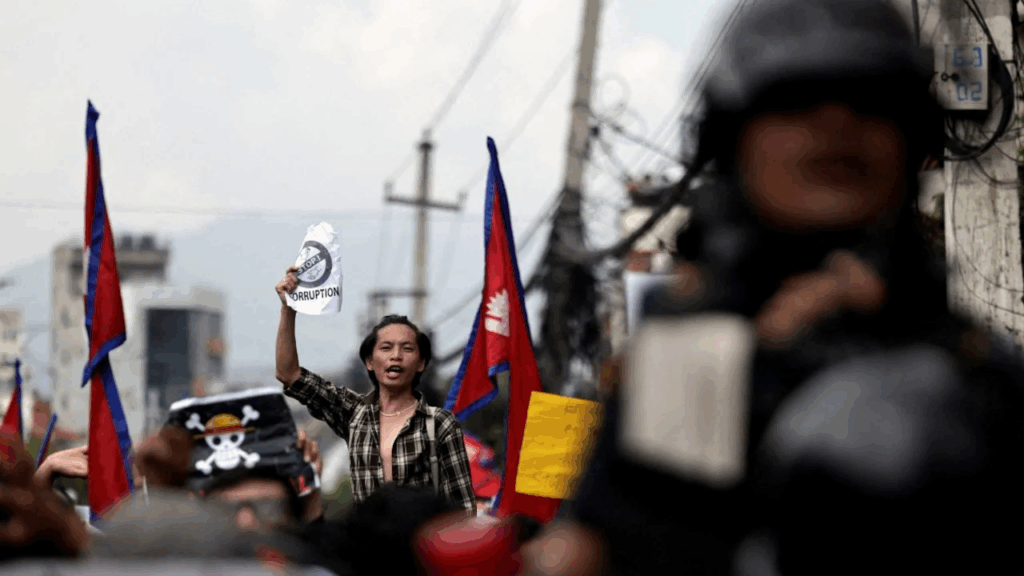
Nepalese Prime Minister KP Sharma Oli stepped down on Tuesday following weeks of unrest fueled by corruption allegations and his government’s decision to ban popular social media apps. The decision, although later revoked, became a rallying cry for young Nepalis, particularly Gen Z, who organized large-scale protests demanding accountability.
According to local reports, Oli’s resignation came after Nepal’s army chief advised him to step down to prevent further escalation of violence. His departure marks one of the most significant political shakeups in Nepal since the monarchy was abolished in 2008.
What triggered the protests?
The immediate spark was the government’s attempt to ban major social media platforms such as Facebook, TikTok, and Instagram, citing “national security concerns.” For a country where digital platforms are central to youth activism, education, and business, the ban was seen as an attack on personal freedom.
The protests quickly expanded into broader demands:
- Corruption allegations: Protesters accused Oli’s government of misusing state funds and engaging in nepotism.
- Police violence: At least 19 people were killed during clashes between security forces and demonstrators.
- Generational divide: Nepal’s young population—nearly 40% are under 25—felt ignored by an aging political elite.
How did the protests escalate?
Initially peaceful marches turned violent after security forces attempted to break up gatherings outside government offices. Protesters set fire to ruling party buildings, stormed barricades around Parliament, and even surrounded the residences of top political leaders, including Oli and the President.
Amid the chaos, rumors circulated that Oli was preparing to flee the country. His resignation was seen as a last-ditch effort to prevent further instability.
What did KP Sharma Oli say in his resignation statement?
On Monday night, KP Sharma Oli released a lengthy statement acknowledging the loss of life during protests. He expressed regret but defended his government’s actions, insisting they never intended to silence social media.
“We expected peaceful demonstrations, not violence,” Oli said, while warning of legal action against those who “crossed the line.”
The statement did little to calm public anger, as many accused him of downplaying the severity of the crisis.
Why does this matter for Nepal’s future?
The rise of Gen-Z activism
This is the first time Nepal’s Gen-Z has forced a sitting prime minister out of office. With social media at the core of their movement, young people organized, mobilized, and amplified their demands faster than traditional political groups.
Fragility of Nepal’s democracy
Nepal transitioned to a federal democratic republic in 2008 after a decade-long civil war. But repeated political instability—12 prime ministers in 17 years—has weakened public faith in governance. Oli’s fall highlights how volatile the system remains.
Geopolitical implications
Nepal is strategically located between India and China. KP Sharma Oli, considered closer to Beijing, often clashed with New Delhi over border disputes. His resignation could shift Nepal’s foreign policy balance depending on who succeeds him.
Who will replace KP Sharma Oli?
As of now, Nepal’s Parliament has not announced a successor. Possibilities include:
- A caretaker prime minister until fresh elections are held.
- A coalition government led by opposition parties.
- A military-backed interim setup if political consensus fails.
The outcome will determine whether the country leans toward stability or plunges into deeper turmoil.
What lessons can be drawn?
- Digital bans are risky in a young democracy
Restricting social media backfired spectacularly. Instead of weakening dissent, it galvanized a digitally literate generation to take to the streets. - Generational change is inevitable
Nepal’s ruling elite has long been dominated by older politicians. Gen-Z’s success in forcing a resignation signals a shift in power dynamics. - Corruption is the root cause of unrest
While the social media ban was the spark, deep-rooted anger over corruption and lack of opportunity is what fueled the protests.
What comes next?
Nepal faces an uncertain road ahead. If the political vacuum is mishandled, the risk of prolonged unrest looms large. But if a new leadership emerges that acknowledges the demands of young citizens and strengthens democratic institutions, the crisis could mark a turning point in Nepal’s modern history.