
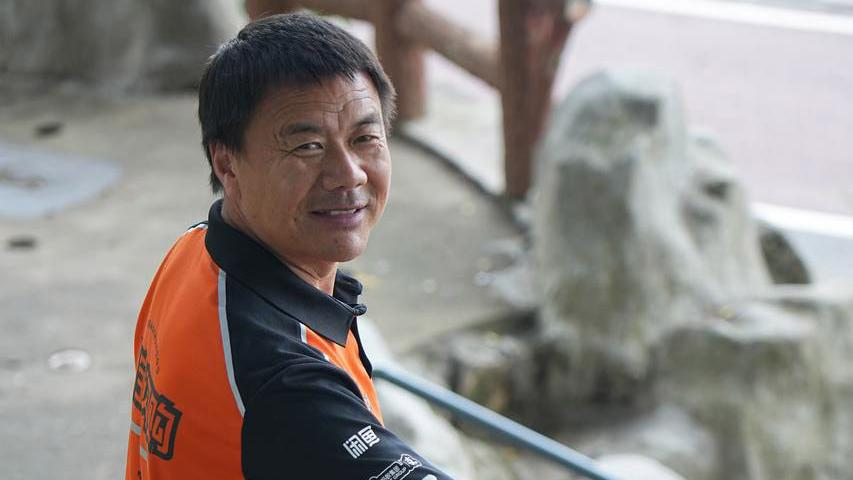
A Chinese food delivery rider who transformed the challenges of daily deliveries into poetry has won one of China’s highest literary honors, drawing national attention to the voices of gig economy workers.
Wang Jibing, a 56-year-old delivery rider from Jiangsu province, received the prestigious Lu Xun Literary Prize for his poetry collection Low Flight, a work that captures the resilience, struggles, and aspirations of people working in China’s rapidly expanding gig economy.
Named after renowned Chinese writer Lu Xun, the award is among the country’s most respected literary recognitions. Wang’s achievement marks an extraordinary journey from blue-collar jobs to the highest levels of Chinese literature.
Who Is Wang Jibing?
Wang Jibing is a Chinese poet and food delivery rider whose writing has become widely recognized for portraying the everyday realities of ordinary workers.
Born in Jiangsu province, Wang left school as a teenager because of financial hardship. Over the years, he worked in construction, collected recyclable materials, and sold goods at street markets before becoming a food delivery rider around 2019.
Despite demanding work schedules, he continued writing poems and essays, often recording ideas while waiting for delivery orders.
His work gradually found an audience online, eventually leading to national literary recognition.
What Is the Lu Xun Literary Prize?
The Lu Xun Literary Prize is one of China’s highest literary awards.
Named after Lu Xun, widely regarded as the father of modern Chinese literature, the prize recognizes outstanding achievements in fiction, poetry, essays, literary criticism, and translation.
Receiving the award places Wang among some of China’s most celebrated contemporary writers.
What Is Low Flight About?
Wang received the prize for his poetry collection Low Flight, published in 2024.
The collection draws inspiration from conversations and interviews with approximately 200 fellow food delivery riders and reflects the emotional and practical realities of gig work.
Its poems explore themes including:
- Hard work and perseverance.
- Financial uncertainty.
- Human dignity.
- Urban life.
- Hope amid adversity.
The title itself symbolizes finding meaning and purpose even when life does not reach extraordinary heights.
One of the collection’s best-known lines reads:
“Who says spreading your wings means flying high? Flying low is also flying.”
The poem emphasizes that achievement and fulfillment can take many forms.
From Viral Poem to National Recognition
Wang first gained widespread attention in 2022 after his poem Man in a Hurry went viral on Chinese social media.
The poem was inspired by a frustrating delivery in which he spent hours searching for a customer because of an incorrect address.
Its popularity led to the publication of his first poetry collection, Man in a Hurry: Poems of a Food Delivery Rider, in 2023.
His latest collection, Low Flight, has now earned him one of China’s most prestigious literary awards.
Writing Between Deliveries
One of the most remarkable aspects of Wang’s journey is how he balanced literature with physically demanding work.
According to interviews, he frequently wrote ideas on scraps of paper or his phone while waiting for orders between deliveries.
Speaking after receiving the award, Wang said he felt extremely nervous while awaiting the results before finally learning that he had won.
Despite the recognition, he has said he intends to continue working as a delivery rider because he enjoys both the work and the lifestyle.
Why Wang’s Story Resonates
Wang’s success reflects a broader movement in contemporary Chinese literature that highlights the experiences of ordinary workers.
Rather than focusing on celebrities or public figures, many recent works have explored the lives of:
- Delivery riders.
- Migrant workers.
- Factory employees.
- Couriers.
- Street vendors.
These stories have found large audiences because they portray the realities of modern urban life from the perspective of people who keep cities functioning every day.
Literature and China’s Gig Economy
China’s gig economy has expanded rapidly in recent years, employing millions of workers in food delivery, ride-hailing, logistics, and e-commerce services.
The demanding nature of these jobs has inspired a growing body of literature documenting workers’ experiences, challenges, and aspirations.
Wang’s poetry is part of this broader literary trend, giving voice to workers whose stories are often overlooked.
Other notable examples include Hu Anyan’s memoir I Deliver Parcels in Beijing and Fan Yusu’s autobiographical essay I Am Fan Yusu, both of which received widespread public attention for depicting the lives of working-class Chinese citizens.
Why This Award Matters
Wang’s victory demonstrates that literary excellence can emerge from everyday life and unexpected places.
His work highlights how personal experiences, when expressed through thoughtful writing, can resonate with readers across social and economic backgrounds.
By honoring a delivery rider with one of its highest literary awards, the Lu Xun Literary Prize also reflects growing recognition of stories rooted in the experiences of ordinary working people.
The Bottom Line
Wang Jibing’s journey from food delivery rider to recipient of the Lu Xun Literary Prize is a remarkable example of how creativity can flourish alongside everyday work. His award-winning collection, Low Flight, offers a moving portrait of China’s gig economy while celebrating resilience, dignity, and hope.
Although his writing has earned national acclaim, Wang says he has no intention of leaving his delivery job, choosing instead to remain connected to the life and people who inspire his poetry.
TL;DR
- Chinese food delivery rider Wang Jibing has won the Lu Xun Literary Prize.
- He received the award for his poetry collection Low Flight.
- The poems draw on the experiences of food delivery workers across China.
- Wang began writing while working as a delivery rider, often between orders.
- Despite the recognition, he says he plans to continue working as a delivery rider until age 60.