
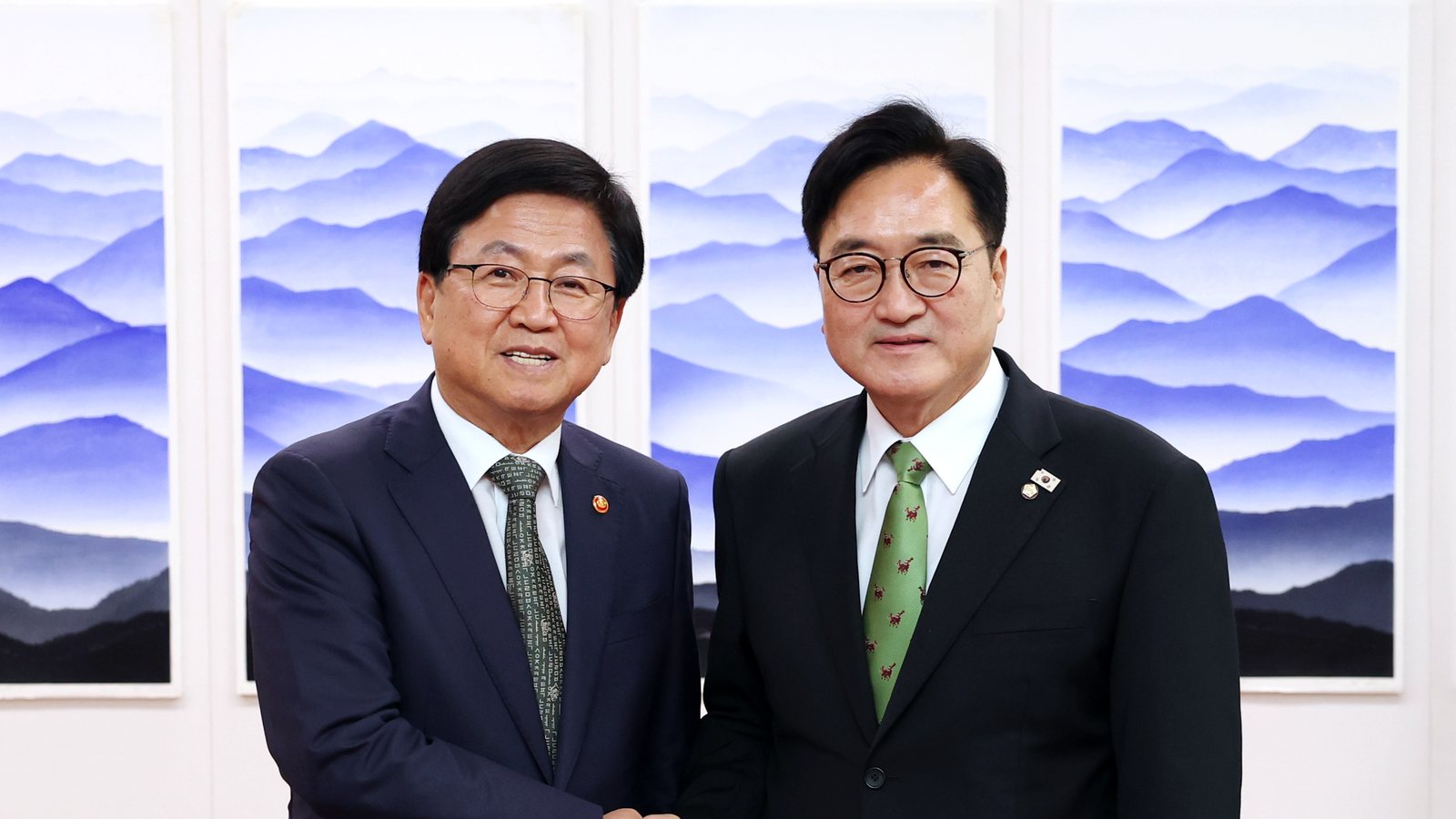

South Korea’s education minister, Choi Kyo-jin, resigned on Sunday, Nov. 22. The college entrance exam he oversaw, run under emergency anti-cheating rules, had ended three days earlier. “Now that the exam is over, I take full responsibility and hereby offer my resignation,” he said, AFP reported. President Lee Jae Myung accepted it.
The exam itself produced 111 cases of banned electronic devices, the Education Ministry said on Nov. 20. On Monday, Nov. 23, the reward for reporting a cheat rose to as much as 500 million won, about $370,000.
What the 111 cases are, and what they are not
The College Scholastic Ability Test, known as the Suneung, ran on Thursday, Nov. 19. Of 551,864 registered candidates, 497,526 sat it, according to the ministry’s exam-day briefing.
The government had fired three nationwide emergency alerts during the day, at 8:30 a.m., 2:21 p.m. and 2:57 p.m. These top-level alerts ring even on silent. Any phone a candidate had not handed in gave itself away. Our exam-day explainer covers the full set of checks, from glasses inspections to stickers on shirt buttons.
Here is the final tally, from ministry figures reported by NewsEdu:
- 54 devices exposed by the three alerts (31, 11 and 12)
- 52 found by other means, such as proctors’ checks and Wi-Fi signal detection
- 5 candidates caught actually using a device during the test
The interim count on exam night was 98. Reports from the final period and further checks added 13 more by the next morning.
The ministry described the five cases of real use on Nov. 19. One candidate wore smart glasses, and one had a tiny camera with a wireless earphone. One photographed the question paper with a smartphone, and two used phones in a restroom. Everyone else on the list was carrying a banned device. Under the rules, that counts as cheating even if it stayed switched off.
No AI cheating has been confirmed so far
That distinction matters, because AI fears drove the whole crackdown. It followed the confession of Han Won-seok, the top scorer in the national tax accountant exam. On Nov. 15 he admitted photographing questions with a miniature camera. He then checked AI-generated answers on a smartphone.
So far, officials have not publicly tied any of the 111 Suneung cases to AI. The ministry has not said what the camera or smart-glasses users did with the images. Lee has said AI companies would hand over user records of photographed exam questions, TIME reported. No company has commented publicly.
What the alerts did show is how many students still carry phones in. Last year’s exam produced 84 device cases, by YTN’s count of ministry data. This year’s 111 is a rise of about a third. The alert is the obvious difference. Nearly half of this year’s total, 54 cases, came from phones that rang in a bag or a pocket.
A minister who said he could not catch cheats
Choi’s position had weakened before exam day. The government unveiled the measures on Tuesday, Nov. 17, two days before the test. Students, parents and opposition parties asked for a postponement. Test-Takers’ Solidarity, a student group, called the last-minute changes a “dereliction of duty,” TIME reported.
At a parliamentary hearing, Choi had said he was not confident authorities could catch every cheat. “Due to my age, I am not confident I could,” he said, according to AFP. Resigning, he said he was not “immune from public criticism that we failed to prepare adequately in advance.”
Lee has put Prime Minister Han Seong-sook in charge of follow-up and called for a “sweeping overhaul” of national exams.
Bigger bounties, and a 10-year ban still on paper
The new reward comes from the Anti-Corruption and Civil Rights Commission. It pays 100 million won for each cheat a tip exposes, up to a legal cap of 500 million won, Yonhap reported. On exam day the cap had been 100 million won. Candidates who confess and name accomplices can collect the reward and get a lighter penalty. The reporting window runs to Jan. 19.
The bounty aims at what proctors missed, which is the gap that worries teachers most. As with managers who suspect AI help at work, suspicion is easy and proof is hard.
The penalty is less settled than the headlines suggest. The government says it will seek legislation for a ban of up to 10 years. The rule in force on Nov. 19 voids the score and bars the candidate from next year’s exam only.
A review committee at the Korea Institute of Curriculum and Evaluation now sets a penalty for each of the 111 cases. It has to finish, appeals included, before scores go out on Dec. 11.