
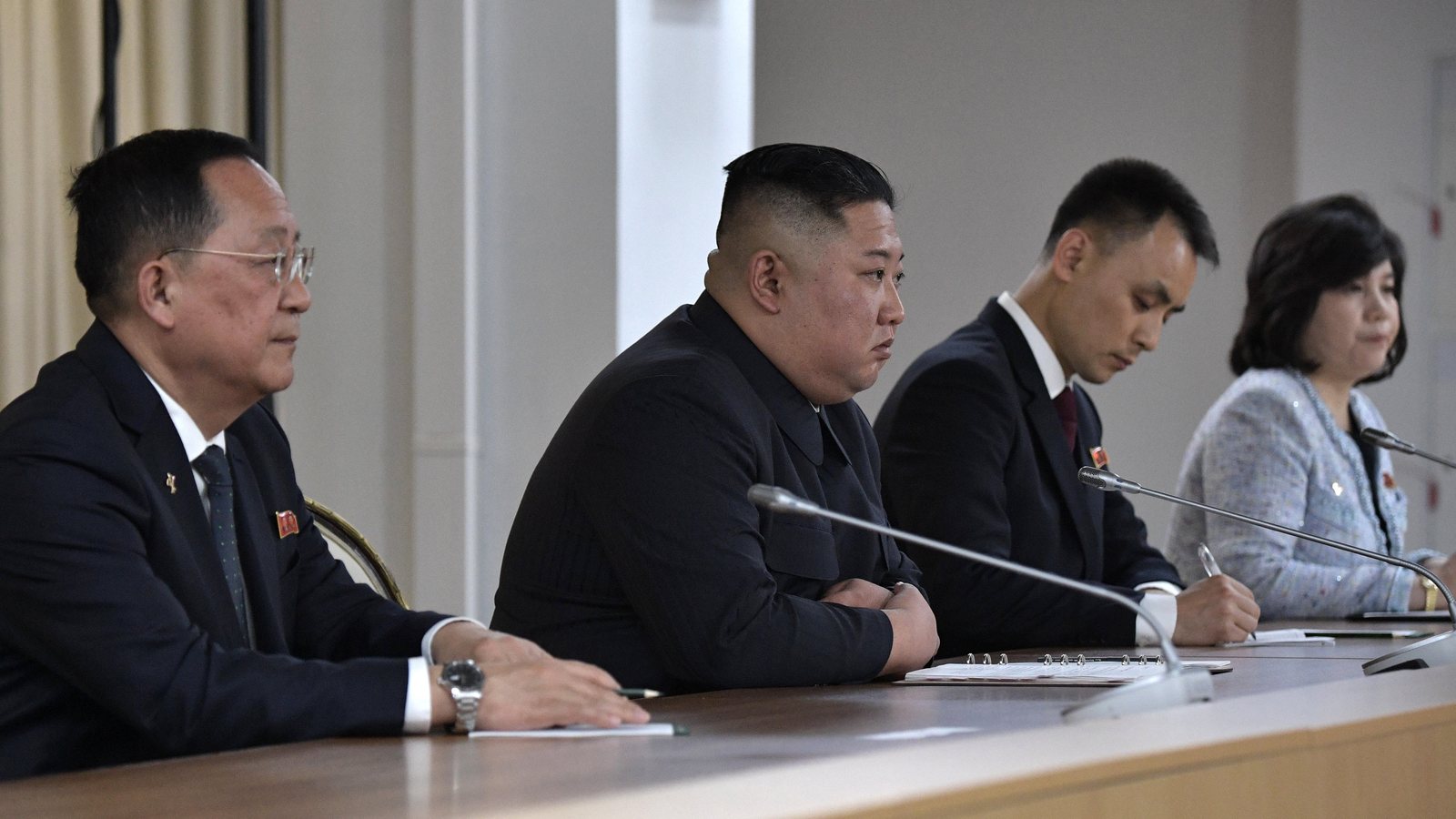

Kim Jong Un accepted the credentials of 10 newly arrived ambassadors in person on Sunday, Nov. 22, at the Workers’ Party headquarters in Pyongyang. It is the first time he has done so in nearly 15 years in power. The envoys came from Russia, Sweden, Indonesia, Vietnam, Brazil, the Czech Republic, India, the Philippines, Thailand and Bangladesh.
Much of the coverage says no North Korean leader had done this in more than 30 years. That figure comes from Russia’s state news agency TASS. It holds up, but it needs an attribution and a little arithmetic.
What is actually new, and who says so
Two firsts are bundled together here. They come from different sources.
The first is about Kim himself. NK News reported that he “personally accepted the credentials of newly appointed ambassadors for the first time.” Since 2019, letters of credence have been addressed to him, but a deputy took them. In November 2024, Choe Ryong Hae accepted the papers of Sweden’s returning ambassador for Kim, the Korea Times reported.
The second is historical. TASS wrote that the ceremony took place for the first time in more than 30 years. The Russian Embassy in Pyongyang reposted that report on its Telegram channel the same day.
The embassy’s own post about its new ambassador, Andrei Podelyshev, makes no such claim. Yonhap repeated the figure attributed only to “reports”.
The arithmetic supports TASS. Kim’s grandfather Kim Il Sung, the country’s founder, received ambassadors himself, and he died in July 1994. Under Kim Jong Il, the job passed to the head of the parliament’s standing body. That puts the gap at 32 years or more, so some Korean outlets’ “almost 30 years” undersells it.
A constitution rewritten in March made it his job
This was a legal change before it was a ceremony. At a session of the Supreme People’s Assembly on March 22 and 23, North Korea revised its constitution. Article 90 now gives the chairman of the State Affairs Commission, Kim’s title, the power to receive foreign envoys’ credentials. That power used to sit with the chairman of the assembly’s standing committee.
The same revision recast the commission chairman as head of state. According to 38 North, it also wrote in his direct command of the nuclear arsenal.
Sunday was the first time Kim used the new power. South Korea’s unification ministry read it the obvious way. “We assess that this displays Kim’s standing as head of state in and out of the country,” spokesperson Yoon Min-ho said on Monday, per Yonhap.
The guest list makes the same point. The Philippines and Thailand are US treaty allies. Sweden and the Czech Republic are NATO members. Pyongyang is showing that it still has working diplomatic relations well beyond Moscow and Beijing.
Kim used the moment to defend his arsenal
Kim posed for a photo with each envoy and then gave a speech. Foreign Minister Choe Son Hui was at his side. State media’s account of it was a foreign-policy statement more than a welcome.
“The DPRK neither pursues supremacy nor expansion,” he said, according to KCNA. “High-handedness and pressure have nothing to do with the foreign policy of the DPRK.” He said the situation in East Asia “urgently demand[s] that we provide for ourselves the power and capability” to stay secure. He offered closer ties to “all other countries that respect the sovereignty of our state and are friendly towards us.”
Seoul’s ministry called the defence passages a restatement of old positions, not a change in policy. That reading looks right. Kim announced no limits on weapons work. And the line about respecting sovereignty carries his usual condition for anyone hoping to discuss his nuclear programme.
The American angle runs through Sweden and Shenzhen
Washington has no embassy in Pyongyang. Sweden acts as the US protecting power there. Its embassy gives Americans limited consular help, according to the State Department. The new Swedish ambassador is now accredited directly to Kim, which is the channel any detained American would depend on.
The timing matters too.
The ceremony was Kim’s first diplomatic appearance since Donald Trump, Xi Jinping and Vladimir Putin met in Shenzhen on Nov. 19 and issued a joint peace declaration. Trump had said he might meet Kim in China that week, while APEC security was tight enough that Shenzhen offered a household money to move out. No meeting happened.
The Wall Street Journal reported on Saturday that Trump’s attempts to reach Kim since last year went unanswered. It said Kim set conditions for a meeting in China that Washington could not accept. A Trump letter handed to a North Korean diplomat at the UN came back unopened, according to a summary of the report. A Trump administration official denied that any effort was made to arrange a meeting, UPI reported.
Pyongyang’s message is that Kim deals with the world as a head of state, on his own terms. He sent it three days after a summit that put the Korean Peninsula on the agenda without him.
Trump told NBC News he and Kim would meet “at some point”. Kim reportedly wants Washington to accept North Korea as a nuclear power first. The next signal to watch is whether either side moves on that condition.