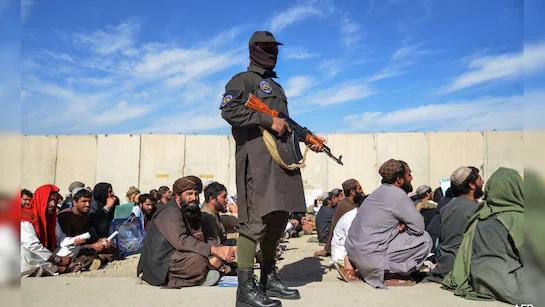
Taliban rule in Afghanistan has taken a darker legal turn with the introduction of a new Criminal Procedure Code that formally embeds social hierarchy or slavery into the justice system. The law, signed by Taliban supreme leader Hibatullah Akhundzada earlier this month, restructures criminal accountability around class and religious status rather than the nature of the crime itself.
Human rights organizations say the code effectively legalizes discrimination, grants near-immunity to religious clerics, and revives concepts resembling slavery, all while dismantling basic protections such as the right to legal defense. The changes mark one of the most explicit breaks yet between Afghanistan’s legal system and international norms.
What is the Taliban’s new criminal procedure code?
The new law, issued on January 4, 2026, spans 119 articles across three sections and ten chapters. Copies of the document were circulated to courts nationwide and later obtained by Rawadari, an Afghan human rights organization that monitors legal and institutional abuses under Taliban rule.
While the Taliban has framed the code as an effort to align justice with its interpretation of Islamic law, legal experts say it does something far more radical. It redefines justice itself as a function of social rank.
A justice system built on hierarchy
At the heart of the controversy is Article 9, which formally divides Afghan society into four classes:
- Religious scholars or clerics, commonly referred to as mullahs or ulama
- The elite class, described as the ashraf
- The middle class
- The lower class
Under this framework, people accused of committing the same crime can face entirely different consequences based solely on where they fall in this hierarchy.
This is a sharp departure from modern criminal law, where punishment is typically linked to the severity of the offense and the individual’s conduct, not their social standing.
How punishments differ by social status
The practical implications of the new law are stark.
Clerics receive advice, not punishment
If a religious scholar commits a crime, the prescribed response under the code is limited to advice. There is no requirement for detention, trial, or formal punishment.
For members of the elite class, the consequences are only slightly more severe. They may be summoned to court and advised but not imprisoned for the same offence that could land others behind bars.
Harsher penalties for ordinary Afghans
Those categorized as middle class face imprisonment for offenses that would draw only a warning for clerics. For individuals designated as lower class, the punishment escalates further, combining imprisonment with corporal punishment.
Human rights groups argue that this structure institutionalises inequality and places clerics and loyal elites effectively above the law.
Rawadari described the system as “a legally codified hierarchy of privilege” that destroys any notion of equality before the law.
Does the new law legalize slavery?
One of the most disturbing aspects of the code is its repeated distinction between “free” persons and “slaves”.
Language that revives a banned practice
Several articles explicitly reference enslaved individuals as a legal category, including in sections dealing with punishment and legal responsibility. Human rights advocates say this amounts to the legal recognition of slavery, a practice that is absolutely prohibited under international law.
Slavery is banned under peremptory norms of international law, meaning no state can lawfully permit it under any circumstances. Yet the Taliban’s code treats enslavement as a normal and regulated social condition.
Legal scholars note that even regimes with harsh interpretations of religious law have typically avoided codifying such distinctions in modern legal texts. By doing so, the Taliban is signaling a rejection of global legal standards and human rights conventions.
Why this law represents a major break from modern justice
Beyond hierarchy and slavery-related language, the new code dismantles fundamental principles that underpin criminal justice systems worldwide.
Punishment no longer matches the crime
Under the Taliban’s framework, the seriousness of an offence becomes secondary. Social rank is the primary factor in determining outcomes.
This undermines the idea of proportionality, a core concept in criminal law that requires penalties to reflect the gravity of the crime and the harm caused.
Courts as tools of social control
Critics argue that courts are being transformed into instruments for preserving a rigid social order rather than delivering justice. By privileging clerics and elites, the system rewards loyalty and religious authority while harshly disciplining those with less power.
What legal protections are missing from the code?
The new Criminal Procedure Code removes or ignores many basic safeguards that protect accused individuals from abuse.
No right to a lawyer or silence
The law does not recognise the right to legal representation. Defendants are not guaranteed access to a defence lawyer, nor are they granted the right to remain silent during questioning.
There is also no provision for compensation in cases of wrongful punishment, leaving victims of judicial errors with no legal recourse.
Confession over investigation
The code places heavy emphasis on confession and testimony as primary means of establishing guilt. It removes clear requirements for independent investigation and fails to define minimum or maximum penalties for many offences.
Rights groups warn this creates strong incentives for forced confessions, especially in a system with little oversight and no accountability for judges or law enforcement officials.
Expansion of corporal punishment and vague crimes
The Taliban has already reintroduced public floggings and other forms of corporal punishment since returning to power. The new code expands these practices further.
Broad and undefined offences
The law introduces vaguely worded crimes such as dancing or being present at “gatherings of corruption.” These terms are not clearly defined, giving judges sweeping discretion to detain and punish individuals for everyday social or cultural activities.
Such ambiguity, legal experts say, allows authorities to selectively enforce the law against perceived opponents, women, minorities, and the poor.
Why the international community is alarmed
The formalization of class-based justice has triggered renewed concern among international observers.
A signal of long-term intentions
Many analysts see this law as evidence that the Taliban is no longer merely imposing temporary restrictions but is rebuilding Afghanistan’s entire legal system around religious authority and social stratification.
Rawadari warned that by placing clerics above the law, the Taliban has effectively declared some people untouchable while rendering others permanently disposable.
Calls for international action
The organisation has urged the United Nations and foreign governments to use diplomatic and legal mechanisms to prevent the code’s implementation. It has also pledged to publish regular reports documenting how the law is enforced on the ground.
What this means for Afghanistan’s future
As Afghanistan becomes increasingly isolated, the new criminal code sends a clear message about the direction of Taliban governance.
Justice aligned with power, not rights
The law replaces the idea of blind justice with a system openly aligned with power, religious status, and loyalty. For ordinary Afghans, particularly women and the poor, it signals a future of deeper vulnerability and fewer protections.
A growing gap with the world
By codifying discrimination and reviving concepts outlawed globally, the Taliban is widening the gap between Afghanistan and the international community. This is likely to complicate humanitarian engagement, diplomatic recognition, and any future efforts at legal reform.
TL;DR
The Taliban has enacted a new Criminal Procedure Code that formally divides Afghan society into classes and ties punishment to social status rather than the crime itself. Clerics receive advice instead of punishment, while lower-class individuals face imprisonment and corporal punishment for the same offences. The law also references “slaves” as a legal category, removes basic due process rights, and expands vague offences and corporal punishment. Human rights groups say it represents the most explicit legal entrenchment of inequality and repression under Taliban rule.