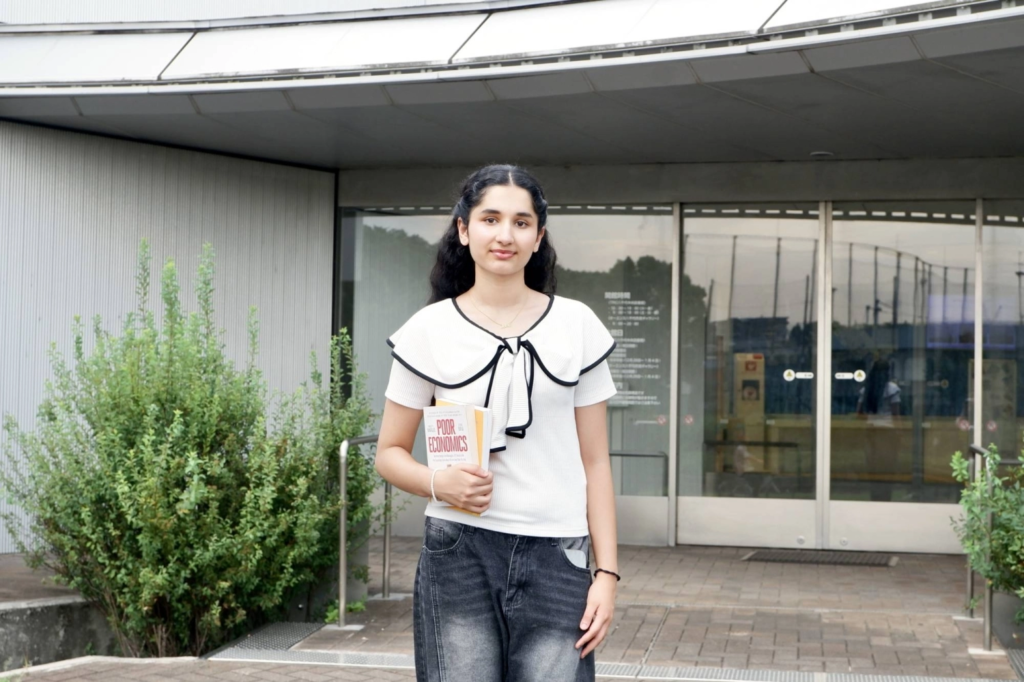
At 17, Aditi Paudel has taken on a role that puts books and education at the center of her public life. The Tokyo high school senior has been named Japan’s first literacy ambassador through the World Literacy Foundation’s global youth program.
Paudel’s appointment is notable not only because of her age but also because of the personal journey that shaped her relationship with reading. Born in Japan and raised in Nepal during part of her childhood, she grew up moving between languages and cultures, with books serving as a constant.
She is now using that experience to advocate for stronger reading habits, wider access to education, and greater opportunities for young people.
Who is Aditi Paudel?
Paudel is a 17-year-old high school senior based in Tokyo. She spent the first part of her childhood in Nepal before returning to Japan in the third grade.
Her interest in reading began unusually early. One of her earliest memories is of her grandfather giving her a newspaper written in Devanagari, the script used for Nepali and several other South Asian languages.
Although she was still a preschooler, Paudel was able to make sense of the writing, surprising the people around her. That early experience appears to have stayed with her and became part of the foundation for her later interest in literacy.
How did Aditi Paudel become Japan’s first literacy ambassador?
Paudel was selected by the World Literacy Foundation, an Australia-based nonprofit that runs a global youth literacy program.
About 900 young people between the ages of 16 and 25 from 101 countries are participating in the current program. According to the foundation’s founder and CEO, Andrew Kay, the initiative has been operating for 12 years, but Paudel is the first participant from Japan to receive the ambassador designation.
Kay said Paudel stood out because of her leadership, enthusiasm for literacy, and interest in empowering young people.
Her role is not simply about promoting books. The broader program encourages young participants to become advocates for literacy in their own communities and use their experiences to encourage others to read and learn.
How did Nepal and Japan shape her love of reading?
Paudel’s childhood across two countries gave her a particularly personal connection to language.
After returning to Japan in third grade, she had to reacquaint herself with Japanese. Books became a useful way to navigate that transition while continuing something she already enjoyed.
Her father also encouraged her reading by regularly buying books for her. She developed an early fondness for fantasy and remembers becoming particularly attached to Enid Blyton’s “The Wishing-Chair” series.
Over time, however, reading became more than entertainment. It began influencing how she thought about education, equality and the opportunities that access to knowledge can create.
How did “I Am Malala” influence her?
One book that changed Paudel’s perspective was Malala Yousafzai’s memoir, “I Am Malala.”
The book helped deepen her interest in female empowerment and the relationship between education and opportunity. For Paudel, the ability to read is closely connected to a person’s ability to make choices, understand the world and build an independent future.
That belief is now central to the message she wants to take to other young people.
Why does Aditi Paudel say literacy matters?
Paudel sees literacy as something much bigger than knowing how to read words on a page.
For her, literacy is a gateway to opportunity. A person may have talent, ambition or potential, but without access to reading and education, those abilities can remain difficult to develop.
Her own family history has shaped that view. She has said her parents grew up with fewer educational opportunities, giving her a firsthand understanding of how access to education can influence the direction of a person’s life.
That makes literacy, in her view, not just an academic skill but a way of unlocking opportunities that might otherwise remain out of reach.
Why is reading becoming a concern among young people in Japan?
Paudel’s appointment comes as concerns grow about changing reading habits among Japanese children and teenagers.
Research cited by The Japan Times from the Benesse Educational Research and Development Institute and the University of Tokyo found that roughly half of elementary, junior high and high school-age children surveyed did not read books.
The challenge is not necessarily a lack of access to information. Young people are surrounded by it through smartphones, social media and digital platforms.
The concern is that quick digital consumption may leave less room for the slower process involved in reading a book, following a long narrative or wrestling with a complicated idea.
Could artificial intelligence make deep reading less common?
Paudel and literacy advocates are also looking ahead to another challenge: artificial intelligence.
AI tools can produce answers almost instantly, which can be useful, but that convenience may reduce the incentive to search for information independently or spend time reading deeply.
The worry is not simply that young people will stop reading books. It is that they could become less accustomed to the patience, concentration and critical thinking involved in working through information themselves.
That makes literacy advocacy increasingly relevant even in a world where technology can provide information faster than ever.
What is Aditi Paudel doing beyond promoting reading?
Paudel is also interested in making books more accessible to children and communities that have fewer resources.
She works with children with disabilities and plans to collaborate with the Shanti Volunteer Association on efforts to collect and donate books to countries with lower literacy rates, including Nepal.
The project would connect her two worlds in a practical way, taking the reading culture she experienced in Japan and helping expand access to books elsewhere in Asia.
What is Aditi Paudel’s advice to young readers?
Paudel does not believe teenagers need to begin reading by forcing themselves through a list of famous classics.
Her advice is more straightforward: start with something that genuinely interests you.
For a teenager competing with a smartphone for attention, choosing a book connected to a personal interest can make reading feel less like an assignment and more like discovery.
She also believes books can do something social media often cannot: push readers beyond their own immediate experiences and expose them to unfamiliar perspectives.
Why Aditi Paudel’s story matters
Paudel’s appointment comes at the intersection of several modern challenges: declining recreational reading, unequal access to educational opportunities and the growing influence of AI on how people find and process information.
Her story also demonstrates how literacy advocacy can begin with a very personal experience. A preschooler reading a newspaper with her grandfather has grown into a teenager urging other young people to discover what books can offer.
For Aditi Paudel, the message is simple but far-reaching: reading is not merely about finishing a book. It is about acquiring the tools to understand the world, recognize opportunities, and make better use of one’s own potential.