
TL;DR
Amber Luke — widely known online as “Dragon Girl” — is heading to Spain for two extreme body modification procedures that are heavily restricted or illegal in Australia. The influencer, who says she has more than 600 tattoos and has spent over $250,000 transforming her appearance, plans to undergo a “coin slot” ear procedure and receive a silicone implant in her hand. Her decision is reigniting debate around body autonomy, cosmetic risk, and the growing global market for underground body modification procedures.
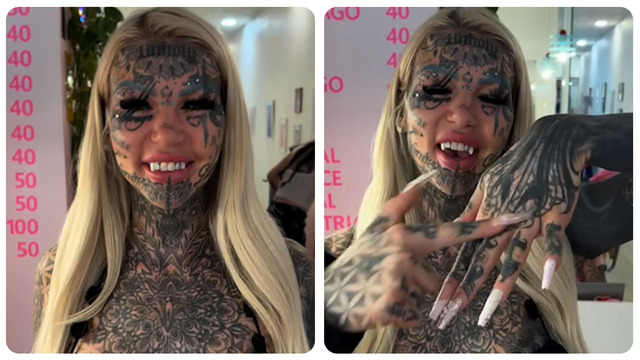
With more than 600 tattoos covering her body, Amber Luke has built an online identity around pushing the limits of body modification. Now, the Australian influencer known as “Dragon Girl” is taking that transformation even further, by traveling overseas for procedures she cannot legally access at home.
Luke recently revealed on social media that she is flying to Barcelona, Spain, to undergo two controversial body modifications: a “coin slot” procedure in her ear and a silicone bow implant beneath the skin of her hand.
“Australia has made them highly illegal for seven years. I’m about to get two body mods done. I am super f–king keen,” she wrote online.
The announcement quickly drew attention not just because of the procedures themselves, but because it highlights a growing trend: people travelling internationally for cosmetic and body modification procedures that face restrictions in their home countries.
Who Is Amber Luke?
Amber Luke has become one of Australia’s most recognizable body modification influencers. Over the years, she has transformed her appearance through extensive tattooing and surgical-style modifications, including:
- Full-body tattoos
- Tattooed eyeballs
- A split tongue designed to resemble a snake’s tongue
- Sharpened “fang” teeth
- Multiple facial and body piercings
She reportedly has spent more than $250,000 AUD on her appearance changes.
Online, Luke frequently documents the process behind her modifications, offering followers a mix of lifestyle content, procedure updates, and commentary on body autonomy and self-expression.
Her social media persona, “Dragon Girl,” has attracted both admiration and criticism, especially after she revealed that an eyeball tattoo procedure temporarily left her blind for three weeks.
What Is a ‘Coin Slot’ Procedure?
One of the procedures Luke plans to undergo is known as a “coin slot.”
The modification involves surgically removing a small section of cartilage from the ear’s helix — the outer rim of the ear — to create a narrow opening where multiple rings or earrings can be stacked together.
Why the Procedure Is Controversial
Unlike standard ear piercings, a coin slot procedure requires cutting and removing tissue. Because of that, many countries regulate it more like a medical procedure than cosmetic piercing work.
Potential risks include the following:
- Infection
- Permanent scarring
- Cartilage damage
- Nerve complications
- Improper healing
In Australia, regulations surrounding extreme body modifications vary by state, but procedures involving tissue removal and subdermal implantation have faced tighter scrutiny in recent years.
According to reports from Nine News, coin slot modifications are heavily regulated rather than outright banned nationwide.
What Is a Silicone Hand Implant?
Luke also plans to receive what she described as a silicone bow implant beneath the skin of her hand.
The procedure falls under the category of subdermal implants, body modifications where shaped silicone pieces are inserted beneath the skin to create raised designs or contours.
These implants have existed for decades in underground body modification communities, but they remain controversial because of the medical risks and lack of standardized oversight.
Why Australia Restricts Subdermal Implants
Australia has cracked down on these procedures due to concerns over the following:
- Unlicensed practitioners
- Infection risk
- Unsafe surgical environments
- Implant rejection
- Long-term complications
Unlike cosmetic surgeries performed in licensed clinics, some body modification procedures globally are done in informal or underground settings.
Luke said one reason she chose Spain was that the procedures would be carried out by licensed medical professionals.
“The end result is to have a nice implant that is not all f–ked up,” she said in a social media post.
Why People Travel Abroad for Body Modification Procedures
Luke’s trip reflects a broader phenomenon often referred to as “cosmetic tourism” or “medical tourism.”
While cosmetic tourism typically focuses on plastic surgery or dental work, body modification enthusiasts increasingly travel internationally to access procedures unavailable in their home countries.
Countries Known for Body Modification Communities
Certain cities have become hubs for advanced body modification culture, including the following:
- Barcelona, Spain
- Bangkok, Thailand
- Mexico City, Mexico
- Berlin, Germany
These destinations often attract clients because of:
- More permissive regulations
- Experienced practitioners
- Lower costs
- Established modification communities
Still, experts warn that traveling abroad for procedures can create challenges if complications arise after returning home.
The Health Risks Behind Extreme Body Modification
Although body modification is often framed as self-expression, medical professionals continue to raise concerns about procedures involving implants, tissue removal, and tattooing sensitive areas.
Risks Associated With Extreme Modifications
Some complications can include:
- Severe infections
- Allergic reactions
- Nerve damage
- Bloodborne diseases
- Implant migration or rejection
- Permanent vision damage
Eyeball tattoos, in particular, remain one of the most controversial procedures in the body modification world.
Luke previously revealed that she experienced temporary blindness for several weeks after undergoing the procedure.
Medical organizations in several countries have warned against scleral tattooing because of the risk of:
- Retinal damage
- Infection
- Blindness
- Chronic pain
Body Modification and Employment Stigma
Beyond the medical debate, Luke has also spoken openly about how her appearance affects her daily life and career opportunities.
“I’m not going to sugar-coat it, it has limited my employment options, but that’s okay,” she previously said.
Her comments reflect a larger cultural conversation around workplace appearance standards and evolving attitudes toward tattoos and body art.
While tattoos have become increasingly mainstream in the U.S. and Australia, extreme modifications still carry social stigma in many industries.
A Pew Research Center or YouGov data reference here could strengthen the article by showing shifting public attitudes toward tattoos and workplace professionalism.
Why Amber Luke’s Story Resonates Online
Luke’s growing popularity says as much about internet culture as it does about body modification itself.
Social media platforms reward visually striking identities, and influencers with unconventional appearances often build highly engaged audiences. For supporters, Luke represents radical self-expression and bodily autonomy. For critics, her transformations raise questions about health risks, online validation, and the boundaries of cosmetic alteration.
That tension is precisely why stories like hers continue to spread online.
They sit at the intersection of:
- Internet fame
- Personal identity
- Medical ethics
- Beauty standards
- Shock culture
And in the social media era, extreme transformations rarely stay niche for long.
The Bigger Debate Around Extreme Body Modification
At the center of the discussion is a difficult question: where should governments draw the line between personal freedom and public safety?
Supporters of body modification argue adults should have the right to alter their bodies however they choose — provided procedures are consensual and professionally performed.
Critics counter that some modifications carry risks significant enough to justify stricter regulation.
Luke’s upcoming procedures are unlikely to settle that debate. But they do highlight how body modification culture is becoming increasingly global, visible, and commercially driven.
And for influencers like Amber Luke, the transformation itself has become part of the brand.