
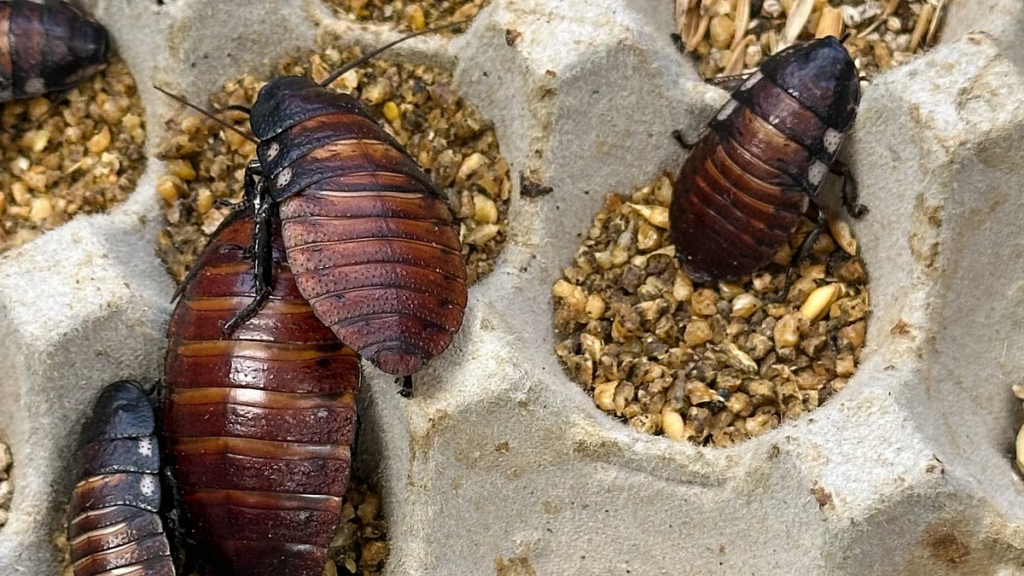
Australian authorities have seized more than 100,000 live exotic cockroaches from a commercial breeder in what officials are calling the country’s largest-ever bust involving illegal invertebrates.
The raid uncovered thousands of Madagascar hissing cockroaches and dubia cockroaches — insects banned in Australia because of the biosecurity risks they pose to agriculture, wildlife, and public health.
Officials estimate the seized insects were worth around 200,000 Australian dollars (roughly $130,000 USD).
The massive cockroach seizure took place in Bathurst, New South Wales, according to Australia’s Department of Climate Change, Energy, Environment and Water.
Why are these exotic cockroaches illegal in Australia?
Australia has some of the world’s strictest biosecurity laws, designed to protect its isolated ecosystem and multi-billion-dollar agriculture industry from invasive species and disease outbreaks.
Authorities say exotic cockroaches can:
- Spread harmful pathogens
- Introduce invasive microorganisms
- Threaten native wildlife
- Damage crops and agriculture
- Disrupt local ecosystems
“If you are found to possess, breed or trade exotic cockroaches such as dubia cockroaches and Madagascar hissing cockroaches, they will be seized, and you could face penalties under federal law,” a department spokesperson said.
The seized insects are illegal to buy, sell, breed, or own anywhere in Australia.
What are Madagascar hissing cockroaches?
The Madagascar hissing cockroach is one of the largest cockroach species in the world, growing between 2 and 3 inches long — roughly the size of a human palm.
Unlike common household cockroaches, these insects are often kept as:
- Reptile feed
- Exotic pets
- Educational display of insects
The species gets its name from the distinctive hissing sound it produces by forcing air through tiny breathing holes.
Photos released by Australian authorities show glossy brown cockroaches significantly larger than typical Australian species.
For comparison, the common Australian cockroach usually measures between 0.9 and 1.4 inches long.
Why reptile owners want these cockroaches
According to Bathurst snake catcher Stefanie Lesser, the larger exotic cockroaches are popular among reptile owners because they provide more food per insect.
“Fewer insects are needed to feed reptiles,” Lesser told the Australian Broadcasting Corporation (ABC).
Dubia cockroaches, in particular, are widely used internationally as feeder insects for:
- Lizards
- Snakes
- Frogs
- Tarantulas
- Other exotic pets
Authorities, however, are urging reptile owners in Australia to use legal alternatives such as:
- Crickets
- Native wood roaches
- Approved feeder insects
Australia’s strict biosecurity laws explained
Australia aggressively monitors everything entering the country — from plants and seeds to insects and animals — because invasive species have historically caused severe environmental and economic damage.
The country’s geographic isolation has created unique ecosystems highly vulnerable to outside organisms.
Biosecurity enforcement can include:
- Airport inspections
- Border searches
- Import restrictions
- Quarantine rules
- Heavy fines and criminal penalties
Anyone caught smuggling undeclared animals, insects, or plant material can face fines worth thousands of dollars.
The government has not publicly identified the breeder involved in the seizure.
Experts warn of growing online insect trade
The cockroach bust has also highlighted concerns over the growing online trade in exotic insects.
Carol Booth, policy director at the Invasive Species Council, warned that illegal insect sales are becoming easier through internet marketplaces and specialty breeder forums.
“There are several websites advertising ants, cockroaches and all sorts of interesting insects online,” Booth told ABC.
She said the risks go beyond the insects themselves.
“These creatures can introduce microorganisms and potential pathogens,” Booth added, warning the trade could contribute to new disease outbreaks.
Why are invasive insects difficult to control
Once invasive insects establish themselves in a new environment, eradication becomes extremely difficult and expensive.
Past invasive species problems in Australia have included:
- Cane toads
- Fire ants
- European rabbits
- Carp fish populations
Experts fear illegal insect breeding could create similar long-term ecological problems.
What happens to the seized cockroaches?
Authorities confirmed that the NSW Department of Primary Industries and Regional Development (DPIRD) will oversee the destruction of all seized cockroaches.
Officials have not disclosed exactly how the insects will be euthanised, though invasive invertebrates are typically frozen or chemically treated in accordance with biosecurity protocols.
The investigation into the breeder is ongoing, and penalties could follow under Australia’s federal environmental laws.
Why is this story getting global attention?
The scale of the seizure has stunned both biosecurity experts and casual readers online.
While cockroaches are common in many parts of the world, the idea of more than 100,000 giant exotic insects being secretly bred has sparked widespread fascination — and disgust.
But behind the viral headlines lies a serious issue.
Australia’s crackdown reflects a broader global concern over how illegal wildlife and exotic pet trades can unintentionally spread diseases, destabilise ecosystems, and create costly environmental problems.
The seizure also highlights how even small creatures can become major national security and agricultural concerns when biosecurity rules are ignored.
TL;DR
- Australia seized more than 100,000 illegal exotic cockroaches from a breeder in New South Wales.
- The insects included Madagascar hissing cockroaches and dubia cockroaches.
- Authorities say the bugs pose risks to agriculture, wildlife, and public health.
- The insects were reportedly worth about 200,000 Australian dollars.
- Officials warn the growing online insect trade could introduce dangerous diseases and invasive species.