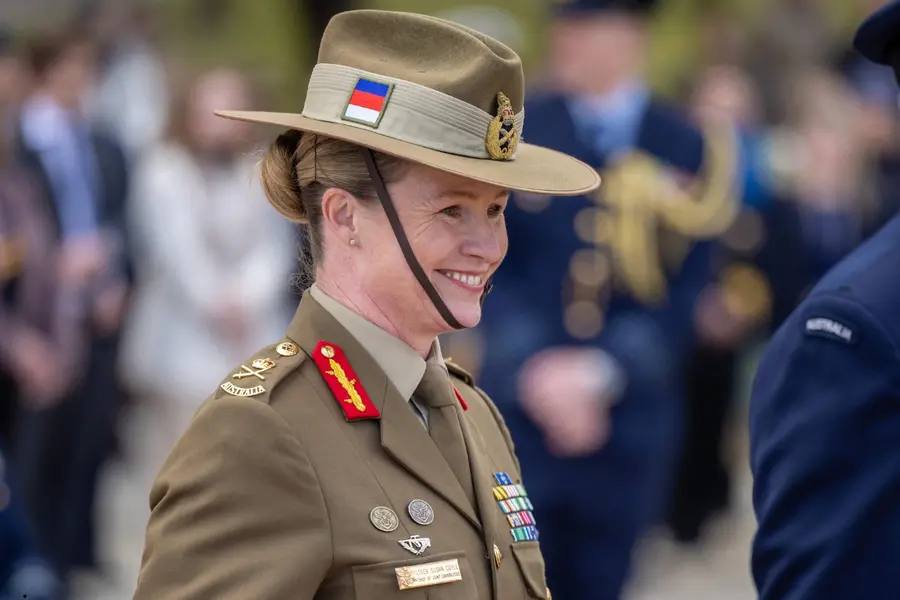
In a milestone moment for military leadership, Susan Coyle has been appointed as the first woman to lead the Australian Army in its 125-year history. The announcement marks a structural shift for Australia’s defense establishment, not just a symbolic one.
Set to take over in July, Coyle will replace Simon Stuart, becoming the first woman to head any service branch within the Australian Defence Force.
Why this is a historic moment
Australian Prime Minister Anthony Albanese called the move a landmark step, while Defense Minister Richard Marles described it as a “deeply historic moment.”
That description is not overstated.
For over a century, senior military leadership in Australia, like in most countries, has been overwhelmingly male. Coyle’s appointment breaks that pattern at the highest operational level.
What makes this appointment significant
- First woman to lead the Australian Army
- First woman to head any branch of the ADF
- Comes during a broader push to improve gender representation
It is both a reflection of progress and a signal of institutional intent.
Who is Susan Coyle?
Coyle brings nearly four decades of military experience.
- Enlisted in 1987
- Currently serving as Chief of Joint Capabilities
- Held multiple senior command roles across operations and strategy
Her career spans logistics, operational planning, and leadership roles that are critical to modern military coordination.
This is not a ceremonial appointment. It is a promotion built on operational depth.
What challenges will she inherit?
Susan Coyle steps into the role at a time when the ADF is undergoing internal and external pressure.
1. Gender representation gaps
- Women make up about 21% of the ADF
- Only 18.5% hold senior leadership roles
- The target is 25% female representation by 2030
There is progress, but the pipeline to top leadership remains narrow.
2. Cultural and legal scrutiny
The ADF is facing serious allegations related to:
- Sexual harassment
- Discrimination
- Institutional accountability failures
A class-action lawsuit filed in 2025 accused the force of failing to adequately protect female personnel.
This context adds weight to Coyle’s appointment. Leadership change is expected to translate into cultural change.
3. Strategic and regional pressures
Australia’s military is also navigating a complex geopolitical environment:
- Rising tensions in the Indo-Pacific
- Closer defense coordination with allies
- Evolving cyber and space warfare demands
Susan Coyle will need to balance internal reform with external readiness.
Why representation in military leadership matters
The phrase shared by Marles, “you cannot be what you cannot see,” captures the broader impact.
The practical effects of representation
- Encourages recruitment of women into the armed forces
- Improves retention by signaling career progression
- Diversifies decision-making at senior levels
Modern militaries increasingly recognize that diversity is not just social policy. It is operational strength.
How Australia compares globally
Australia is not alone in moving toward more inclusive military leadership, but it has lagged behind some peers.
- The US has had women in top combatant command roles
- European militaries have expanded female leadership pipelines
- NATO has emphasized gender inclusion as part of readiness
Susan Coyle’s appointment brings Australia closer to these trends, though gaps remain.
What changes could follow this appointment?
Leadership transitions at this level often trigger broader institutional shifts.
Potential areas of impact
Recruitment and training
Expect renewed focus on attracting and supporting female candidates across ranks.
Policy reform
Stronger safeguards and accountability mechanisms around harassment and discrimination.
Leadership development
More structured pathways for women to rise into senior command roles.
Public perception
A shift in how the military is viewed by younger and more diverse populations.
The broader leadership reshuffle
Susan Coyle’s appointment is part of a wider restructuring of Australia’s defense leadership.
At the same time, Mark Hammond has been named the next chief of the ADF, replacing David Johnston.
This coordinated transition suggests a deliberate reset at the top of the defense hierarchy.
Why this moment matters beyond Australia
This is not just a national milestone. It reflects a global shift in how institutions evolve under pressure.
Military organizations, often seen as resistant to change, are being reshaped by:
- Social expectations
- Legal accountability
- Strategic necessity
Susan Coyle’s rise sits at the intersection of all three.
TL;DR
- Susan Coyle becomes the first woman to lead the Australian Army
- She will take over in July, replacing Simon Stuart
- The move comes amid efforts to increase female representation
- The ADF faces ongoing scrutiny over harassment and discrimination
- Her leadership could influence both culture and military strategy