
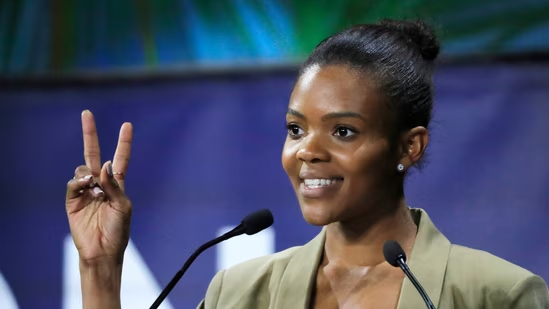
What led to Australia’s decision to deny Candace Owens entry?
The Australian High Court has upheld the government’s decision to deny US conservative commentator Candace Owens a visa, marking a significant moment in the country’s ongoing debate over free speech and national security.
Owens, known for her outspoken views on race, gender, and politics, had challenged the government’s ruling after Home Affairs Minister Tony Burke invoked the Migration Act to refuse her visa on “character grounds.” Authorities cited concerns that Owens’ presence and rhetoric could “incite discord” within Australian society, a key factor in the minister’s decision.
This ruling confirms that the government acted lawfully when applying what’s known as the ‘character test,’ a broad legal standard designed to prevent individuals who may threaten public safety, order, or community cohesion from entering the country.
What is Australia’s ‘character test’?
Under Section 501 of Australia’s Migration Act 1958, the ‘character test’ allows the Minister for Home Affairs to refuse or cancel a visa if a person:
- Has a substantial criminal record.
- Is reasonably suspected of being involved in criminal conduct.
- Is deemed likely to “incite discord” or pose a risk to the Australian community.
While the rule is often applied to individuals with criminal backgrounds, it also covers those whose public behavior or statements are judged likely to undermine social harmony.
In Owens’ case, her past remarks targeting minority groups and her history of inflammatory political commentary played a major role. Officials argued that her speeches and media appearances could exacerbate racial and social tensions, a stance the High Court ultimately upheld.
What did Candace Owens argue in her defense?
Owens’ legal team challenged the decision by claiming that the Migration Act violates Australia’s implied constitutional right to free political communication. They contended that restricting her entry based on her opinions amounted to censorship of political thought, something that goes against the spirit of democratic discourse.
Her lawyers also argued that the Act’s wording gives “excessive discretionary power” to the minister, potentially allowing for political bias in decision-making.
However, the High Court rejected this argument, emphasizing that while freedom of political expression is protected under Australian law, it is not an absolute right. Justice Stephen Gageler and his fellow justices, Michelle Gordon and Robert Beech-Jones, stated that limitations on speech are permissible when public safety, national security, or community cohesion are at stake.
Why this ruling matters for Australia and global free speech debates
The Owens ruling highlights a growing global tension between free expression and social responsibility. Australia has long positioned itself as a liberal democracy that values open debate, but recent visa denials suggest a shift toward a more cautious stance on imported political rhetoric.
In July, Australian authorities revoked rapper Ye’s (formerly Kanye West) visa after he released a song accused of promoting hate speech. Owens’ case, following soon after, reinforces the government’s willingness to deny entry to high-profile figures whose views could ignite division.
Experts say this trend aligns with broader Western efforts to curb extremist narratives, particularly in a post-pandemic world marked by rising polarization and online misinformation.
What is the global context behind such restrictions?
Australia is not alone in taking a hard line on controversial figures. The United Kingdom, Canada, and New Zealand have all denied entry to speakers and activists over concerns about hate speech or extremist rhetoric.
For example:
- The UK previously banned right-wing activist Lauren Southern under similar “public order” concerns.
- Canada has denied visas to several far-right figures on the grounds of inciting hatred.
These moves reflect an emerging global consensus among democracies: freedom of speech ends where the potential for harm begins.
However, critics argue that such restrictions risk creating “soft censorship,” where governments selectively silence unpopular opinions rather than confronting them in open debate.
What could this mean for future US-Australia relations?
While this decision is unlikely to strain official diplomatic ties between Canberra and Washington, it underscores Australia’s independence in applying its immigration laws.
For American conservatives, the ruling may deepen perceptions that Western nations are becoming less tolerant of right-wing viewpoints. Owens herself has yet to issue a full statement following the verdict, but in past comments, she has accused governments of “weaponizing censorship under the guise of inclusivity.”
Political observers say that as Australia becomes a key partner in global security and digital regulation, decisions like this send a clear signal: entry into the country is a privilege, not a right, and one conditioned on adherence to shared values of respect and social stability.
The takeaway
Candace Owens’ visa rejection underscores a fundamental question at the intersection of democracy and security: How far should governments go to protect harmony without stifling dissent?
For now, Australia’s High Court has drawn that line firmly affirming that even in open societies, free speech does not guarantee free entry.