
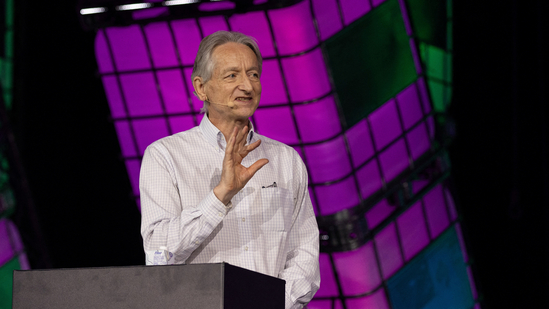
Nobel-winning computer scientist advises vocational careers as AI resistance
Geoffrey Hinton, the renowned AI researcher often called the “Godfather of Artificial Intelligence,” has identified plumbing and other skilled trades as some of the most secure jobs in the coming wave of workplace automation. The neural network pioneer warned that while AI will eventually surpass human capabilities in most domains, physical trades remain relatively safe, for now.
Hinton made these observations during a recent appearance on the Diary of a CEO podcast, where he outlined his concerns about massive job displacement across knowledge-based industries.
The coming employment crisis
“For mundane intellectual labor, AI is just going to replace everybody,” Hinton stated bluntly. He specifically highlighted paralegals and call center workers as particularly vulnerable, advising that such employees “should be terrified” about their future prospects.
The Turing Award winner explained that AI systems are progressing much faster in cognitive tasks than in physical manipulation. “I’d say it’s going to be a long time before it’s as good at physical manipulation. So a good bet would be to be a plumber,” Hinton told Business Insider.
Beyond economic impacts
While some experts argue AI will primarily augment rather than replace human workers, Hinton warns that this optimistic view may be dangerously naive. He acknowledges AI’s potential to assist workers but cautions that such partnerships often lead to complete automation as systems improve.
The computer scientist also raised concerns about the psychological impacts of mass unemployment, noting that even with solutions like universal basic income, “people would still struggle with a lack of meaning and purpose in their lives without employment.”
Only a few sectors, like healthcare, appear relatively safe due to insatiable demand, Hinton noted. “Most jobs, I think, are not like that,” he emphasized, predicting widespread disruption across most industries.