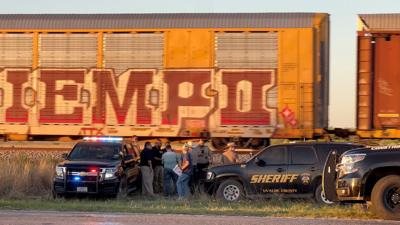
Authorities in Laredo are investigating after multiple bodies were discovered inside a Union Pacific cargo train near the US-Mexico border on Sunday afternoon.
The grim discovery has renewed attention on the dangerous methods migrants sometimes use to cross into the United States, including hiding inside freight railcars traveling through major border trade corridors.
Police have not yet confirmed how many bodies were found, who the victims were, or what caused their deaths.
What Authorities Have Confirmed So Far
According to the Laredo Police Department, officers responded around 2:30 p.m. local time near mile marker 13, close to 12100 Jim Young Way in Laredo.
Investigators confirmed that multiple bodies were located inside a cargo train car, but key details remain unclear.
Authorities have not publicly released:
- The exact number of deceased individuals
- Their identities or nationalities
- Whether any survivors were found
- The estimated timeline of the deaths
- The confirmed cause of death
Federal agencies and medical examiners are now involved in the investigation.
Why Investigators Are Looking at Possible Migrant Smuggling
The incident occurred in one of the busiest border transit zones in North America.
Laredo sits directly across from Nuevo Laredo in Mexico and serves as a major commercial gateway between the two countries. Freight trains moving through the region are frequently monitored because migrants and human smuggling groups have historically used rail routes to bypass highway checkpoints.
Investigators have not officially stated that the victims were migrants. However, the location and circumstances surrounding the discovery have fueled speculation that the individuals may have been attempting an unauthorized border crossing.
Freight Trains Have Become a Dangerous Migration Route
Smugglers sometimes direct migrants into freight containers or railcars because trains can travel long distances without inspection stops.
But those journeys can quickly become deadly due to:
- Extreme heat exposure
- Lack of ventilation
- Dehydration
- Oxygen deprivation
- Physical injury inside moving railcars
South Texas temperatures reached nearly 95 degrees Fahrenheit on Sunday, increasing concerns that heat may have played a role.
Authorities, however, have not confirmed heat-related deaths pending autopsy results.
The Discovery Echoes Previous Migrant Tragedies in Texas
The incident recalls several past tragedies involving migrants transported in unsafe conditions across Texas.
One of the deadliest occurred in 2022, when dozens of migrants died inside an overheated tractor-trailer in San Antonio after being abandoned without air conditioning or water.
Rail-based incidents have also occurred before.
In July 2024, US Border Patrol agents reportedly rescued 23 migrants trapped inside a Union Pacific autorack train car before severe medical complications developed.
That earlier rescue highlighted the growing use of freight infrastructure in cross-border smuggling networks.
Why Freight Trains Pose Extreme Risks
Unlike passenger trains, freight railcars are not designed for human transport.
Many cargo compartments:
- Lack airflow
- Reach dangerous internal temperatures
- Cannot be opened from inside
- Have limited access to water or medical aid
In sealed environments, temperatures can rise rapidly — especially during South Texas heatwaves.
Experts say people trapped inside railcars may lose consciousness within hours under extreme conditions.
The risks become even greater when smugglers abandon groups during transit or fail to communicate with train operators.
Human Smuggling Along the Border Is Becoming More Complex
Border enforcement efforts in recent years have pushed many smuggling operations toward more dangerous routes and concealment methods.
Security analysts say criminal networks increasingly rely on:
- Freight trains
- Tractor-trailers
- Remote desert crossings
- Underground stash houses
The goal is often to avoid heavily monitored highways and official checkpoints.
But those methods frequently expose migrants to life-threatening conditions.
Human rights organizations and border-security advocates disagree on immigration policy solutions, but both sides have repeatedly warned that smuggling operations are becoming more lethal.
What Happens Next in the Investigation
Authorities are expected to focus on several key questions:
- Were the victims migrants?
- Was human smuggling involved?
- Did heat exposure contribute to the deaths?
- How long were the bodies inside the train?
- Did anyone knowingly seal or transport the individuals?
Autopsy results will likely determine the official cause and timing of death.
Federal agencies, including border and homeland security investigators, may also examine surveillance footage, rail records, and train manifests.
Because the victims’ identities remain unknown, international coordination with Mexican authorities could become part of the investigation.
Why This Story Matters Beyond One Incident
The discovery in Laredo highlights a larger reality along the US-Mexico border: as migration routes become more restricted, crossing attempts often grow more dangerous.
For many migrants, freight trains represent one of the few available ways to avoid detection. For smugglers, they offer mobility and concealment.
But those same conditions can quickly turn deadly.
The tragedy also underscores how border infrastructure — railways, highways, and cargo systems designed for trade — has increasingly become intertwined with humanitarian and security crises.
Until investigators identify the victims and determine what happened inside the train car, many of the most important questions remain unanswered.