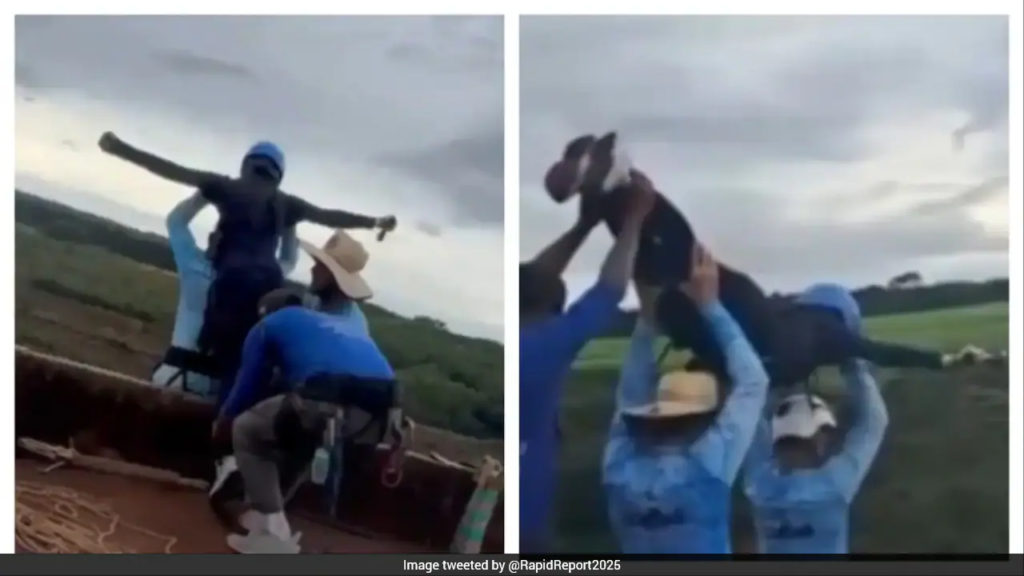
A fatal bungee-jumping accident in Brazil has sparked outrage, criminal investigations, and renewed scrutiny of adventure sports safety standards after shocking new details emerged about the death of a 21-year-old participant.
Authorities are investigating whether basic safety procedures were ignored during a recreational bungee-jumping event in São Paulo state, leading to the death of Maria Eduarda Rodrigues de Freitas. Reports suggest Freitas may have been pushed from a bridge without being attached to a safety rope, resulting in a fall of approximately 40 meters (130 feet).
The incident has become one of Brazil’s most closely watched public safety investigations, raising serious questions about operator negligence and oversight in high-risk recreational activities.
What Happened in the Brazil Bungee Jumping Accident?
The tragedy occurred on Saturday at a structure locally known as Skeleton Bridge in Limeira, a city in Brazil’s São Paulo state.
According to local reports, Freitas was participating in a recreational bungee-jumping event organised by a private operator. Video footage that has circulated on social media appears to show event staff escorting her to the edge of the bridge before she falls.
Witnesses at the scene reportedly realised moments later that no safety rope had been attached.
Investigators are now examining whether the fatal fall resulted from a catastrophic breakdown in safety protocols or human error during the preparation process.
Key Facts About the Incident
- Victim: Maria Eduarda Rodrigues de Freitas, 21
- Location: Skeleton Bridge, Limeira, São Paulo state, Brazil
- Fall distance: Approximately 40 meters (130 feet)
- Date: Saturday
- Investigation status: Criminal investigation underway
- Detentions reported: Six individuals connected to the event
Authorities have not yet publicly released conclusions regarding responsibility.
New Reports Suggest the Victim Survived the Initial Impact
One of the most disturbing aspects of the case involves reports that Freitas may not have died instantly after the fall.
Early accounts indicated that the impact was immediately fatal. However, subsequent statements from a witness have painted a different picture.
Nurse Describes Victim’s Final Moments
According to Brazilian media reports, an off-duty nurse identified as Rayza Dias was present when emergency responders arrived.
Dias reportedly stated that Freitas was still alive when rescuers reached her. She claimed the young woman remained conscious for a brief period and that she attempted to comfort and reassure her while emergency assistance was being provided.
If confirmed by investigators, these details could become an important part of the official timeline and may influence the legal proceedings surrounding the case.
However, authorities have not yet released a comprehensive medical report detailing the exact sequence of events following the fall.
Why Investigators Are Treating the Case as a Criminal Matter
The central question facing investigators is straightforward: How could a participant have been allowed to jump—or be pushed—from a bridge without being secured to a bungee cord?
Reports from witnesses suggest that event personnel may have simply failed to attach the safety system before the jump.
If that account is verified, investigators will likely examine:
- Whether established safety checklists were followed.
- The qualifications and training of event staff.
- Whether mandatory equipment inspections were conducted.
- The supervision procedures in place before each jump.
- Potential negligence or recklessness by organizers.
Brazilian media reports indicate that six people connected to the organization and operation of the event have been taken into custody, including five men and one woman.
Authorities have not yet publicly disclosed the specific charges that may be filed.
The Social Media Post That Added to Public Attention
The case has generated significant public reaction across Brazil, partly because of a social media post Freitas reportedly shared shortly before the jump.
According to reports, she posted a photograph of the bridge on Instagram, accompanied by the caption:
“Who was the crazy person who let me jump off a bridge???”
The post, intended as a lighthearted remark before the activity, has since been widely shared online following news of the tragedy.
While the message has no bearing on the investigation itself, it has become a poignant detail in public discussions surrounding the accident.
How Common Are Bungee Jumping Accidents?
Bungee jumping is generally considered a highly regulated adventure sport when proper safety measures are followed.
Modern operators typically employ multiple layers of verification, including the following:
- Equipment inspections.
- Redundant safety systems.
- Weight and harness checks.
- Verbal confirmation procedures.
- Multi-person safety verification.
Industry experts often note that serious accidents are rare compared with the number of jumps conducted worldwide each year.
However, when accidents do occur, investigations frequently point to human error, equipment failures, or lapses in established safety procedures.
The Importance of Safety Protocols
Adventure sports rely heavily on strict adherence to safety procedures because participants place their trust entirely in operators and equipment.
Many professional operators use mandatory “double-check” or “four-eyes” systems, requiring multiple staff members to independently verify that harnesses, ropes, and safety connections have been secured before a participant leaves the platform.
Investigators will likely determine whether similar safeguards were required and whether they were properly implemented during the event in Limeira.
What Happens Next in the Investigation?
Authorities are expected to review:
- Video footage from the event.
- Witness testimony.
- Equipment records.
- Safety manuals and operating procedures.
- Medical and forensic reports.
The investigation will seek to establish whether the death resulted from negligence, procedural failures, or violations of safety regulations.
Any criminal charges will depend on the findings of prosecutors and law enforcement officials.
Until the investigation concludes, several key questions remain unanswered, including exactly how the safety rope was allegedly omitted and whether warning signs were missed before the fatal jump.
Why This Case Is Resonating Across Brazil
Beyond the tragedy itself, the case has sparked broader concerns about safety oversight in adventure tourism and recreational sports.
For many observers, the incident represents a worst-case scenario: a participant placing trust in trained professionals only for a fundamental safety measure to allegedly be overlooked.
As investigators continue their work, the focus remains on determining what happened in the moments before the jump and whether the accident could have been prevented.
For Freitas’ family and loved ones, those answers may prove crucial in understanding how a recreational activity turned into a fatal tragedy.
TL;DR
- Maria Eduarda Rodrigues de Freitas, 21, died after falling approximately 130 feet during a bungee-jumping event in Limeira, Brazil.
- Reports suggest she may have been pushed from the bridge without being attached to a safety rope.
- An off-duty nurse claims the victim was alive and conscious for a brief period after the fall.
- Brazilian authorities have launched a criminal investigation into the incident.
- Six individuals connected to the event have reportedly been detained.
- Investigators are examining whether safety procedures were ignored or improperly followed.