Quick Summary
- A Brazilian journalist accidentally stepped on the body of a missing 13-year-old girl, Raissa, while filming a segment on her disappearance.
- The incident occurred in the Mearim River, where she had drowned while swimming with friends.
- Authorities confirmed the cause of death as accidental drowning.
- The moment was caught on video and went viral, sparking ethical debates about live reporting.
- Rescue teams recovered her body at the same spot shortly after the segment aired.
- Her school declared three days of mourning, and a community vigil was held in her honor.
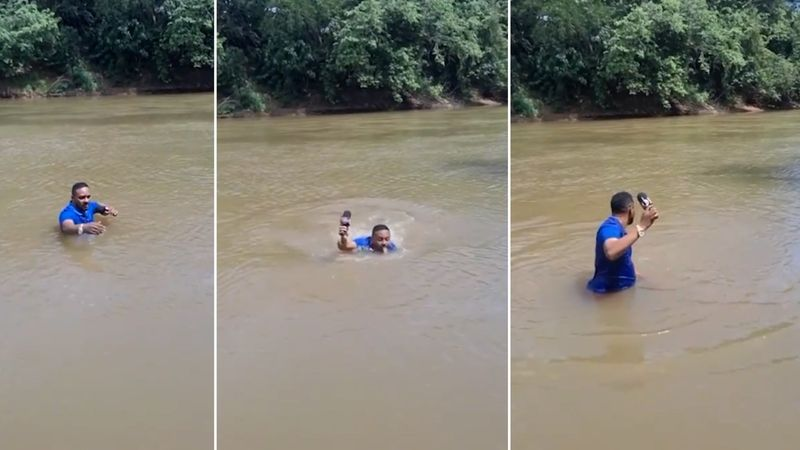
In a deeply unsettling and tragic incident in Brazil, a journalist inadvertently stepped on the body of a missing 13-year-old girl during a live television segment covering her disappearance. The incident, captured on video and widely circulated online, occurred at the Mearim River in Bacabal, northeastern Brazil, on June 30, 2025.
As shocking as it was accidental, the moment has ignited conversations about media ethics, the unpredictability of live reporting, and the dangers lurking in Brazil’s rural waterways.
What led to the incident?
A report turned horrifying
Lenildo Frazao, a Brazilian television journalist, was covering the disappearance of Raissa, a local schoolgirl believed to have drowned while swimming with friends. During the segment, Frazao entered the Mearim River to demonstrate the depth of the water where the girl was last seen.
Unaware of what lay beneath, Frazao suddenly jolted when the water reached his chest. Disturbed, he retreated and told his crew, “I think there’s something down here at the bottom of the water… it looked like an arm—could it be her? But it might be a fish, too.”
Soon after the report, rescue teams resumed their search. Raissa’s body was recovered at the exact spot where the journalist had stood.
Who was Raissa, and what caused her death?
Raissa was a 13-year-old student who had gone missing after an afternoon of swimming with friends. Her body was found later that evening, and a post-mortem examination confirmed accidental drowning as the cause of death. There were no signs of trauma or foul play.
The local school declared three days of mourning, and the community held a vigil, lighting candles and offering prayers in memory of the young girl.
How did the video go viral?
Footage from the live report spread rapidly across Brazilian social media platforms and was soon picked up by international outlets like The Sun. The video, though graphic in implication, does not show Raissa’s body but captures Frazao’s stunned reaction and his words that, in retrospect, seemed ominously accurate.
Social media reactions ranged from horror to outrage, with many expressing concern about the traumatic nature of the footage and its ethical implications.
What are the ethical questions raised?
Should reporters enter active search areas?
While reporters often immerse themselves in the environments they cover, entering an active search zone where authorities suspect a body might be found raises serious ethical and safety concerns. In this case, authorities had not closed off the site, but Frazao’s actions unintentionally disrupted a sensitive recovery operation.
Media ethics experts would likely argue that demonstrating river depth could have been done from a safer vantage point or with expert assistance.
Was the broadcast exploitative?
Critics argue that the live demonstration blurred the line between reporting and spectacle, especially given the tragic outcome. While there’s no indication that Frazao intended to exploit the situation, the viral nature of the clip may have unintentionally sensationalized Raissa’s death, detracting from the respect due to her and her family.
How are authorities and the community responding?
Local fire department
Following Frazao’s discovery, firefighters and divers intensified the search, leading to the eventual recovery of Raissa’s body. No action has been announced against the journalist or the television network, although officials have not ruled out revising protocols for press access in similar situations.
Community mourning
Raissa’s funeral took place later that same evening, with dozens attending a candlelight vigil. Her schoolmates and teachers described her as a bright and kind student, and tributes poured in from local leaders.
Why does this story resonate globally?
This story taps into multiple global conversations:
- The responsibility of live journalism: What are the limits in pursuit of immersive storytelling?
- Respect for victims and families: Where is the line between coverage and intrusion?
- The hidden dangers of natural water bodies: How can communities better educate youth about water safety?
In an age where viral content often overshadows context, the Brazilian incident serves as a stark reminder that behind every viral clip is a human story—and a grieving family.
What should change moving forward?
Recommendations for safer coverage:
- Media organizations should implement stricter field protocols when covering active crime scenes, search areas, or unfolding emergencies.
- Authorities must clearly demarcate and restrict sensitive areas to prevent public interference—intentional or otherwise.
- Training for trauma-informed reporting should be mandatory for journalists working in crisis or disaster zones.