
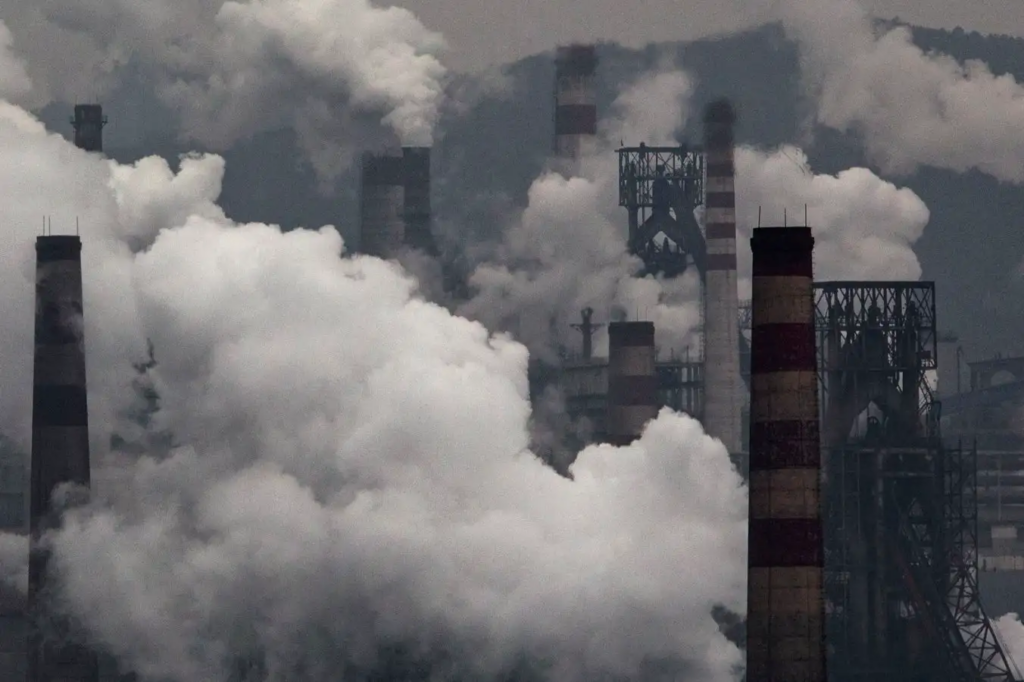
China’s aggressive push to clean up its air delivered one of the most significant public health wins of the 21st century. But new research suggests that this success story came with an unexpected side effect: a sharper rise in global warming.
The phenomenon, often described as the removal of an “aerosol shield,” is reshaping how scientists—and policymakers—think about climate action. It’s not that cutting pollution was a mistake. It’s that the atmosphere is more interconnected and more complicated than it seems.
What Happened When China Cut Air Pollution?
In the early 2010s, China launched a sweeping campaign to reduce air pollution, targeting emissions from factories, power plants, and vehicles. The results were dramatic:
- Aerosol emissions dropped by roughly 75% since 2013
- Air quality improved across major cities
- Public health outcomes began to improve
But aerosols, tiny particles suspended in the air, don’t just harm lungs. They also interact with sunlight and clouds in ways that affect the planet’s temperature.
The Hidden Role of Aerosols
For years, aerosols acted like a planetary sunshade:
- They reflected sunlight into space
- They brightened clouds, making them more reflective
- They reduced the amount of heat reaching Earth’s surface
This masking effect partially offsets the warming caused by greenhouse gases like carbon dioxide.
When China cleaned up its air, that masking effect began to fade.
How Did the “Aerosol Shield” Work?
To understand the shift, think of aerosols as a temporary filter on global warming.
A Simple Breakdown
- Greenhouse gases trap heat → warming the planet
- Aerosols reflect sunlight → cooling the planet
For decades, both forces were at play simultaneously. The cooling from aerosols didn’t cancel out global warming, but it slowed down how quickly it showed up.
What Changed After 2013?
As aerosol levels dropped:
- More sunlight reached Earth’s surface
- Cloud reflectivity decreased
- The full impact of greenhouse gases became more visible
In short, the planet didn’t suddenly start warming—it simply stopped hiding the warming that was already there.
Why Did Arctic Sea Ice Suddenly Decline?
The shift became impossible to ignore in early 2019.
Scientists observed unusual atmospheric changes over the North Pacific:
- Five powerful cyclones formed in quick succession in the Bering Sea
- Warm winds surged northward into the Arctic
- Temperatures rose 12–16°C above normal
Within just two months:
- Arctic sea ice cover dropped by 82% in the region
This wasn’t a gradual trend, it was a sharp, puzzling event.
The Missing Link: Cleaner Air
New research published in npj Climate and Atmospheric Science points to China’s pollution cuts as a key factor.
Here’s how it connects:
- Aerosols previously kept winter storms further south
- With fewer aerosols, storm tracks shifted northward
- Cyclones began pushing warm, moist air into the Arctic
This created a feedback loop:
- Warmer air melts ice
- Less ice reflects less sunlight
- More heat is absorbed → accelerating warming
How China’s Air Pollution Reduction and Global Warming Are Connected
This is where the story becomes more nuanced and more important.
China’s air quality improvements didn’t cause global warming. Instead, they:
- Removed a cooling layer that had been masking warming
- Allowed existing greenhouse gas effects to fully emerge
- Altered atmospheric circulation patterns
As climate researcher Bjørn Samset noted in comments to Live Science, what we’re seeing now is the warming that was always coming, just no longer hidden.
Why This Matters for Global Climate Policy
The findings carry a clear message: clean air alone won’t solve climate change.
The Double-Edged Sword of Aerosols
Reducing aerosols is essential because they:
- Harm human health
- Contribute to respiratory and cardiovascular diseases
- Reduce visibility and quality of life
But they also:
- Temporarily cool the planet
- Mask the full impact of greenhouse gases
What This Means for Policymakers
Governments face a delicate balancing act:
- Cut air pollution to protect public health
- Cut greenhouse gases faster to prevent accelerated warming
If countries reduce aerosols without aggressively cutting carbon emissions, they may see a short-term spike in warming.
What Scientists Are Saying
Researchers say this study highlights a critical gap in public understanding of climate systems.
Key Takeaways from the Study
- A significant portion of global warming has been temporarily hidden
- Cleaner air can lead to short-term warming acceleration
- Climate models must better account for aerosol-cloud interactions
This doesn’t undermine climate action—it reinforces the urgency.
What Happens Next?
As more countries improve air quality, similar effects could emerge globally.
Potential Future Impacts
- Increased frequency of Arctic cyclones
- Faster polar ice melt
- Shifts in weather patterns and storm tracks
This makes one thing clear: tackling climate change requires a multi-pronged approach.
What Should Be Done Now?
Experts point to a straightforward, if challenging, path forward:
1. Accelerate Greenhouse Gas Reductions
- Transition to renewable energy
- Improve energy efficiency
- Reduce reliance on fossil fuels
2. Strengthen Climate Models
- Better integrate aerosol data
- Improve forecasting of regional impacts
3. Prepare for Short-Term Warming
- Adapt infrastructure and disaster planning
- Monitor Arctic and ocean systems closely
TL;DR
- China has cut aerosol pollution by about 75% since 2013
- Aerosols had been masking global warming by reflecting sunlight
- Their reduction exposed the full force of greenhouse gas warming
- This contributed to unusual Arctic warming and rapid ice loss
- The takeaway: clean air must be paired with aggressive carbon cuts
Final Thought
China’s air pollution crackdown is still a win; millions of lives depend on cleaner air. But the climate system doesn’t offer simple trade-offs.
Removing one problem can reveal another. And in this case, it revealed just how much warming had been quietly building beneath the surface.