
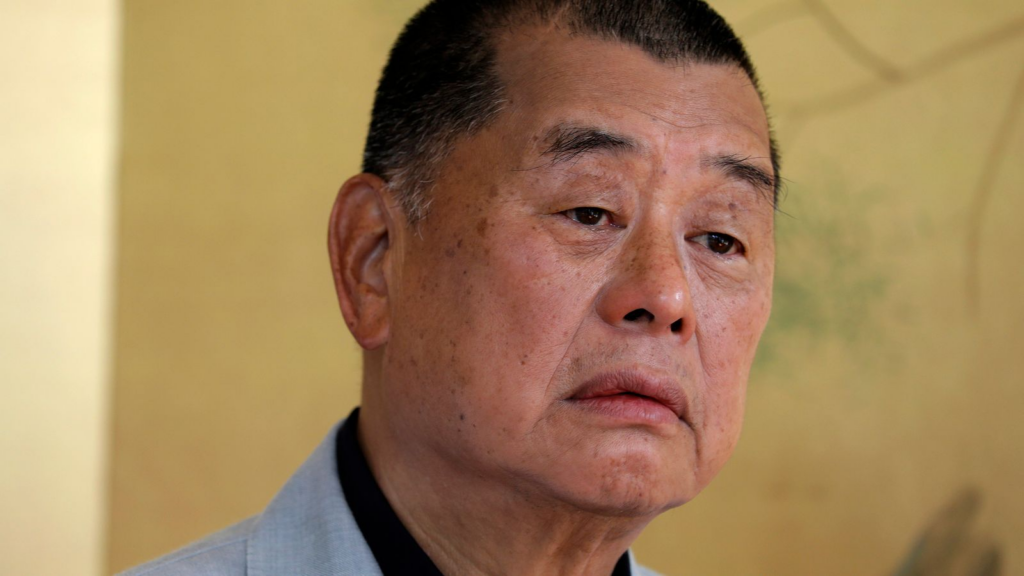
When a Hong Kong court found Jimmy Lai guilty of national security crimes on December 15, it wasn’t just another legal ruling. It was a defining moment for press freedom in the city and a test case for how far Beijing’s authority now reaches into Hong Kong’s once fiercely independent institutions.
Lai, the 78-year-old founder of the outspoken newspaper Apple Daily, now faces the possibility of life in prison. Supporters call him a political prisoner. Authorities describe him as a “troublemaker” who crossed a red line by inviting foreign interference.
So what exactly did Jimmy Lai do, according to the court? And why has his case become one of the most closely watched trials under Hong Kong’s national security law?
Below is a clear, fact-based breakdown of the Jimmy Lai national security verdict, what led to it, and what happens next.
Who is Jimmy Lai, and why has he long angered Beijing?
Jimmy Lai is not a career politician. He is a businessman-turned-publisher who built a media empire by betting on confrontation rather than caution.
From factory floors to front-page fights
Born in mainland China, Lai fled to Hong Kong as a teenager and built a fortune in the garment industry before launching Apple Daily in 1995. The paper mixed tabloid-style headlines with aggressive political commentary, openly criticizing the Chinese Communist Party and supporting democratic reforms in Hong Kong.
That editorial stance made Apple Daily wildly popular with pro-democracy readers—and deeply unpopular with Beijing.
A symbol of resistance
By the time mass protests erupted in Hong Kong in 2019, Lai had become one of the most visible backers of the movement. He gave interviews to international media, met foreign officials, and warned that Beijing was tightening its grip on the city.
For supporters, Lai represented defiance. For authorities, he embodied everything the national security law was designed to stop.
What is the national security law, and why is it so powerful?
To understand the Jimmy Lai national security verdict, you have to understand the law under which he was convicted.
Beijing’s response to unrest
China imposed Hong Kong’s national security law in June 2020 after months of protests. The law criminalizes four broad categories of conduct:
- Secession
- Subversion
- Terrorist activities
- Collusion with foreign forces
The definitions are intentionally wide, giving prosecutors significant discretion.
Why critics fear it
Unlike Hong Kong’s previous legal framework, the national security law allows:
- Life sentences for certain crimes
- Trials without juries in some cases
- Tighter bail rules that keep defendants in custody for years
Human rights groups and press freedom advocates argue that the law effectively criminalizes dissent.
What exactly was Jimmy Lai convicted of?
The court found Lai guilty on multiple charges, the most serious of which fall under the national security law.
Collusion with foreign forces
Lai was convicted on two counts of conspiracy to collude with foreign forces. Prosecutors argued that he actively sought international pressure against Hong Kong and China.
According to the prosecution, this included:
- Calling for sanctions or punitive measures
- Encouraging foreign governments to take “hostile actions”
- Coordinating messaging through media platforms
The court agreed that these actions posed a risk to national sovereignty.
Under the law, this offense carries a maximum sentence of life in prison.
Publishing seditious material
Lai was also convicted of conspiracy to publish seditious material under a colonial-era law that Hong Kong revived in recent years.
Prosecutors cited 161 articles, opinion columns, and broadcasts linked to Apple Daily. These included pieces written by Lai himself.
The court ruled that the content:
- Stirred public resentment against the government
- Undermined trust in authorities
- Encouraged resistance to state power
This charge carries a lesser penalty—up to two years in prison for a first conviction—but it adds to the overall legal weight against him.
How did Apple Daily factor into the case?
Apple Daily was central to the prosecution’s argument.
Media as a political tool
Prosecutors said Lai used the newsroom not just to report news but to shape political outcomes. They argued he worked closely with senior editors to align coverage with an international lobbying strategy.
The paper, they said, wasn’t merely critical—it was mobilizing.
The end of a newspaper
Apple Daily shut down in 2021 after police froze its assets and arrested top editors. Its closure sent shockwaves through Hong Kong’s media industry, accelerating self-censorship across newsrooms.
What happened during the trial?
The trial itself stretched across roughly 150 days and became a legal marathon.
Delays and legal battles
Proceedings were repeatedly delayed, including after Hong Kong authorities sought Beijing’s intervention to block Lai’s chosen British lawyer from representing him.
The trial finally began in December 2023, nearly three years after Lai was first detained.
Evidence under the microscope
Much of the courtroom debate revolved around:
- Articles and opinion pieces
- Talk show clips and interviews
- Communications with overseas figures
Prosecutors named foreign contacts such as former US Secretary of State Mike Pompeo, describing them as intermediaries or collaborators.
Lai was also accused of backing an international advocacy group called “Stand With Hong Kong, Fight for Freedom.”
What did Jimmy Lai say in his own defense?
Lai took the stand and rejected the prosecution’s narrative.
“I never called for sanctions”
He insisted he did not try to influence foreign policy or push governments toward punitive action against China or Hong Kong.
He framed his statements as warnings—not instructions—and said his goal was to protect the freedoms Hong Kong had been promised.
A tense courtroom presence
Lai frequently answered questions before lawyers finished speaking and openly described himself as a “political prisoner,” prompting rebukes from the judges.
At one point, he told the court that his fears about the national security law curbing freedoms had “come to pass.”
How long has Jimmy Lai been in jail, and under what conditions?
Lai’s time in custody has been unusually long even by Hong Kong standards.
Arrest and detention timeline
- Arrested in August 2020
- Briefly released on bail
- Re-detained on December 31, 2020
- Held continuously since then
In 2021, Hong Kong’s top court tightened bail rules for national security cases, making pretrial release extremely rare.
Solitary confinement and health concerns
Authorities confirmed Lai spent extended periods in solitary confinement, saying it was at his request.
His family disputes that account, raising concerns about weight loss and physical decline. The government insists he has received proper medical care.
Why does the Jimmy Lai national security verdict matter beyond Hong Kong?
This case has implications far beyond one man.
A warning to journalists
The verdict sends a clear signal to media owners and editors: editorial lines that cross into advocacy may now be treated as criminal.
For journalists in Hong Kong, the boundaries of acceptable reporting have narrowed sharply.
A diplomatic flashpoint
Lai holds British citizenship, drawing attention from Western governments. His conviction is likely to strain already tense relations between China and countries that view the trial as politically motivated.
A test of “one country, two systems”
Hong Kong was promised a high degree of autonomy until 2047. Critics argue cases like Lai’s show that promise is hollow.
Supporters of the law counter that national security must come first.
What happens next for Jimmy Lai?
The legal process is not yet over.
Sentencing and appeals
Sentencing will take place later, after further legal arguments. The court may order medical assessments before deciding on punishment.
Lai has the right to appeal, and his lawyers have said they will study the ruling closely before deciding next steps.
The bigger question
Whether or not Lai succeeds on appeal, his case has already reshaped Hong Kong’s legal and media landscape.
The verdict answers one question decisively: public criticism backed by international engagement now carries extraordinary legal risk.
TL;DR
- Jimmy Lai was convicted of colluding with foreign forces and publishing seditious material.
- He faces the possibility of life in prison under Hong Kong’s national security law.
- Prosecutors argued he used Apple Daily to lobby foreign governments and stir opposition.
- Lai denies wrongdoing and says he is a political prisoner.
- The case is a landmark moment for press freedom and political dissent in Hong Kong.