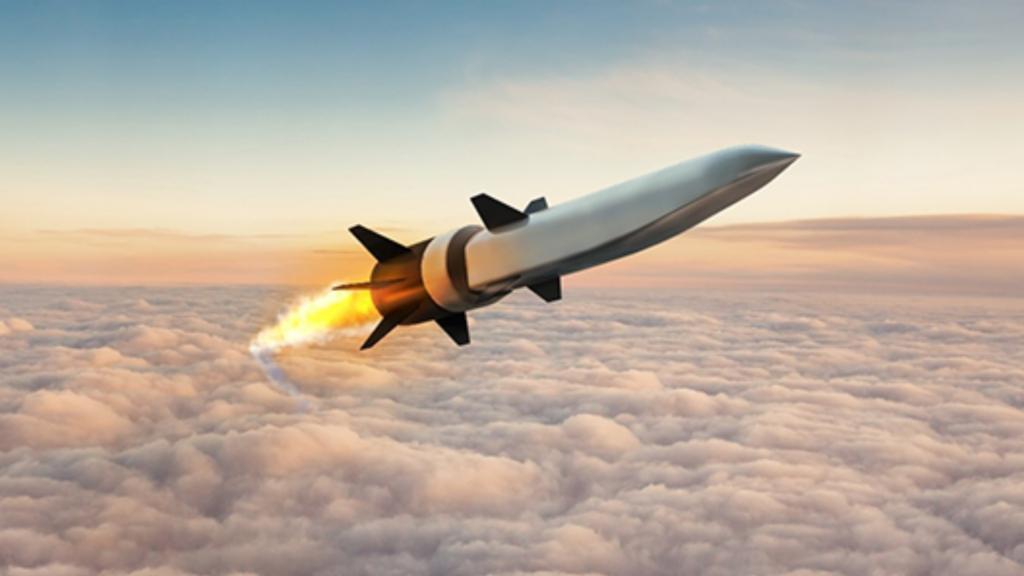
The U.S. Defense Advanced Research Projects Agency (DARPA) is exploring a new generation of hypersonic cruise missiles designed to survive increasingly sophisticated enemy air-defense systems. The proposed Next Generation Hypersonic Cruise Missile (NGHCM) program aims to combine extreme speed with long range, high-altitude flight, manoeuvrability, and a reduced radar signature—capabilities intended to make the weapon significantly harder to detect and intercept.
The initiative comes as military planners around the world reassess the effectiveness of conventional stand-off weapons against modern Integrated Air Defense Systems (IADS) deployed by near-peer competitors. Rather than relying on speed alone, DARPA wants a missile capable of penetrating contested airspace while remaining affordable enough for large-scale production.
TL;DR
- DARPA is seeking industry input for a Next Generation Hypersonic Cruise Missile (NGHCM).
- The weapon is intended to overcome advanced Integrated Air Defense Systems (IADS).
- It would use scramjet (air-breathing) propulsion and combine high speed with maneuverability and a low observable signature.
- DARPA wants a missile that is cost-effective enough for mass production, not just a technological demonstrator.
- The missile could be launched from fighter aircraft, bombers, or ground-based launch systems.
Why is DARPA developing the Next Generation Hypersonic Cruise Missile?
Modern air-defense networks have become increasingly capable of detecting, tracking, and intercepting incoming missiles. Countries investing heavily in layered Integrated Air Defense Systems combine long-range radars, surface-to-air missiles, electronic warfare, and command-and-control networks to create highly contested environments.
In its Request for Information (RFI), DARPA warned that the spread of these advanced defenses among peer adversaries could significantly reduce the effectiveness of existing stand-off strike weapons and limit the U.S. military’s operational freedom.
The NGHCM program is intended to address this challenge by creating a missile that is not only fast but also difficult to detect, track, and engage throughout its flight.
What makes NGHCM different from existing hypersonic missiles?
DARPA’s concept moves beyond the common assumption that greater speed automatically translates into greater survivability.
Instead, the agency is looking for a balanced design that optimizes several performance characteristics simultaneously, including:
- Long-range strike capability
- Sustained hypersonic cruise speed
- High-altitude flight
- Midcourse maneuverability
- Reduced radar and infrared signature
- Sufficient payload capacity
- Affordability for large-scale production
DARPA describes the goal as achieving a “revolutionary leap” in operational capability rather than simply producing a faster version of existing missiles.
Why speed alone is no longer enough
Hypersonic weapons—generally defined as traveling at speeds above Mach 5—have long been viewed as difficult to intercept because of their velocity.
However, military planners increasingly recognize that advanced air-defense systems are also improving.
A missile flying at extreme speed can still become vulnerable if:
- Its flight path is predictable.
- It generates a large radar or infrared signature.
- Defenders receive enough warning to position interceptors.
- It lacks the ability to maneuver during flight.
DARPA’s latest effort reflects this evolving reality. Instead of prioritizing maximum velocity alone, the agency wants a weapon that remains unpredictable and survivable throughout its mission.
How would the missile be powered?
One of the central technologies under consideration is scramjet propulsion.
What is a scramjet?
A scramjet, or supersonic combustion ramjet, is an air-breathing engine that compresses incoming air without rotating compressors before burning fuel while the airflow remains supersonic.
Unlike conventional rocket engines, scramjets:
- Carry only fuel rather than both fuel and oxidizer.
- Can operate efficiently at sustained hypersonic speeds.
- Potentially offer greater range for long-distance missions.
Because they rely on atmospheric oxygen, scramjets are generally lighter and more fuel-efficient than rockets during atmospheric flight, though they are also considerably more challenging to develop and operate.
What technologies is DARPA asking industry to develop?
The Request for Information outlines several technology areas where industry innovation is needed.
These include:
- Air-breathing propulsion systems
- High-energy-density fuels
- Advanced booster technologies
- High-temperature structural materials
- Thermal management systems
- Electrical power generation
- Flight control and actuation systems capable of operating under extreme temperatures
Managing heat remains one of the biggest engineering challenges for sustained hypersonic flight, as air friction can expose the missile’s surface to temperatures exceeding several thousand degrees Fahrenheit.
How far could the missile travel?
DARPA has asked companies to study missions covering a wide operational range.
Testing concepts are expected to examine flights between:
- 250 nautical miles (about 460 kilometers)
- 2,000 nautical miles (about 3,700 kilometers)
This broad envelope would allow the technology to support both tactical battlefield missions and long-range strategic strikes, depending on the final configuration.
Which military platforms could launch NGHCM?
Unlike some existing hypersonic programs designed for specific aircraft or launch systems, DARPA envisions a flexible architecture compatible with multiple platforms.
Potential launch options include:
Tactical fighter aircraft
Smaller variants could be carried by frontline fighter jets, enabling rapid precision strikes against heavily defended targets.
Heavy bombers
Larger versions could be mounted internally or externally on strategic bombers, increasing payload capacity and operational range.
Ground-based launch systems
DARPA is also considering vertical launch systems capable of firing the missile from land-based platforms.
Strategic-scale variants
The agency is evaluating heavier concepts that could maximize the advantages of air-breathing propulsion for longer-range missions and larger payloads.
This multi-platform approach would provide greater flexibility across different military operations and theaters.
Why affordability matters
One notable aspect of DARPA’s proposal is its emphasis on cost, not just capability.
Historically, cutting-edge hypersonic weapons have been extremely expensive to develop and manufacture, limiting procurement numbers.
DARPA wants the NGHCM to demonstrate that an advanced hypersonic cruise missile can also be affordable enough for production at operationally meaningful quantities.
A missile that costs too much to manufacture in large numbers may have limited value during prolonged conflicts where sustained inventories are critical.
The agency has also asked companies to propose accelerated development schedules, moving away from what it describes as traditional, slower acquisition processes.
Why this program matters
The NGHCM initiative highlights how the next phase of hypersonic weapon development is shifting from chasing record-breaking speeds toward creating balanced systems that combine survivability, flexibility, and production scalability.
If successful, the program could influence the future of long-range precision strike by demonstrating that hypersonic weapons can be:
- More difficult to detect and intercept.
- Adaptable across multiple launch platforms.
- Capable of sustained operations in contested environments.
- Practical to manufacture in larger numbers.
At this stage, however, the program remains in its early planning phase. DARPA’s Request for Information is intended to gather ideas from industry before any formal acquisition or prototype contracts are awarded.