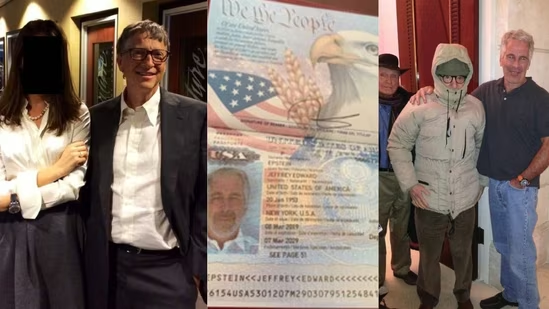
Names of influential figures from politics, business, academia, and culture are back in the spotlight after Democratic members of the US House Oversight Committee released a new tranche of previously unseen photographs linked to disgraced financier and convicted sex offender Jeffrey Epstein.
The images—made public just ahead of a Justice Department deadline to release investigative records- do not allege wrongdoing by the individuals pictured. But their release has reignited public debate about Epstein’s far-reaching social network, the extent of federal knowledge, and why accountability has remained elusive years after his death.
What are the newly released Epstein photos?
On Wednesday, Democrats on the House Oversight Committee published 68 additional photographs tied to Epstein, according to reporting by Reuters. The images are part of a much larger archive, roughly 95,000 photos, turned over to the committee by Epstein’s estate.
What makes this release significant
- The photos are undated and largely lack contextual details
- Several depict Epstein alongside well-known public figures
- Others include passports, identification documents, and screenshots of messages
- Faces of several women appearing with Epstein are redacted
The timing is notable. The release came one day before a legal deadline requiring the Justice Department to hand over documents related to its Epstein investigations.
Which global figures appear in the latest Epstein photo cache?
Among the most closely watched aspects of the release is the list of high-profile individuals whose names or likenesses appear in the newly published images.
Notable figures named or pictured
According to the Oversight Committee’s release and media reports, the latest batch includes references to:
- Bill Gates, Microsoft co-founder
- Woody Allen, filmmaker
- Steve Bannon, former White House chief strategist under Donald Trump
- Noam Chomsky, political philosopher and public intellectual
- David Blaine, illusionist and performer
- Salar Kamangar, former Google CEO
- David Brooks, columnist and author
It is critical to note: appearance in the photos does not imply criminal activity or misconduct. Several individuals previously acknowledged social or professional contact with Epstein years before his crimes were fully exposed.
Still, the resurfacing of these images underscores how deeply Epstein embedded himself within elite circles.
What else was included in the latest Epstein files?
Beyond celebrity photos, the new cache contains materials that have raised fresh questions about Epstein’s operations and the scope of federal investigations.
Passports and identification documents
- Multiple foreign passports with redacted personal information
- Epstein’s US passport
- IDs reportedly from countries including Russia and the Czech Republic, according to PBS
The presence of numerous travel documents has renewed speculation about Epstein’s international movements and contacts.
Screenshots of messages
The Guardian cited screenshots of messages allegedly involving a discussion about sourcing young women. One exchange refers to an “18-year-old from Russia” and includes messages such as:
- “I have a friend scout she sent me some girls today”
- “But she asks $1000 per girl”
- “Maybe someone will be good for J?”
While the sender and recipient remain unidentified, the language has intensified calls for greater transparency around what federal authorities knew—and when.
Why has one image drawn particular attention
BBC reporting highlighted one photograph showing a bottle labeled Phenazopyridine, a medication commonly used to relieve pain associated with urinary tract infections or irritation.
The image has drawn attention not because it proves wrongdoing, but because it adds another unexplained detail to a case already defined by unanswered questions.
As with many items in the release, there is no accompanying explanation of who took the photo, when it was taken, or why it was preserved.
How Democrats are framing the release
House Oversight Democrats say the goal is transparency—not speculation.
Representative Robert Garcia, the committee’s top-ranking Democrat, said the images raise concerns about what materials the Justice Department may still be holding.
“Oversight Democrats will continue to release photographs and documents from the Epstein estate to provide transparency for the American people,” Garcia said. “These new images raise more questions about what exactly the Department of Justice has in its possession.”
Representative Ro Khanna echoed that sentiment, saying the public deserves to know whether powerful individuals were shielded from scrutiny.
What did earlier Epstein file releases reveal?
This is not the first time Epstein-related documents have named prominent figures.
Previous batches included references to:
- Donald Trump, current US president
- Bill Clinton, former US president
- Prince Andrew, Duke of York
- Woody Allen, filmmaker
- Larry Summers, former US Treasury secretary
- Alan Dershowitz, attorney
As with the current release, these mentions varied widely in context—from flight logs and photos to contact lists—and did not necessarily imply criminal conduct.
Still, the cumulative effect has been to reinforce how Epstein moved comfortably among the world’s most powerful people for decades.
Why this matters now
Accountability and public trust
The Epstein case has become a symbol of institutional failure: a wealthy, well-connected individual who evaded sustained accountability until the final years of his life.
Each new document release raises the same fundamental questions:
- Who knew what—and when?
- Were investigations slowed or constrained by political pressure?
- Why have so few secondary figures faced consequences?
Pressure on the Justice Department
With a court-imposed deadline looming for the DOJ to release additional Epstein-related records, the Oversight Committee’s actions increase pressure on federal authorities to demonstrate transparency.
For many observers, this is no longer just about Epstein—it’s about whether the legal system treats the powerful differently.
What to watch next
Several developments could shape the next phase of the Epstein case:
- DOJ document releases following the legal deadline
- Potential congressional hearings based on new material
- Responses—or silence—from individuals named in the photos
- Renewed civil litigation tied to Epstein’s estate
Whether these disclosures lead to accountability or simply more unanswered questions remains an open—and deeply consequential—issue.
TL;DR
- House Oversight Democrats released 68 new, previously unseen photos linked to Jeffrey Epstein.
- The images reference high-profile figures including Bill Gates, Noam Chomsky, Steve Bannon, and Woody Allen.
- The photos are undated and lack context; inclusion does not imply wrongdoing.
- Additional materials include passports, message screenshots, and unexplained images.
- The release intensifies pressure on the Justice Department ahead of a document disclosure deadline.