
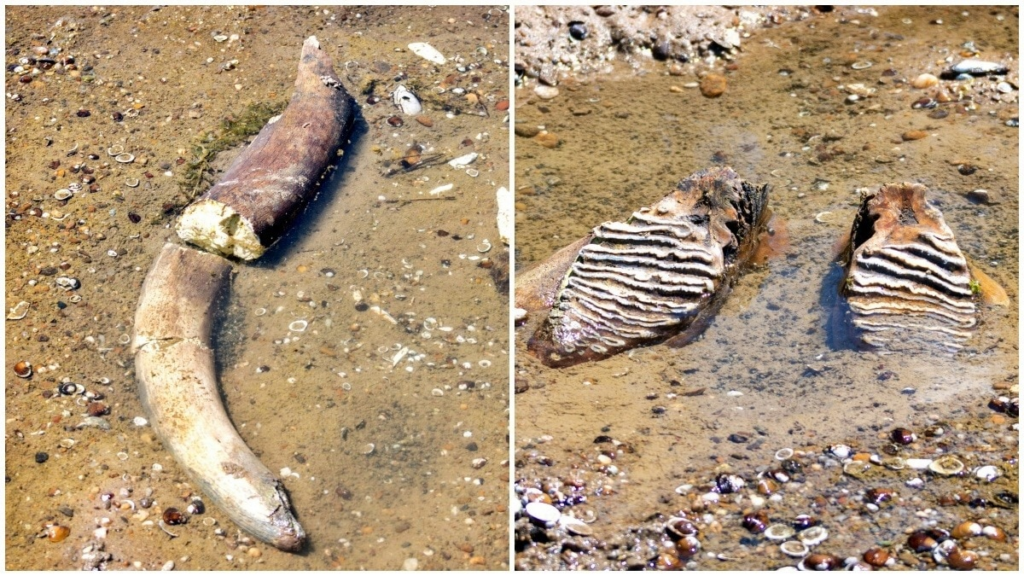
Europe’s prolonged heatwave has pushed the Danube River to some of its lowest recorded levels, uncovering archaeological treasures that had remained hidden beneath its waters for decades, and in some cases, thousands of years. From the remains of a woolly mammoth in Bulgaria to long-submerged shipwrecks in Croatia and Serbia, the shrinking river is exposing remarkable pieces of the continent’s past while disrupting life in the present.
The discoveries come as extreme heat and persistent drought continue to strain Europe’s waterways, affecting shipping, tourism, and even electricity generation.
Mammoth remains emerge from the Danube in Bulgaria
One of the most significant discoveries has been made along the Danube’s newly exposed riverbed in northern Bulgaria, where researchers believe they have uncovered the remains of a woolly mammoth.
The find reportedly includes a lower jaw, two tusks, and what may be a rib, offering another glimpse into the Ice Age mammals that once roamed Europe. Scientists are expected to conduct further examinations to confirm the age and identity of the fossils.
Historic shipwrecks resurface after decades underwater
The falling water levels have also revealed more recent chapters of European history.
In Croatia, the Danube has exposed the wreck of the Fulton, a cargo vessel that sank in 1937 while transporting coal. Farther downstream in Serbia, the receding river has brought parts of a World War II-era Nazi warship back into view after decades beneath the surface.
The discoveries highlight how prolonged drought can temporarily uncover historical artifacts that normally remain inaccessible beneath rivers and lakes.
Record-low water levels are disrupting daily life
The Danube, Europe’s second-longest river, flows through 10 countries and serves as a vital transportation and economic corridor.
This summer’s drought has reduced water levels to historic lows in several sections. In Hungary, authorities recorded the river at just 9 inches (about 23 centimeters), breaking the previous low-water record of 13 inches set in 2013.
The exceptionally low river has created major challenges for commercial navigation. Cargo vessels have been forced to reduce loads to avoid running aground, increasing transportation costs and delaying shipments. River cruise operators have also altered itineraries or canceled trips as navigation becomes increasingly difficult.
A cruise ship in Bulgaria recently ran aground on a sandbank, underscoring the growing impact of the drought on river traffic.
Hungary’s nuclear power plant faces an unprecedented shutdown
The shrinking Danube is affecting more than transportation.
Hungarian Prime Minister Peter Magyar announced that the country’s Paks Nuclear Power Plant would be completely shut down because insufficient river water is available for cooling operations. According to the government, it is the first full shutdown of the facility in its 44-year history due to low river levels.
The plant generates nearly half of Hungary’s electricity, raising concerns about potential pressure on the country’s energy supply if drought conditions persist.
Climate change and El Niño could prolong the crisis
Scientists have linked Europe’s extreme heat and prolonged drought to broader climate trends, with higher temperatures accelerating evaporation and reducing river flows.
Adding to those concerns, the World Meteorological Organization (WMO) has warned that El Niño conditions are expected to strengthen between August and October, potentially driving temperatures even higher in many parts of the world.
UN Secretary-General António Guterres recently warned that the climate crisis is intensifying, describing recent weather extremes as only “a warm-up act.”
As rivers continue to shrink across Europe, the continent is witnessing an unusual contrast. Ancient relics buried for centuries are returning to the surface even as modern infrastructure faces mounting pressure from increasingly severe drought conditions.