
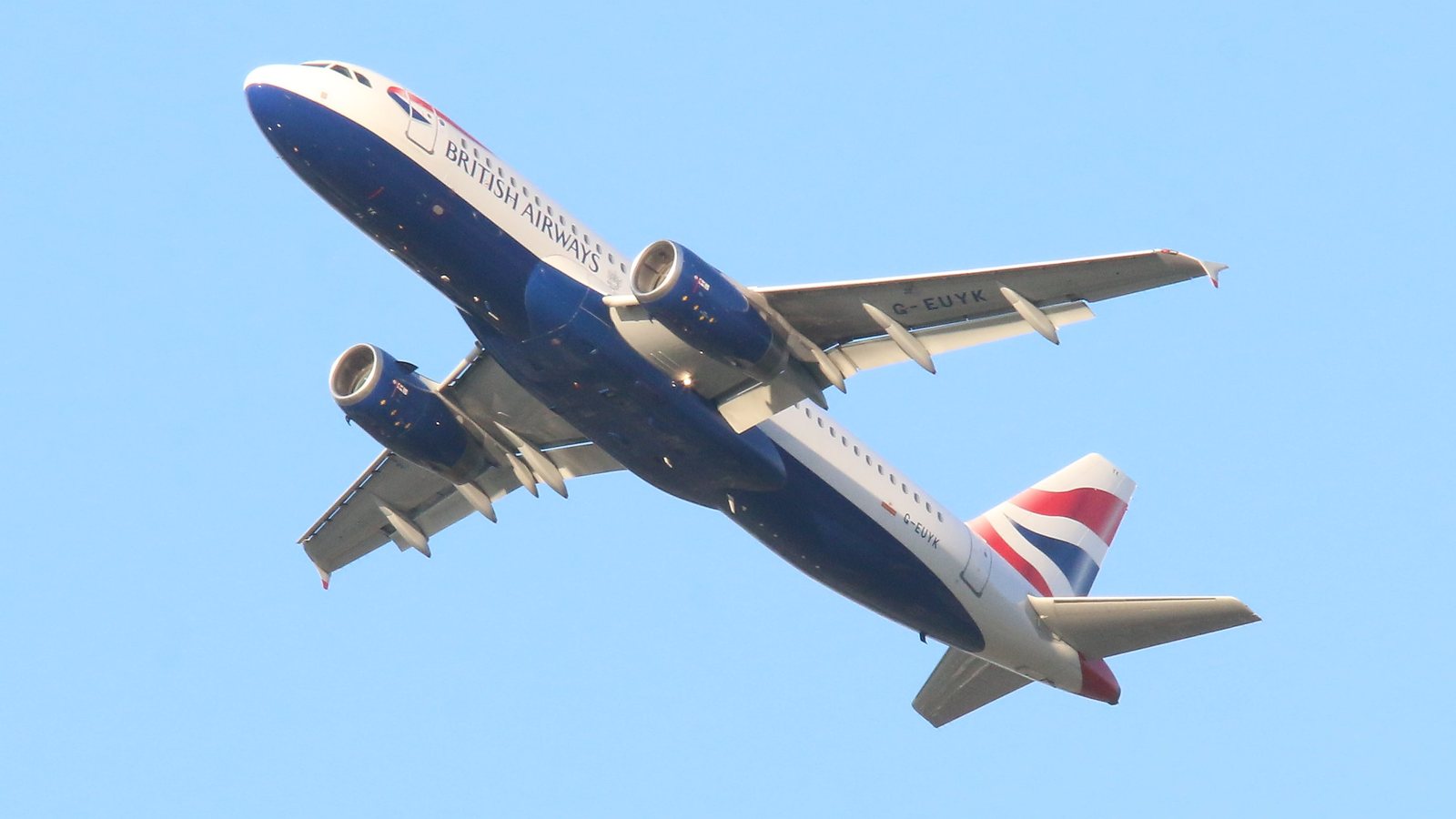

For about 20 minutes on the evening of Monday, Nov. 9, roughly 140 aircraft lost reliable GPS over the North Sea, eastern England and the Netherlands.
The aviation data group Hexbird traced the likely source of the GPS jamming to a point about 190 miles off the English coast. A sanctioned Russian cargo convoy, escorted by a Russian warship, was sailing through those waters at the time.
The Telegraph reported the findings on Nov. 24, after The i Paper first published them. Nobody has proven the warship did it, and Hexbird says its data can’t. Hexbird also found no operational effect on the flights.
What makes the episode notable is where it happened. Russian interference with satellite signals is routine over the Baltic and around Kaliningrad. “It’s the first time to my knowledge, first time we’ve seen anything this far west,” electronic warfare specialist Thomas Withington told The Telegraph.
How 140 flights lost GPS in 20 minutes
John Wiseman, the US analyst behind the GPSJam interference map, leads Hexbird. His method relies on a number most airliners broadcast in their ADS-B position messages. It reports how much the onboard GPS trusts its own position. When it drops across many aircraft at once, jamming is the likely cause.
The reported flights included a British Airways service from Heathrow to Stockholm and an easyJet flight from Manchester to Hurghada in Egypt. A Ryanair flight from Edinburgh to Rome was also on Hexbird’s list. Around 40 of the affected aircraft were in or near UK-controlled airspace, LBC reported.
The Dutch noticed first. The newspaper NRC reported the disruption on Nov. 15. Dutch air traffic control (LVNL) said seven flights approaching Amsterdam’s Schiphol Airport reported losing GPS.
Controllers guided all seven in, and LVNL said there were no flight safety consequences, AeroTime reported. Wiseman’s own reconstruction put the window at 6:08 p.m. to 6:27 p.m. local time.
Britain’s air traffic control provider, NATS, said no pilots reported GPS interference across its network that day, according to LBC. The Dutch digital infrastructure inspectorate, RDI, is investigating, DutchNews reported.
The case for the warship, and the doubts
Three Russian-flagged cargo ships made up the convoy: the Lady R, the Lady D and the Maia-1. The Telegraph says Western officials have suspected them of carrying weapons between Russia and North Korea. AeroTime notes that the Lady R and the Maia-1 have been on the EU’s sanctions list since June 2024.
James Droxford, a former naval intelligence officer, pointed to the escort. He told The Telegraph the warship was “almost certainly the origin of the GPS jamming, not the merchant vessels.” He suggested it may have been “a reaction to deter surveillance by the West against those ships.”
Hexbird is more careful. Its analysis “neither identifies the convoy as the source” of the jamming, “nor rules it out,” the group said.
A senior British defense source went further and dismissed the theory to the Daily Mail, according to Anadolu Agency. “Do the Russians have the capability to do that? Theoretically, yes,” the source said. “But none of the assets that were there at the time could have done what’s been described.”
Nobody agrees on which ship it even was. Some coverage named the frigate Admiral Golovko.
Maritime Executive’s tracking of the convoy tells a different story. It had the corvette Stoikiy escorting the ships out of the Baltic, and put what was “probably” the frigate Neustrashimy near the Thames Estuary on Nov. 10. The Admiral Golovko does not appear in that account at all.
The UK government has not blamed anyone. “We do not comment on operational security or intelligence matters,” a spokesman told The Telegraph. He added that “UK aviation is amongst the safest in the world.”
Jamming is not spoofing, and that matters for safety
People use the two words interchangeably. Europe’s aviation regulator, EASA, draws a sharp line between them in its latest safety bulletin on GPS interference, revised on July 3, 2026.
Jamming drowns out the weak satellite signal, so the receiver simply stops working. EASA says its effects are “typically immediate and noticeable by the flight crew.” Spoofing broadcasts fake satellite signals, so the receiver confidently calculates a wrong position. EASA says that is harder to detect, “thus posing more safety risk than jamming.”
The Nov. 9 data looks like jamming. Receivers lost confidence in their position; nothing suggests anyone pushed aircraft off course.
Some British coverage reached for the 2014 downing of Malaysia Airlines Flight MH17 as a comparison. The two have nothing in common. The Dutch Safety Board found that a Buk surface-to-air missile destroyed MH17 over eastern Ukraine, killing all 298 people aboard. Losing GPS does not bring down an airliner.
What pilots do when GPS drops out
Airliners flew long before GPS, and the ground-based systems they used still exist. EASA’s bulletin and the FAA’s Safety Alert for Operators 24002, issued in January 2024, describe the same playbook.
Crews cross-check the aircraft’s position against radio beacons on the ground, known as VOR and DME stations. They stay ready to switch to procedures that don’t need GPS. An instrument landing system (ILS) approach can replace a satellite-guided one. They also call air traffic control, which can steer them by radar.
The FAA tells US airlines to prepare before takeoff, too. They should plan extra fuel and check the conventional approaches at their destination and alternate airports.
The real costs are workload and false alarms. EASA lists spurious “PULL UP” terrain warnings, wrong clock times and corrupted ADS-B position reports among the side effects. Each one is manageable alone, but EASA warns that several at once can overload crews and controllers.
That is why the Schiphol arrivals mattered. They were satellite-guided approaches, where losing GPS bites hardest, and controllers had to step in.
Off Europe’s interference map, for now
EASA publishes a running list of airspace regions where aircraft report poor GPS quality. The version dated Nov. 25 names 49 regions over the previous 30 days. They include Warsaw, Tallinn, Riga, Vilnius, Helsinki, Kaliningrad and Norway’s Polaris region.
London, the Scottish region, Amsterdam and Brussels are not on it. That fits what happened on Nov. 9.
EASA’s list ranks regions by the share of a whole day’s flights with poor GPS quality. One 20-minute burst over some of the busiest airspace in the world barely registers against that.
For Americans flying into Heathrow or Schiphol, the North Sea is still not a known jamming zone. A repeat would change that.
This is the second Russia-linked security alarm in Europe this week. German media reported plans for a nuclear-armed Russian satellite on Nov. 23. And air traffic can stop without any adversary at all, as the FAA’s four-hour nationwide ground stop showed.
The UK government says it is funding a GPS interference monitoring program, The Telegraph reported. It is part of £155 million for critical infrastructure resilience.
The next official word is likely to come from the Netherlands, where the RDI is investigating the Nov. 9 jamming. No government has yet said publicly where the signal came from.