

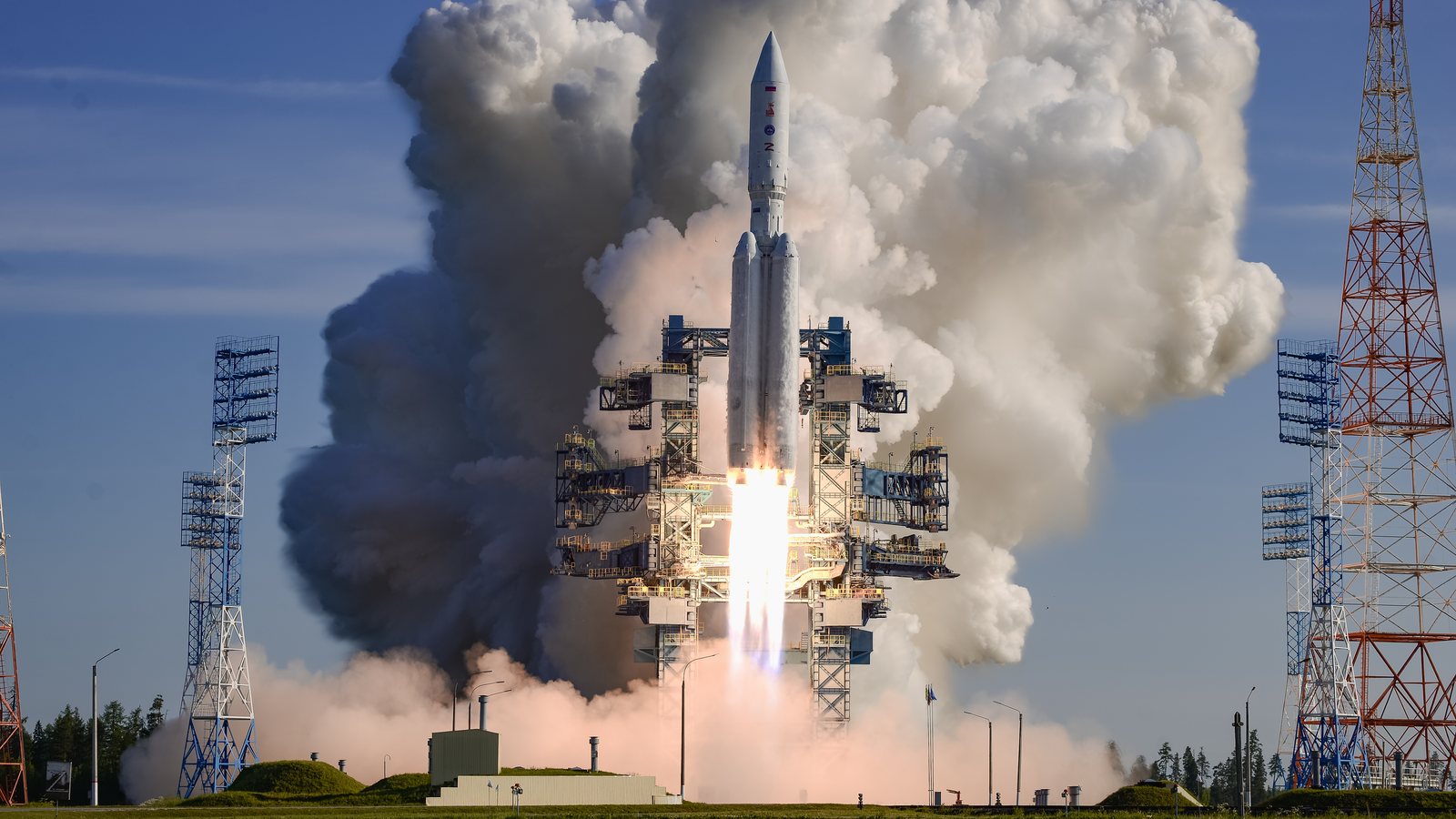
Western intelligence services have warned NATO allies that Russia could launch a nuclear-armed satellite within weeks, according to a joint investigation by German broadcasters WDR and NDR and the newspaper Süddeutsche Zeitung, published Monday, Nov. 23. The Russia nuclear satellite claim rests on unnamed sources. No government has confirmed it on the record, and Moscow calls it propaganda.
The reason to take it seriously anyway is that it isn’t new. The Pentagon’s own intelligence agency said in October that Russia is building such a satellite. What the German report adds is a name, a storage site and a launch window.
What the German investigation says, and who it relies on
According to the reporting, intelligence warnings circulated among several NATO countries in early November. They said Russia had a satellite called “Sputnik-S,” fully assembled and stored in the Moscow region for several years. It could be launched within 60 days and become operational soon afterward, Fox News reported, summarizing the German investigation. The German military’s Space Command reportedly considers a December launch possible.
The sources are thin on detail. The German outlets cite assessments involving Germany’s foreign intelligence service, the BND, and the Bundeswehr, Austria’s ORF reported. The reporting gives no number of sources.
The Telegraph noted that it is unclear which country or agency produced the findings. Defense Minister Boris Pistorius was reportedly briefed by military experts.
The timing is looser than some headlines suggest. Sixty days from the first week of November runs to roughly the first week of January, so the window straddles New Year rather than ending with 2026. Der Tagesspiegel’s account says only that a launch is possible “at any time in the coming weeks.” Nobody has said the satellite already carries a warhead.
Berlin says there is no immediate threat
German officials have been careful not to confirm the intelligence. Government spokesman Stefan Kornelius said Berlin takes the reports “very seriously,” The Telegraph reported. He added that “there is currently no immediate threat,” according to Der Tagesspiegel (our translation). The Foreign Office said stationing nuclear weapons in space would be a “flagrant breach of the Outer Space Treaty” (our translation).
Chancellor Friedrich Merz went further. Speaking alongside NATO Secretary General Mark Rutte in Berlin, he said the report showed “the extent to which Russia is apparently prepared to escalate the situation,” The Telegraph reported. A Bundeswehr spokesperson declined to comment on the report itself, ORF said. The spokesperson did say Russia has the capability, and that a detonation in space would mean going “back to the Stone Age” (our translation).
Rutte did not address the report directly. “I can assure you, we will always make sure that we defend every inch of NATO territory,” he said, according to Reuters as quoted by Fox News.
Moscow rejects all of it. Kremlin spokesman Dmitry Peskov said: “We haven’t seen the report. But there are so many ‘alleged’ and ‘possible’ claims in it.” The Russian embassy in Berlin called the reports “unfounded allegations” and “part of a propaganda campaign,” The Telegraph reported. It said Russia’s space activities serve “exclusively peaceful purposes.”
The Pentagon flagged the same program in October
The firmest public evidence comes from Washington, not Berlin. On Oct. 26, the Defense Intelligence Agency released its 2026 “Challenges to Security in Space” report, with information current as of July. It states that “Russia is developing a satellite designed to carry a nuclear weapon,” as quoted by Fox News.
The report warns that such a weapon “could cause rapid and sudden loss or degradation of thousands of satellites,” The Telegraph reported. That is a statement about development, not deployment. The DIA did not say a launch was imminent. The German report is the first to put a date range on it.
The concern goes back further. In February 2024, House Intelligence Committee chairman Mike Turner urged the Biden administration to declassify what he called a “serious national security threat.” A day later, White House spokesman John Kirby confirmed Russia had obtained a “troubling” anti-satellite capability. He said it was not operational and posed “no immediate threat to anyone’s safety,” the Associated Press reported. Kirby said it was space-based and would violate the Outer Space Treaty, but he declined to say whether it was nuclear.
Why one blast in orbit worries satellite operators
A nuclear weapon in orbit would not be aimed at cities. Its threat is to satellites, and not only an enemy’s. The DIA report says a detonation in space “would also leave lingering radiation belts,” The Telegraph reported, which would keep damaging spacecraft long after the blast.
US Space Command chief Gen. Stephen Whiting has estimated that about a third of satellites in low Earth orbit would fail within hours to days of such a blast, with more failing over the following months, Der Tagesspiegel reported. Low Earth orbit is also where SpaceX flies its Starlink internet satellites, and where Elon Musk wants to fly satellites carrying Nvidia chips.
There is a precedent. In 1962, the United States detonated a nuclear device about 400 km above the Pacific, ORF noted, and streetlights went out in Hawaii. That test, Starfish Prime, came five years before the treaty that now bans weapons of this kind in orbit.
The treaty Russia signed, and the 2024 veto
Article IV of the 1967 Outer Space Treaty bars parties from placing nuclear weapons or other weapons of mass destruction in orbit. Russia and the United States are among its 115 parties, the Arms Control Association notes. Moscow also signed the 1963 Partial Nuclear Test Ban Treaty, The Telegraph noted.
On April 24, 2024, Russia vetoed a US-Japanese Security Council resolution that reaffirmed that ban. The vote was 13 to 1, with China abstaining, the AP reported. Ambassador Vassily Nebenzia called the text “absurd and politicized” and pushed an amendment covering all weapons in space, which failed.
Britain’s UN ambassador, Barbara Woodward, spelled out the stakes to the General Assembly two weeks later. The radiation and debris from a single detonation “would render many orbits unusable for a very long time,” she said.
President Vladimir Putin has said Russia has no intention of putting nuclear weapons in space. The day after the veto, national security adviser Jake Sullivan said “the United States assesses that Russia is developing a new satellite carrying a nuclear device.” If Putin’s claim were true, Sullivan added, “Russia would not have vetoed this resolution,” the Arms Control Association reported.
What would confirm or end the story
Nothing the officials have said would let an outsider tell a nuclear payload from an ordinary military one. Russia launches military satellites regularly, and none of the reporting says how allies would know what Sputnik-S carries.
The Sputnik-S claim arrives four days after Putin joined Trump and Xi Jinping in a Shenzhen declaration that promised talks on nuclear risk, with no date yet set. If the German sources are right, the 60-day window closes in the first week of January.