
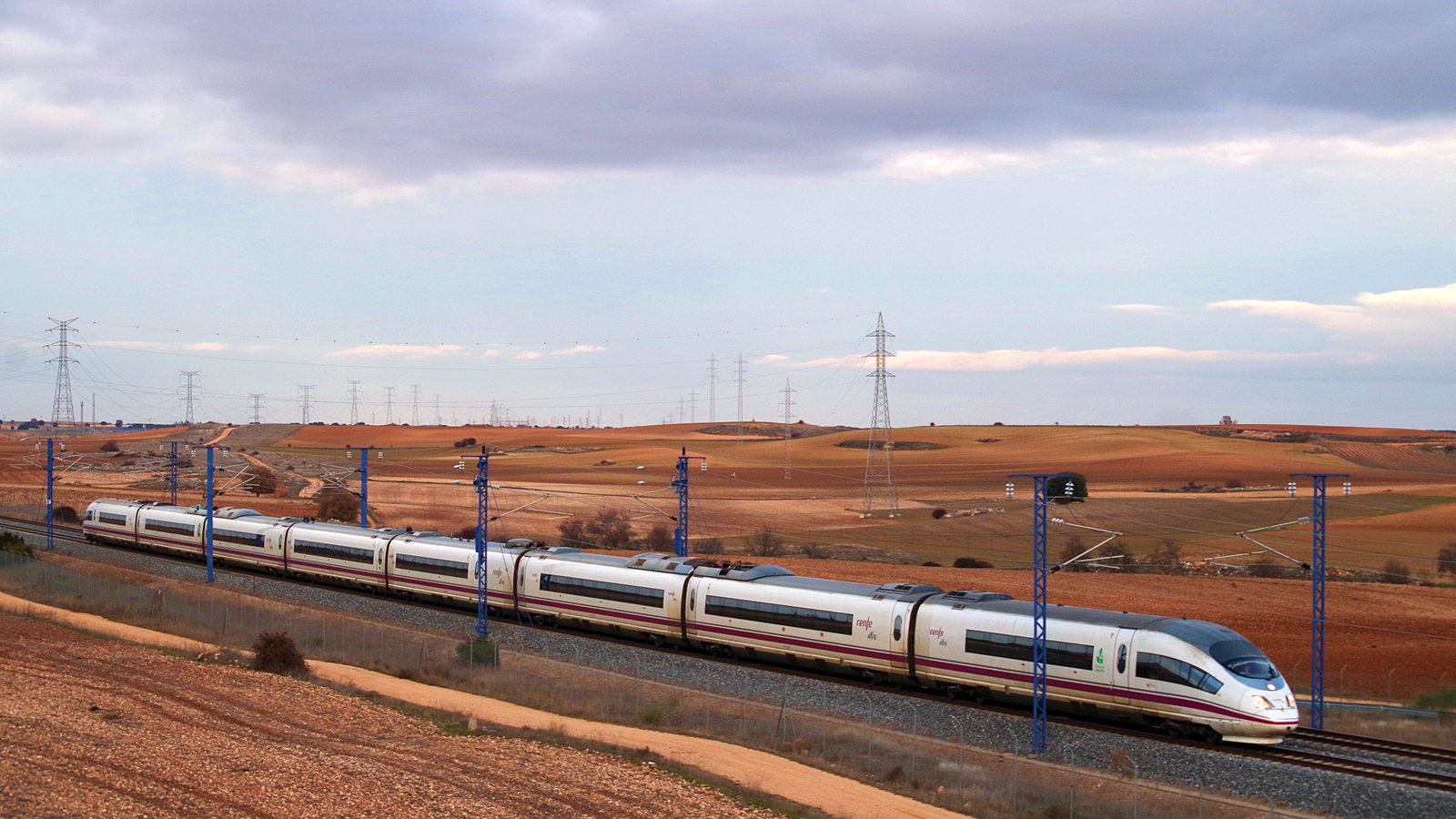

A Spanish high-speed train slammed into the back of a stopped train near Toledo on Wednesday morning, killing at least 68 people in the country’s second deadly high-speed crash this year. The Spain train crash happened after a computer fault knocked out the line’s protection system. Transport Minister Óscar Puente says the Adif control center then cleared the moving train to resume normal running with another train stopped ahead.
Puente called that decision “inexplicable.” The State Department says several US citizens were among the injured, and the US Embassy in Madrid issued an alert with helpline numbers for families.
Two trains bound for Seville on the same track
Both trains had left Madrid’s Atocha station for Seville. The private operator Iryo’s 7:54 a.m. service carried 147 people. State-owned Renfe’s 8:00 a.m. AVE carried 397, Railway Gazette reported.
At about 8:53 a.m., the AVE struck the rear of the stationary Iryo train between Los Yébenes and Urda, about kilometer 118 of the line. Two carriages derailed and fell down an embankment.
The regional government of Castilla-La Mancha put the toll at 68, ABC News reported. Regional president Emiliano García-Page said 24 of the dead were on the Renfe train and the rest on the Iryo train. At least 15 people suffered serious injuries, and more than 50 others needed hospital care.
Spanish media list former employment minister Fátima Báñez, who was traveling on the Iryo train, among the dead, The Olive Press reported. Officials warned the toll could still rise.
A computer fault, then an order to run at normal speed
Puente laid out a timeline on Wednesday. At about 8:30 a.m., a computer fault took down LZB, the in-cab signaling and train-protection system, along a 63-kilometer (39-mile) stretch near Urda. Six trains stopped automatically, Al Jazeera reported. Railway Gazette noted that this is the fail-safe response the system is built to give.
Control then passed to Adif’s control center at Atocha. Adif is the state company that runs Spain’s rail infrastructure. At 8:36 a.m., the center authorized the AVE to resume its trip “normally,” Puente said, according to Spain in English. The Iryo train was still stopped ahead at Urda station.
The minister said the AVE faced a red signal and a “target zero” indication, which tells a driver to stop. Rules and Adif’s own procedures did not allow normal running in that situation, he said.
What should have happened is simpler. With LZB down, trains may move only “on sight,” slow enough to stop short of any obstacle. Puente said that meant a limit of 40 km/h (about 25 mph), Railway Gazette reported. Instead, the AVE covered about 25 kilometers (15.5 miles) in roughly 17 minutes before the impact.
Those two figures alone tell the story. Twenty-five kilometers in 17 minutes is an average of about 88 km/h (55 mph), more than twice the on-sight limit. That average includes the time spent accelerating, so the train’s top speed was higher. The line allows up to 200 km/h (124 mph) on that section, but Puente said investigators don’t yet know the speed at impact.
“It’s not a system fault,” Puente said, per Railway Gazette. The computer failure stopped the trains. The order that followed put them back in motion.
What is still unknown
The key open question is why anyone gave the order. Puente said he had not spoken with the controller who made the decision, Spain in English reported. He said officials know who the controller is, and that the controller is “subject to whatever the investigation determines,” The Olive Press reported.
Spain’s Civil Guard has questioned the Adif operator who gave the order. It is not clear whether police see him as a witness or a suspect. Three investigators from the national rail accident commission, the CIAF, reached the site by early afternoon.
Puente also said the Iryo train received an instruction to move after the AVE had already restarted, and it is unclear why, according to Railway Gazette. Some Spanish outlets have published what they say are recordings between the control center and the drivers. We have not been able to verify them, and we are not quoting them.
The crash also raises a design question. Puente said, “There is no system that can come into operation when the LZB goes down.” If that holds, the only safeguard left was a person following a rule, and that safeguard failed.
The second deadly crash on this line in 2026
The crash came nine months after the Adamuz disaster in Córdoba province, on the same Madrid-Andalusia line and involving trains from the same two operators. That crash on January 18 killed 46 people.
Prime Minister Pedro Sánchez said the causes appear unrelated. But he told reporters, “It is unacceptable for a country like Spain to have two high-speed accidents in less than a year,” NBC News reported. He promised that “if there has been negligence,” it would come out. Sánchez faces a snap election next month, and most parties paused campaigning. Spain has declared three days of official mourning.
The Spanish Union of Railway Drivers said it would go ahead with a planned strike on Thursday “in defense of railway safety,” NBC reported.
Failures that hand control from automated systems back to people are not unique to Spain. In September, an FAA communications failure delayed about 1,000 flights at New York airports. In Spain, the handoff is now the center of a fatal-crash inquiry.
What American travelers should know
The State Department says it is working with Spanish authorities to identify all Americans involved and to provide consular help. “We encourage U.S. citizens in the area to notify loved ones of their safety and monitor local media for updates,” a spokesperson said, according to NBC. The department had not reported any Americans among the dead as of Wednesday, ABC News said.
The US Embassy in Madrid lists the train companies’ family lines as +34 900 101 020 and +34 900 001 403. Americans needing help can call the embassy at +34 915 872 200, or the State Department at +1-888-407-4747 from the US.
High-speed service between Toledo and Seville remains suspended. Trains are running between Madrid and Toledo and between Málaga and Seville, according to Adif as reported by The Olive Press. Renfe has added replacement buses from Atocha to Ciudad Real and Puertollano. Iryo canceled all Southern Corridor departures from Madrid with no restart date, ABC News reported.
The next step is the investigation. The CIAF’s technical inquiry and the Civil Guard’s questioning will determine who gave the 8:36 order, under what rule, and why the Iryo train was not protected. Travelers heading to Andalusia should check with their operator before leaving.