
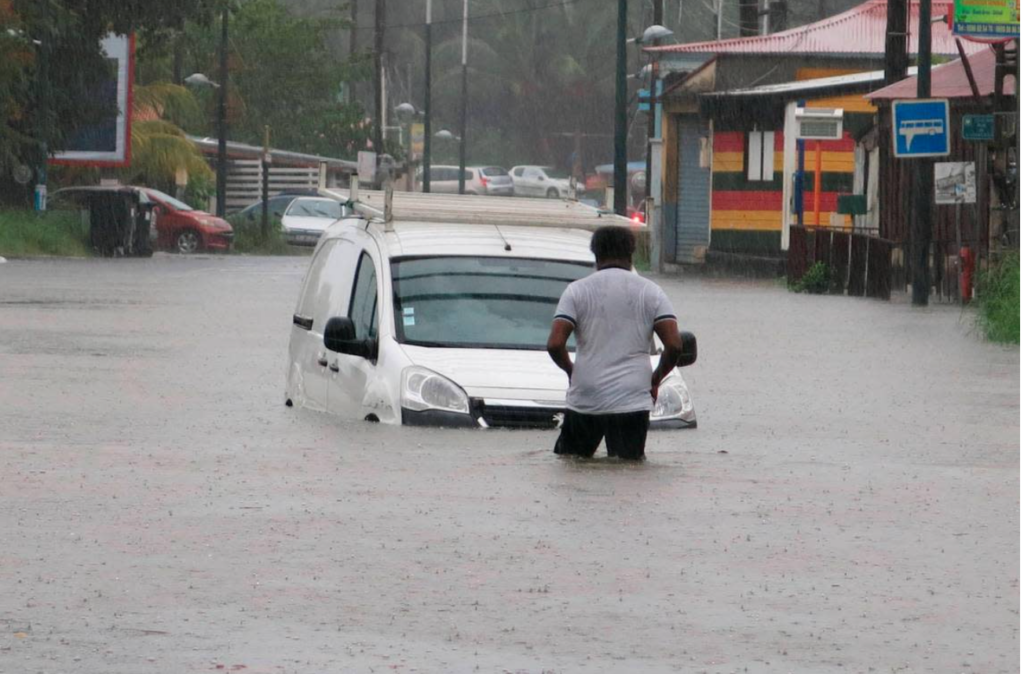


Hurricane Fiona left most of Puerto Rico without power on Sunday. A government agency said it caused catastrophic flooding and landslides on the island before barreling toward the Dominican Republic.
Hurricane Fiona has plunged 3.3 million residents into darkness
According to the eyewitnesses, the storm, hit Puerto Rico five years after Hurricane Maria devastated the island. It ripped up asphalt from roads, swept away a central road bridge, closed airports, and swamped cars. Moreover, it dumped rain in such quantities that some rivers were rising 20 feet in just hours.
“This has been catastrophic,” Puerto Rico Governor Pedro Pierluisi said at a news conference in the capital San Juan. Carmen Yulín Cruz, the former mayor of San Juan, said on Twitter that many believed the rainfall was worse than Hurricane Maria in 2017.
The center of the storm made landfall on the southwestern coast of Puerto Rico near Punta Tocon at 3:20 p.m. ET (1920 GMT) with maximum sustained winds of about 85 miles (140 kilometers) per hour, clearing the threshold for a Category 1 hurricane, the National Hurricane Center said.
Other details
President Joe Biden declared a state of emergency for the island, allowing authorities to provide disaster relief. Ports have been closed and flights out of the island’s main airport have been canceled. There have also been several road closures and a highway bridge in Utuado, in the island’s central mountainous region, has been washed away by flooding.
On the French island of Guadeloupe, one person was killed when his house was swept away by severe flooding. Hurricane Fiona has hit Puerto Rico just five years after Hurricane Maria – the worst in the island’s history – caused devastation there. Three weeks after the disaster, only about 10% of Puerto Ricans had electricity. Authorities opened more than 100 shelters and closed beaches and casinos. The national grid still remains fragile, with outages a daily occurrence.