
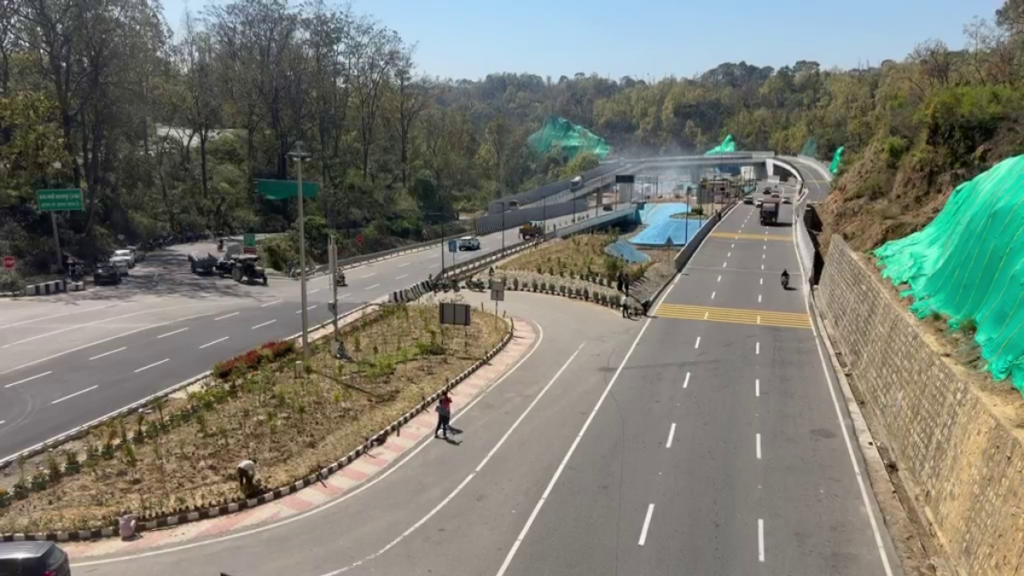
India’s road network just got a major upgrade. The newly inaugurated Delhi-Dehradun Expressway, flagged off by Narendra Modi, promises to transform how people and goods move between Delhi and Dehradun.
At first glance, it’s about speed. A journey that once stretched to six hours can now be completed in roughly two and a half. But beneath that headline lies a deeper story about design, sustainability, and regional growth.
What is the Delhi-Dehradun Expressway, and why does it matter?
The Delhi-Dehradun Expressway is a 213-kilometer, six-lane, access-controlled highway built at an estimated cost of ₹12,000 crore.
It is designed not just to shorten travel time but to decongest existing routes and improve connectivity across northern India.
Key highlights
- Length: 213 km
- Travel time reduced: ~6 hours to ~2.5 hours
- Lanes: Six-lane access-controlled
- Interchanges: 10
- Major bridges: 4
- Rail overbridges: 3
- Wayside amenities: 14
The expressway also connects seamlessly with corridors like the Delhi-Meerut Expressway, creating a more integrated road network.
How is the expressway structured?
The project has been developed in four phases, each covering a key stretch of the route.
Phase-wise breakdown
- Phase 1: Akshardham to Eastern Peripheral Expressway (EPE) Junction
- Phase 2: EPE Junction to Saharanpur Bypass
- Phase 3: Saharanpur Bypass to Ganeshpur
- Phase 4: Ganeshpur to Dehradun
This phased approach allowed construction to progress in parallel segments, speeding up overall completion.
Why phased development is important
- Faster execution of large infrastructure
- Better allocation of resources
- Reduced disruption to existing traffic
What makes this expressway environmentally unique?
One of the standout features of the Delhi-Dehradun Expressway is its focus on wildlife conservation.
Asia’s largest elevated wildlife corridor
The project includes a 12-kilometer elevated wildlife corridor, designed to allow animals to move freely without crossing traffic.
Key eco-friendly features
- Two dedicated elephant underpasses
- Six animal crossings
- Elevated sections to minimize habitat disruption
This is particularly significant in regions near forested zones, where highways often fragment ecosystems.
The Daat Kali tunnel
A 370-meter tunnel near the Daat Kali Temple has been constructed to preserve the surrounding environment while maintaining route efficiency.
Why this matters
- Reduces animal-vehicle collisions
- Preserves natural migration routes
- Sets a precedent for future infrastructure projects
How much will it cost to travel?
While the expressway is now operational, toll pricing is expected to be implemented soon.
Expected toll rates
- One-way trip: Around ₹670
- Round trip: Close to ₹1,000
These figures are not yet officially confirmed, but they provide a rough estimate of travel costs. The expressway is also projected to boost tourism in Dehradun, Mussoorie, Haridwar, and the Char Dham Circuit. It will also boost trade and economic activity between Delhi, western Uttar Pradesh, and Uttarakhand, while alleviating traffic congestion on existing routes.
Is it worth the cost?
For many commuters, the trade-off is clear:
- Significant time savings
- Reduced fuel consumption due to smoother traffic flow
- Improved safety compared to older highways
How will this impact tourism and the economy?
The expressway is not just about faster commutes. It is expected to reshape regional travel and economic activity.
Tourism boost
Improved connectivity will make it easier for travelers to reach popular destinations like:
- Mussoorie
- Haridwar
- The Char Dham pilgrimage circuit
Shorter travel times could encourage more frequent weekend trips and increase visitor numbers year-round.
Economic benefits
- Faster movement of goods between Delhi and Uttarakhand
- Growth in logistics and transport sectors
- Increased investment in roadside infrastructure and services
Reduced congestion
The expressway is also expected to ease traffic pressure on existing routes, particularly in and around Delhi and western Uttar Pradesh.
How does this compare to other Indian expressways?
India has been rapidly expanding its expressway network, but the Delhi-Dehradun corridor stands out for a few reasons.
What sets it apart
- Strong focus on environmental integration
- Direct connectivity to major tourist and religious hubs
- Strategic alignment with existing high-speed corridors
While projects like the Delhi-Mumbai Expressway emphasize long-distance freight and travel, this one balances urban connectivity with ecological sensitivity.
What challenges could arise?
No infrastructure project is without trade-offs.
Potential concerns
- Toll affordability for daily commuters
- Maintenance of eco-sensitive zones over time
- Managing increased tourist traffic in fragile hill regions
Long-term success will depend on how these challenges are handled.
TL;DR
- The Delhi-Dehradun Expressway cuts travel time from 6 hours to 2.5 hours
- It spans 213 km and includes modern, high-speed infrastructure
- Features Asia’s largest elevated wildlife corridor
- Expected toll: ₹670 one way (approximate)
- Likely to boost tourism, trade, and regional connectivity