
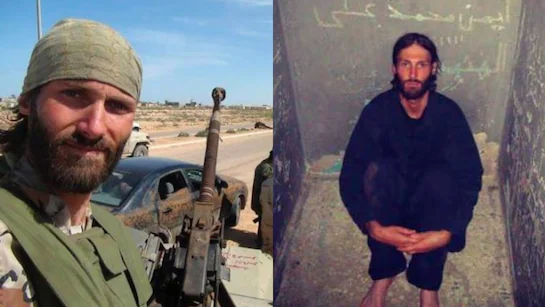
The arrest of Matthew Aaron VanDyke at Kolkata airport has drawn attention far beyond India’s borders. Authorities allege he entered the country on a tourist visa, travelled to the Northeast without permits, and attempted to cross into Myanmar to train armed groups engaged in conflict with the military junta.
But VanDyke isn’t an unknown figure. For over a decade, he has publicly described a controversial approach to modern conflict, training local fighters rather than deploying foreign combatants. Now, investigators are examining whether those earlier claims align with his alleged activities in India.
Who Is Matthew VanDyke, and What Is His Background?
VanDyke first gained public attention during conflicts in the Middle East, where he positioned himself not as a conventional soldier but as a facilitator and trainer.
In past interviews, including a YouTube series by History NOW, he described a mission centered on building local capacity for warfare.
His Core Philosophy
VanDyke framed his work around a specific idea:
- Foreigners should not fight wars for others
- Local populations should be trained to defend themselves
- Training must be fast, practical, and close to the frontlines
He claimed that his teams often had just four to six weeks to prepare recruits for active combat.
What Is the “Train Local Fighters” Model?
The approach VanDyke describes is not entirely new, but it exists in a legal and ethical grey zone when conducted privately.
How the Model Works
- Recruit individuals (often with prior military experience)
- Deploy them to conflict zones as trainers
- Focus on asymmetric warfare tactics (guerrilla-style operations)
- Train local forces to operate independently
Typical Training Areas
- Weapons handling
- Urban combat
- Tactical movement
- Increasingly, drone operations
According to reports tied to the current investigation, drones may have been part of the training provided to ethnic armed groups in Myanmar.
What Are the Allegations in India?
Indian authorities allege that VanDyke and a group of foreign nationals:
- Entered India on tourist visas
- Travelled to sensitive border regions like Mizoram without permits
- Crossed illegally into Myanmar
- Provided training to ethnic armed organisations
Six Ukrainian nationals were also detained in connection with the case.
Why This Is Serious
India has strict regulations governing:
- Movement in border states
- Foreign nationals’ activities
- Cross-border travel into conflict zones
If proven, these actions could violate multiple laws related to immigration, national security, and foreign engagement in armed conflict.
Why Myanmar Is Central to the Case
Myanmar has been in a state of prolonged conflict since the 2021 military coup.
Current Situation in Myanmar
- Ongoing fighting between the military junta and ethnic armed groups
- Increasing use of drones and unconventional tactics
- Fragmented control across regions
This environment makes Myanmar a potential destination for individuals seeking to train or support armed factions but also raises serious legal and geopolitical risks.
What Did VanDyke Previously Say About His Work?
In past interviews, VanDyke offered unusually candid insights into how his operations functioned.
Recruitment Criteria
He stated a preference for:
- Former special forces personnel
- Individuals aligned with his ideological framework
- Candidates willing to operate in unstable, high-risk environments
“We are very selective… I’m looking for people who believe in training local forces to resolve problems themselves.”
Conditions on the Ground
He described austere conditions:
- Accommodation in abandoned buildings
- Limited electricity
- Proximity to active frontlines
These details, once presented as proof of commitment, are now being revisited by investigators as potential indicators of operational patterns.
The Legal and Ethical Questions at Stake
This case raises broader questions that go beyond one individual.
1. Can Private Individuals Train Foreign Armed Groups?
In most countries, including India, the answer is no, at least not without authorization.
Such actions can:
- Violate sovereignty
- Escalate conflicts
- Complicated diplomatic relations
2. Is This Mercenary Activity?
VanDyke has framed his work as ideological rather than commercial. However, the line between
- Volunteer trainer
- Private military actor
- Mercenary
…can be difficult to define legally.
3. What About Global Security?
Unregulated training of armed groups can lead to:
- Spread of advanced combat techniques
- Increased use of drones in conflict zones
- Harder-to-control insurgent capabilities
Why Investigators Are Looking at His Past Statements
Authorities are not just focusing on incidents in India; they are examining VanDyke’s own words as potential evidence.
What They’re Looking For
- Patterns in how he recruits and operates
- Consistency between past claims and current allegations
- Networks of individuals involved in similar activities
This reflects a broader trend in investigations: public statements, interviews, and digital footprints increasingly serve as key evidence.
How This Case Fits Into a Larger Trend
VanDyke’s story highlights a growing phenomenon:
The Rise of Non-State Military Actors
- Individuals or small groups operating outside formal military structures
- Use of social media and online platforms for recruitment
This trend complicates traditional ideas of warfare, where states were the primary actors.
What Happens Next?
The case is still developing, and several key questions remain:
- Will formal charges be filed under national security laws?
- What evidence links the group to activities in Myanmar?
- How will this affect India’s diplomatic stance on cross-border conflicts?
TL;DR
- American national Matthew VanDyke was arrested in India over alleged illegal travel to Myanmar.
- He has previously described training local fighters for conflicts worldwide.
- Authorities are examining whether his past statements align with current allegations.
- The case raises major legal and ethical questions about private military involvement.
- It also reflects a broader trend of non-state actors influencing modern warfare.