
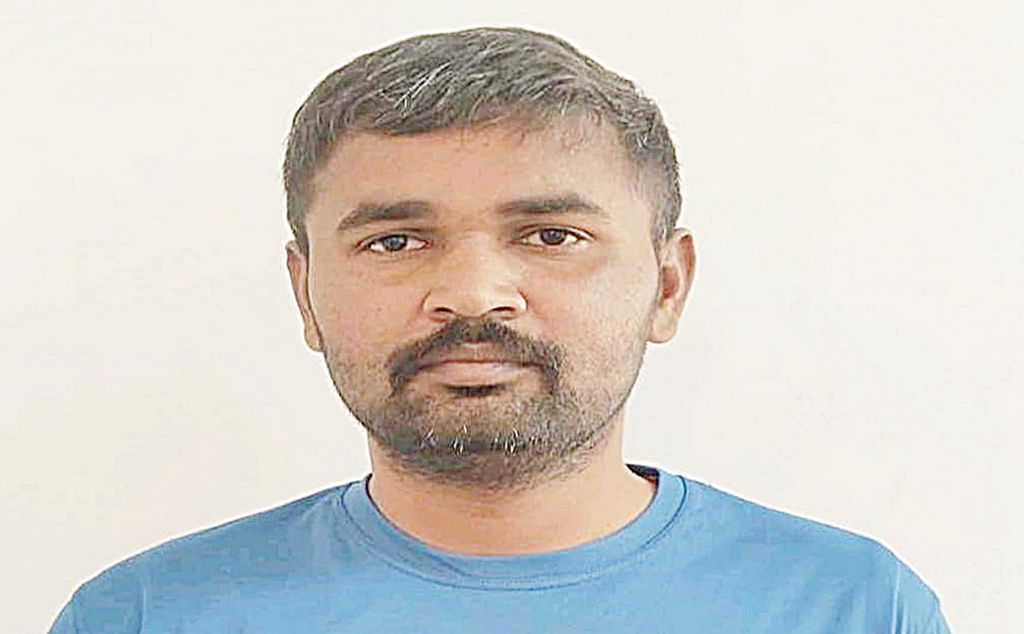
The arrest of a 28-year-old man from Rajasthan’s border district of Jaisalmer has once again put the spotlight on Pakistan’s alleged intelligence operations inside India—and the evolving methods used to recruit civilians for espionage.
Rajasthan CID (Intelligence) has arrested Jabbara Ram, accusing him of spying for Pakistan’s Inter-Services Intelligence (ISI) by sharing sensitive information about Indian security forces. Investigators say the case involves a classic honey trap, small but steady financial transfers, and the use of everyday digital platforms like WhatsApp to relay information.
While the investigation is ongoing, officials say the case highlights how intelligence agencies increasingly rely on low-profile civilians in border areas to gather operational details with minimal risk.
Who is Jabbara Ram, the man arrested for ISI espionage?
Jabbara Ram, also spelled Jhabararam or Jhabbara Ram in official records, is a 28-year-old resident of Nedan village in Pokhran tehsil of Rajasthan’s Jaisalmer district, close to the India–Pakistan border.
According to investigators:
- He ran an E-Mitra digital service kiosk, a common government-authorized center used for online forms, payments, and certificates.
- He had no prior criminal record.
- Locals reportedly described him as an unremarkable figure with no known political or extremist affiliations.
Authorities believe this low-profile background made him an ideal target for recruitment, someone who could move freely, access information, and avoid drawing attention.
How was Jabbara Ram arrested?
Jabbara Ram was arrested on Friday by Rajasthan CID (Intelligence) from the Sankra police station area of Jaisalmer under provisions of the Official Secrets Act.
He was produced before a local court on Saturday, which granted the CID four days of police remand, allowing investigators to question him and verify information on the ground.
On Monday, a Jaipur-based CID team brought him to multiple locations in the Jaisalmer district as part of a verification exercise. He was later taken back to Jaipur on Tuesday, where further interrogation is expected to continue.
What information is he accused of sharing with ISI?
According to investigators, Jabbara Ram allegedly passed on sensitive and strategic information related to Indian security forces to handlers linked with Pakistan’s ISI.
Officials claim the material included:
- Photos and videos of Indian Army convoys
- Images of Air Force and BSF vehicles
- Details of troop movements and deployments
- Visuals and information from areas around Pokhran and Jaisalmer
- References to Operation Sindoor (details not publicly disclosed)
Investigators say he was instructed to send four to five photos or videos every month, suggesting a steady, ongoing flow of intelligence rather than a one-off incident.
He is also accused of forwarding sensitive information shared in local WhatsApp groups, a tactic that allows intelligence handlers to harvest data without directly accessing restricted areas.
Where did the CID conduct verification?
During his police remand, CID teams took Jabbara Ram to several locations to verify his alleged activities:
- His residence in the Pokhran area, which was searched but yielded no incriminating material
- Pokhran town
- Gadisar crossing in Jaisalmer city
- Other suspected vantage points from where photos and videos may have been captured
While no physical evidence was recovered from his home, officials say digital evidence from his mobile phone and financial records forms the backbone of the case.
What is the alleged honey-trap angle?
One of the most striking elements of the case is the alleged use of a female ISI handler, identified by investigators as “Muskan.”
According to officials:
- Ram was allegedly honey-trapped, a method involving emotional or romantic manipulation to recruit or control assets.
- Communication reportedly took place via WhatsApp and direct chats.
- His mobile phone examination allegedly confirmed exchanges of sensitive information in return for money.
Honey-trapping has long been a documented tactic in espionage, particularly effective against civilians with limited awareness of intelligence tradecraft.
Was Jabbara Ram paid for the information?
Investigators say a preliminary review of Ram’s bank accounts revealed multiple transactions totaling around ₹70,000, allegedly linked to ISI-connected accounts.
While the amount is relatively small, officials say this is typical of such operations:
- Payments are kept modest to avoid triggering suspicion.
- Funds are often transferred in installments.
- Financial incentives are combined with emotional pressure and flattery.
Authorities are now tracing the source and routing of these transactions to establish foreign links conclusively.
Why are WhatsApp groups a concern in espionage cases?
Officials noted that Jabbara Ram was connected to multiple local WhatsApp groups, from which he allegedly forwarded sensitive content.
This method raises broader security concerns because:
- Information shared casually in local groups can include photos, movement updates, or rumors.
- Civilians may unknowingly post sensitive visuals.
- Espionage networks can exploit this data without direct infiltration of military facilities.
Security experts have repeatedly warned that open-source intelligence (OSINT)—information gathered from public or semi-public platforms—can be highly valuable to hostile agencies.
Why this arrest matters
The Jabbara Ram case is not just about one individual—it reflects a broader pattern.
Indian security agencies have increasingly flagged attempts by Pakistan’s ISI to:
- Recruit civilians in border districts
- Use digital platforms instead of traditional spies
- Rely on low-cost, low-risk assets
- Exploit emotional vulnerabilities rather than ideology
The fact that Ram was arrested just hours before Republic Day, according to reports, adds to concerns about the timing and potential security implications.
What happens next in the case?
As of now:
- Jabbara Ram remains under investigation by Rajasthan CID (Intelligence).
- Digital forensics of his phone and accounts is ongoing.
- Authorities are verifying whether others were involved or similarly compromised.
Officials stress that all allegations will need to stand up in court, and further details may emerge as the investigation progresses.
TL;DR
- Rajasthan CID arrested Jabbara Ram, a 28-year-old from Jaisalmer, for allegedly spying for Pakistan’s ISI.
- He is accused of sharing photos and videos of the Indian Army, Air Force, and BSF movements.
- Investigators say he was honey-trapped by a female ISI handler and paid around ₹70,000.
- The case highlights ISI’s alleged use of civilians and digital platforms for intelligence gathering.
- The investigation is ongoing, with digital and financial trails under scrutiny.