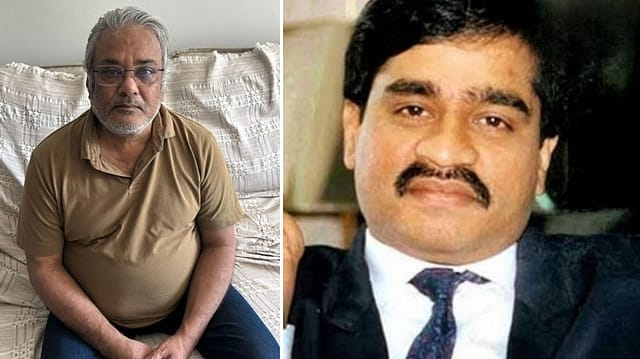
The deportation of Salim Dola from Istanbul to India has brought renewed focus to the global networks tied to Dawood Ibrahim and his criminal syndicate, often referred to as D-Company. Indian authorities confirmed that Dola was handed over to investigative agencies on April 28, 2026, following a coordinated international operation.
Officials say Dola—long suspected to be a key operator in Dawood’s drug network, is now under interrogation. His arrest could provide rare insight into how transnational narcotics operations linked to Indian organized crime actually function today.
Who Is Salim Dola?
Early Life and Entry Into Crime
Salim Dola was born in 1966 in Mumbai’s Byculla neighborhood, a densely populated area that has historically been linked to the city’s underworld networks.
- Came from a middle-class background
- Entered criminal circles at a young age
- Built connections with figures tied to D-Company
One of his early associations was with Chhota Shakeel, a known lieutenant of Dawood Ibrahim. That connection is believed to have played a pivotal role in Dola’s rise within organized crime.
How Did He Rise in the Underworld?
Dola’s criminal trajectory reflects a broader pattern seen in Mumbai’s underworld, starting with low-level smuggling and scaling into high-value narcotics operations.
From Gutkha Smuggling to Drug Trafficking
His early activities reportedly included:
- Smuggling gutkha (chewing tobacco) across Mumbai and Delhi
- Building logistics networks and distribution channels
Over time, he transitioned into narcotics:
- Began trafficking marijuana (ganja)
- Expanded into higher-risk, higher-profit drug markets
This shift marked his move from small-scale operations to more organized, syndicate-linked activity.
What Are the Key Cases Against Him?
Dola has been on the radar of Indian law enforcement for over a decade, with multiple arrests tied to drug trafficking.
2012 Narcotics Case
- Arrested by the Narcotics Control Bureau
- Allegedly caught with 80 kilograms of marijuana
- Spent nearly five years in prison
- Later acquitted by the court
2018 Fentanyl Seizure
- Arrested by the Anti-Narcotics Cell of the Mumbai Police
- Authorities claimed to have seized 100 kilograms of fentanyl
- Granted bail within four months after forensic reports did not confirm the substance
These cases highlight a recurring issue in narcotics enforcement: seizures and arrests that don’t always result in convictions due to evidentiary gaps.
What Role Did He Play in the Synthetic Drug Trade?
Authorities now suspect Dola played a critical role in expanding into synthetic narcotics—an area far more lucrative and dangerous than traditional drugs.
Entry Into Synthetic Drugs
After his release from prison, Dola reportedly connected with fugitive supplier Kailash Rajput.
Together, they are believed to have:
- Entered the synthetic drug market
- Began producing a substance known as “Button.”
What Is “Button”?
“Button” is described as:
- A tablet or pill-form drug
- Allegedly made using opioids like fentanyl
- Highly potent and dangerous
Fentanyl, in particular, has been linked to overdose crises globally due to its extreme potency—even in small doses.
What Happened After He Left India?
Following his 2018 bail, Dola reportedly fled the country, raising questions about enforcement gaps and international mobility.
Alleged Operations in the UAE
Authorities believe he relocated to the United Arab Emirates, where he:
- Established a real estate business
- Used his son’s name, Tahir, for the venture
- Allegedly routed drug money into property investments
This aligns with a common tactic in organized crime: laundering illicit proceeds through legitimate businesses.
How Was He Brought Back to India?
The deportation from Istanbul signals coordinated action across borders.
International Intelligence Operation
According to officials:
- Indian intelligence agencies tracked Dola’s movements
- Collaborated with international counterparts
- Secured his detention and deportation from Turkey
While details remain limited, such operations typically involve:
- Interpol coordination
- Diplomatic channels
- Immigration and extradition frameworks
Why Is This Arrest Significant?
Dola’s return could have broader implications beyond a single case.
Potential Intelligence Breakthrough
As an alleged insider in Dawood Ibrahim’s network, Dola may provide:
- Details on current drug trafficking routes
- Information on financial networks and laundering methods
- Insight into D-Company’s global operations
Renewed Focus on Organised Crime
The case highlights:
- The persistence of legacy crime networks
- Their evolution into modern drug economies
- The role of international hubs in sustaining operations
What Happens Next?
Indian investigative agencies are currently interrogating Dola. The next steps may include:
- Formal charges under narcotics and organised crime laws
- Financial investigations into alleged money laundering
- Cooperation with international agencies for broader crackdowns
Much will depend on what authorities uncover during interrogation—and whether it leads to additional arrests.
The Bigger Picture: India’s Fight Against Transnational Crime
This case underscores a larger challenge: tackling crime networks that operate across borders.
Key Issues
- Movement of suspects across jurisdictions
- Use of legitimate businesses for laundering
- Rapid shift toward synthetic drugs
Why It Matters
Synthetic narcotics like fentanyl are:
- Easier to produce than traditional drugs
- More profitable
- Far more dangerous
Cracking down on such networks requires sustained international coordination.
TL;DR
- Salim Dola, an alleged aide of Dawood Ibrahim, has been deported to India from Istanbul.
- He is suspected of playing a key role in drug trafficking, including synthetic opioids.
- His criminal history includes multiple arrests, though convictions have been limited.
- Authorities believe he operated internationally and laundered money through real estate.
- His interrogation could reveal critical details about transnational crime networks.