India’s plan for the Siang dam, an 11,200-megawatt project meant to counter a giant Chinese dam upstream, has set off violent unrest in Arunachal Pradesh. On the night of Friday, Oct. 23, a crowd burned an office of the state-run hydropower company NHPC in Pasighat. Part of the town’s police station was also damaged.
The project is still only at the survey stage. But it sits where two arguments meet. New Delhi says India needs its own reservoir to guard against China’s Medog dam, which would be the largest hydropower plant in the world. Many people in the Siang valley, most of them from the Indigenous Adi community, say the price is their land.
A shutdown that ended in fire in Pasighat
Four groups called a 12-hour shutdown across Siang, Upper Siang and East Siang districts, The Week reported. They included Adi Bane Kebang United and the youth wing of the Siang Indigenous Farmers’ Forum.
The first clash came early. Police fired tear gas at protesters near Geku village around 7 a.m., and at least four women were hurt, Outlook reported. Siang police chief Kamdam Sikhom said the crowd had broken prohibitory orders.
Protesters said several people struggled to breathe after the tear gas. EastMojo, citing the Arunachal Times, said five women went to the hospital.
Worse came in Pasighat that evening. Protesters blocked the highway after 5 p.m. and refused to leave, East Siang Deputy Commissioner Jayanti Pertin told Outlook. A magistrate then ordered tear gas.
Police told Down To Earth that 200 to 300 people threw stones at officers.
The clashes lasted until about 3:30 a.m. Saturday. By then the NHPC office had burned, and crowds had damaged at least nine police vehicles, setting some on fire. They also attacked the homes of state BJP president Kaling Moyong and two legislators, Ninong Ering and Oni Panyang.
Some in the movement quickly distanced themselves. “I want to make it clear that the violence that took place was completely contrary to our movement’s ideology and objectives,” Otul Jerang, a Pasighat resident, told Down To Earth.
India’s Home Ministry sent two companies of the Rapid Action Force, a riot-control unit, about 250 officers each. By Oct. 24, police had arrested or detained 15 people, Inspector General Hibu Tamang said.
What the Siang dam would be
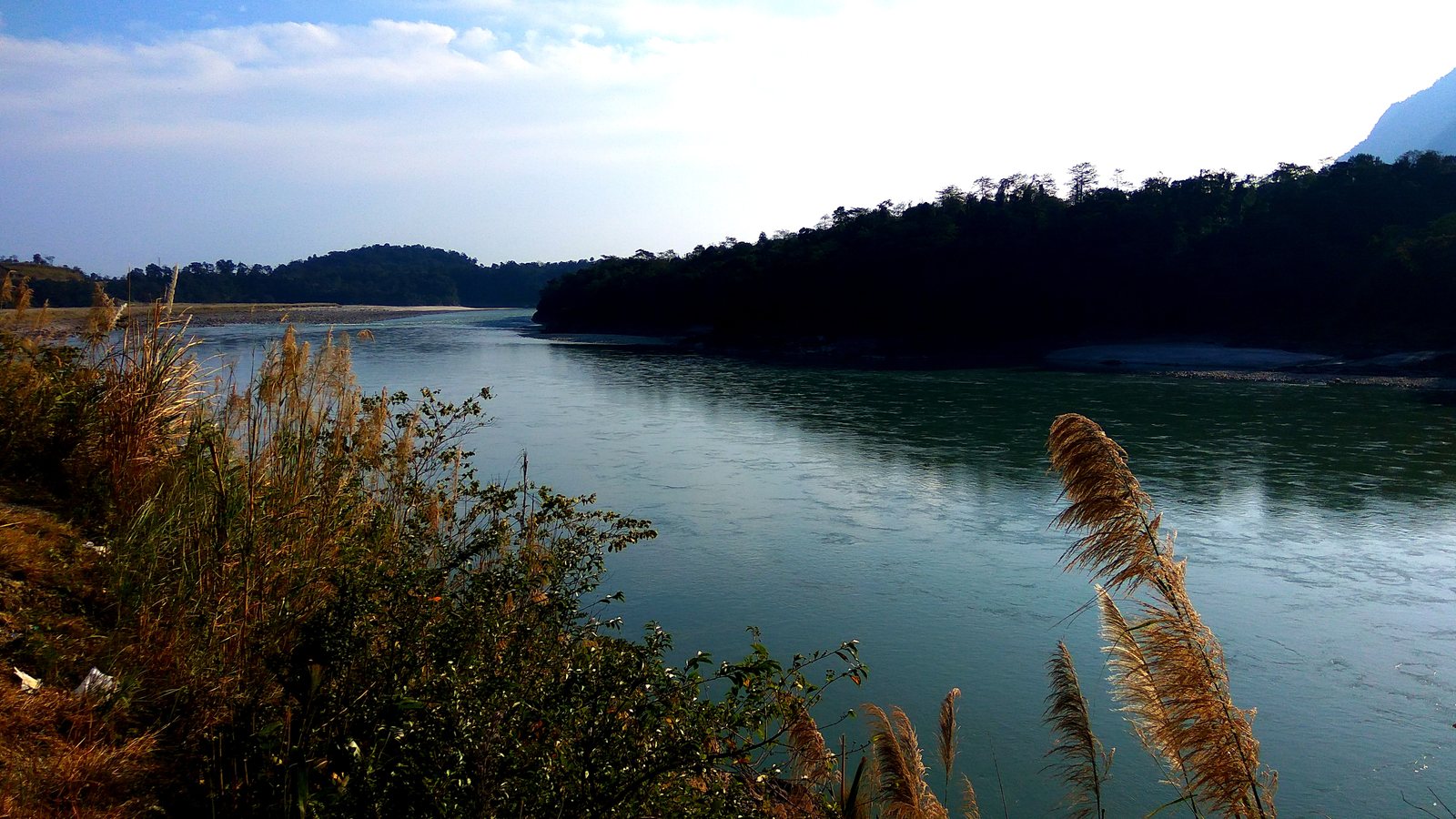
The Siang Upper Multipurpose Project, or SUMP, would block the Siang. That is the name the Yarlung Tsangpo takes after it leaves Tibet. Downstream in Assam, the same river becomes the Brahmaputra.
The idea surfaced in 2017, Mongabay India reported. The government think tank NITI Aayog proposed one large storage dam in place of two smaller ones. NHPC drafted a pre-feasibility report in December 2022 that looked at three sites.
Its preferred site, Parong, would need a dam wall about 250 meters high. The reservoir would hold 9.2 billion cubic meters, according to Mongabay. Chief Minister Pema Khandu put the cost at about 1.5 trillion rupees in September, and said it could reach 2 trillion, ANI reported.
Nobody has an official count of who would lose their homes. The Siang Indigenous Farmers’ Forum told Mongabay that 27 villages would likely go under water and 43 would feel the impact. Scroll put the number of fully submerged villages at 13. They include fields where Adi farmers grow ginger, cardamom and rice.
Why India ties the dam to China’s Medog project
China approved a 60,000 MW hydropower project in Tibet’s Medog County in December 2024. Work began in July 2025, about 30 kilometers north of Arunachal Pradesh, Scroll reported. The plant would have nearly three times the capacity of the Three Gorges Dam, today’s largest.
Indian officials fear China could hold back water in the dry season or release a surge in the monsoon. A 2022 government technical report said the Siang dam “will act as a flood cushion” against a sudden release from China, Scroll reported. Khandu calls SUMP a national project with security stakes. He says China has turned down requests from India and Bangladesh for details and talks.
The stakes downstream are large. The Brahmaputra supports about 130 million people in India’s northeast, the Lowy Institute’s Interpreter noted. More than 160 million people in Bangladesh also rely on it. The fight echoes the long dispute between Egypt and Ethiopia over the Nile dam.
Some water experts doubt a dam is the right answer. Dam operators tend to keep reservoirs full to make more power, Soumya Dutta of the Impact and Policy Research Institute told Scroll. A full reservoir has little room to absorb a flood. Sumit Vij of Wageningen University called for “a diplomatic solution, a dialogue solution, and not a dam solution.”
That leaves India making a costly bet with little data. Without China’s operating plans for Medog, nobody can say how much protection a Siang reservoir would buy. The land it would flood, by contrast, is already mapped village by village.
What the Adi community is fighting for
The protesters’ demands are concrete. They want 10 detained activists freed and the suspension of several village headmen, known as gaon buras, reversed. They also want survey work stopped and paramilitary forces pulled out, according to IANS via The Morung Express.
Mistrust of the survey runs deep. “We know that if the PFR happens here, the project will come through,” Dubit Siram, a Parong resident and farmers’ forum member, told Mongabay last year. Authorities have also held at least four people under the Arunachal Pradesh Unlawful Activities (Prevention) Act, Down To Earth reported.
The state insists nothing has been approved. Khandu chaired the first meeting of a high-level committee on the project in Yingkiong on Sept. 29. He said the survey was “only an initial assessment and does not amount to final approval,” UNI reported.
“If the experts determine after the PFR that the project cannot be built, there will be no further process,” Khandu said, according to ANI. He added that affected communities could still reject the project through the formal process.
Talks offered, troops still deployed
After the violence, Khandu offered talks. “The government’s doors are always open,” he said. The opposition Congress party wants an independent inquiry into the use of tear gas.
Pressure now comes from the state assembly too. On Tuesday, Oct. 27, Peoples Party of Arunachal president Nabam Vivek urged the government to pull out paramilitary forces and free those arrested, UNI reported.
The dam fight plays out as New Delhi and Beijing manage a wider relationship, including China’s last-minute confirmation of Xi Jinping’s India visit for the BRICS summit.
The next test is the survey calendar. Khandu said the pre-feasibility study would run through November, December and January. It must judge whether a dam can stand in Seismic Zone V and how much it would protect against a release from upstream. If surveyors return in November with security forces still in the valley, the protests are likely to return with them.