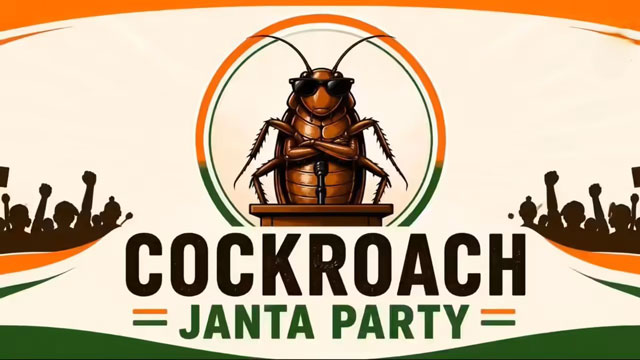
A satirical online movement called the “Cockroach Janta Party” has exploded across Indian social media after controversial remarks by India’s Chief Justice triggered outrage, memes, political commentary, and a flood of ironic membership applications.
What began as an internet joke quickly snowballed into a full-fledged digital phenomenon complete with a manifesto, mock party branding, celebrity-style endorsements from politicians, and a growing online following among students and young users frustrated with unemployment and political discourse.
At the center of the controversy are comments made by Surya Kant during a Supreme Court hearing, where he referred to certain unemployed and unqualified individuals as “cockroaches” attacking institutions.
Within hours, the internet turned the insult into a banner.
What is the Cockroach Janta Party?
The Cockroach Janta Party, often shortened to CJP online, is a satirical political movement launched by former AAP social media worker Abhijeet Dipke.
The group presents itself as a parody party representing the following:
- Unemployed youth
- Chronically online users
- Students are frustrated with institutions
- Meme creators and digital activists
- Politically disillusioned young Indians
Its slogan-heavy social media posts blend internet humor with real political criticism, creating something halfway between a protest movement and a meme ecosystem.
The party reportedly crossed 100,000 online registrations within days, while related hashtags and memes spread rapidly across X, Instagram, and student communities.
Its self-description reads:
“Secular, socialist, democratic, lazy.”
That final word became the internet’s favorite detail almost instantly.
What did the chief justice actually say?
The controversy began during a Supreme Court hearing
The backlash traces back to comments made on May 15 during a court proceeding, where Chief Justice Surya Kant expressed concern about fake degree holders, opportunistic activists, and online attacks targeting institutions.
During the remarks, he said:
“There are youngsters like cockroaches, who don’t get any employment…”
He went on to criticize what he described as people entering media, activism, or social media spaces without proper qualifications.
The comments quickly spread online, where many users interpreted them as an insult directed at unemployed youth more broadly.
The court later clarified the remarks
After criticism intensified, the chief justice clarified that his comments were being taken out of context.
He said he was referring specifically to individuals using fake credentials or dubious qualifications to enter professions and attack institutions, not unemployed youth in general.
Still, by then the internet had already done what the internet does best: mutate outrage into satire at warp speed.
Why did the Cockroach Janta Party go viral?
It tapped into real frustrations beneath the humor
The movement succeeded because it mixed absurdist comedy with issues many young Indians genuinely care about:
- Unemployment
- Competitive exam stress
- Student debt and education pressure
- Distrust in institutions
- Political hypocrisy
- Social media culture
Its humor works because the jokes carry recognizable frustrations underneath them.
In many ways, the Cockroach Janta Party resembles modern internet-driven protest cultures seen globally, where memes become political shorthand faster than traditional activism.
The party’s “eligibility criteria” became especially popular online.
According to its parody recruitment posts, ideal members are:
- “Unemployed”
- “Chronically online”
- “Lazy”
- Able to “rant professionally.”
The language mirrors Gen Z internet humor almost perfectly: self-deprecating, politically aware, and intentionally unserious on the surface.
Politicians joined the joke, too
Mahua Moitra and Kirti Azad amplified the trend
The movement gained even more visibility after politicians began interacting with it publicly on X.
Kirti Azad jokingly asked what qualifications were required to join.
The CJP account replied:
“Winning the 1983 World Cup is good enough qualification.”
Meanwhile, Mahua Moitra also posted that she wanted to join the party.
The account responded with a sharply political message accusing election rigging and communal politics of being the real threats to democracy.
Those exchanges helped transform the page from a niche meme account into a national political talking point.
What does the Cockroach Janta Party actually stand for?
The satire includes serious policy jabs
Although largely comedic, the movement’s manifesto touches on several real political and institutional debates.
Its demands reportedly include:
- Banning post-retirement Rajya Sabha seats for chief justices
- 50% reservation for women in Parliament
- A 20-year election ban for defecting MLAs and MPs
- Support for students affected by NEET controversies
- Eliminating CBSE rechecking fees
That combination of absurd branding and real grievances is part of what gives the movement staying power online.
The memes may attract attention, but the issues underneath are recognizable and politically charged.
Why internet satire is becoming political power
Meme movements increasingly shape public discourse
The Cockroach Janta Party reflects a broader trend in digital politics where irony and activism increasingly overlap.
Traditional political messaging often struggles with younger audiences who consume news through memes, short-form videos, and viral posts rather than speeches or press conferences.
Satirical movements can spread rapidly because they:
- Feel participatory
- Lower barriers to engagement
- Turn anger into humor
- Create viral identity symbols
- Encourage community building online
In India especially, meme culture now regularly intersects with elections, policy debates, and institutional criticism.
The Cockroach Janta Party may not become a real political organization, but that may not even matter.
Its influence comes from attention, not ballots.
Could the movement survive beyond social media?
Viral energy does not always translate into political structure
Internet movements often burn brightly and disappear quickly.
But some evolve into larger communities or influence mainstream political language.
The key question is whether the CJP remains:
- A temporary meme wave
or - A broader symbol of youth frustration and online dissent
For now, it sits somewhere between parody and protest, which may be exactly why it resonates.
The movement turns a controversial insult into a shared identity badge. That kind of symbolic reversal has long been powerful in politics, from protest slogans to reclaimed labels.
In this case, the internet responded to “cockroach” by printing membership cards.
TL;DR
- The Cockroach Janta Party is a viral satirical movement born after controversial remarks by Chief Justice Surya Kant.
- The movement exploded online with memes, mock manifestos, and parody political branding.
- It gained traction among students and young internet users frustrated with unemployment and institutions.
- Politicians including Mahua Moitra and Kirti Azad publicly engaged with the trend.
- Though comedic on the surface, the movement reflects deeper youth anxieties around jobs, education, and politics.