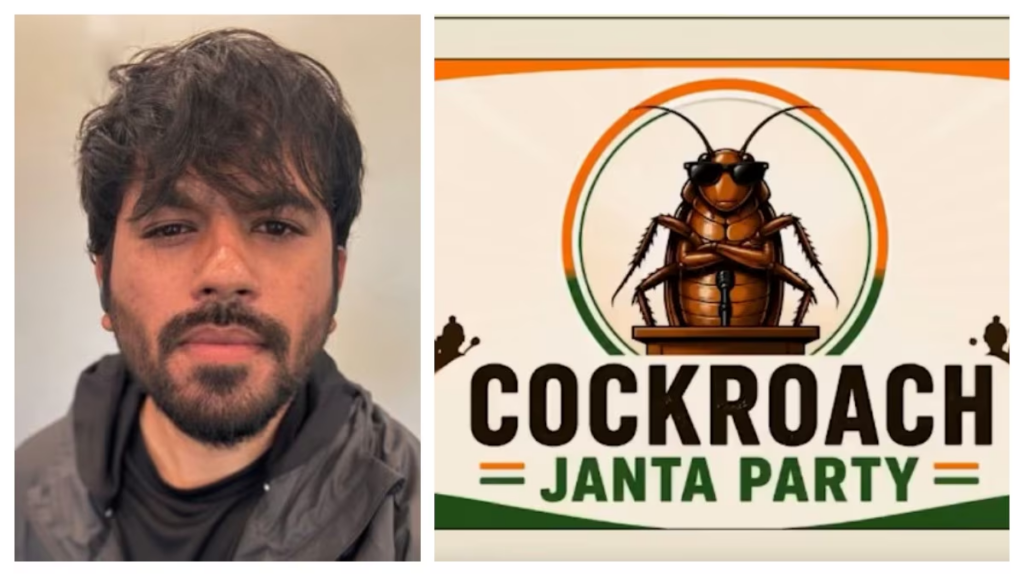
In just a few days, the Cockroach Janta Party (CJP) transformed from an internet joke into one of India’s biggest viral political phenomena. The movement attracted millions of followers, sparked debates across social media, and triggered questions about youth frustration, digital activism, and online political influence. At the center of it all is Abhijeet Dipke, a political communication strategist whose background in digital campaigning has now come under intense public scrutiny.
Who is Abhijeet Dipke?
Abhijeet Dipke and the rise of Cockroach Janta Party
Abhijeet Dipke is a 30-year-old Indian political communication professional known for his work in:
- Digital political messaging
- Social media campaigns
- Narrative-building strategies
- Meme-based online communication
He studied journalism in Pune before moving to the United States for higher education. According to reports, he recently completed a master’s degree in Public Relations from Boston University.
What is the Cockroach Janta Party?
Cockroach Janta Party began as a satirical online movement but quickly evolved into a massive digital trend.
Why it went viral
The movement gained traction after remarks attributed to Chief Justice Surya Kant comparing unemployed youth to “cockroaches.”
That phrase became a rallying symbol online, especially among younger users frustrated over:
- Unemployment
- Economic insecurity
- Political disillusionment
- Perceived disconnect between institutions and youth concerns
Massive social media growth
Within days:
- CJP reportedly crossed 100,000 members
- Its X account gained over 200,000 followers before being withheld in India
- Its Instagram following reportedly surpassed the official BJP Instagram account
The movement’s rapid growth reflected the power of meme-driven political engagement.
What was Dipke’s connection to AAP?
One of the biggest points of discussion around Abhijeet Dipke has been his previous work with the Aam Aadmi Party (AAP).
His role in political campaigning
From 2020 to 2023, Dipke reportedly worked with AAP’s:
- Social media team
- Election campaign operations
- Digital messaging efforts
During the 2020 Delhi Assembly elections, he was involved in meme-based political communication campaigns that helped shape online narratives.
Why this became controversial
Critics argue that Dipke’s past association raises questions about whether CJP is truly politically neutral.
Supporters, however, argue that:
- Political strategists often work across campaigns
- Satirical movements can still operate independently
- The movement reflects genuine public frustration
The debate intensified after rival online groups like Oggy Janata Party began highlighting his past affiliations.
Why was CJP’s X account withheld in India?
Cockroach Janta Party and India’s digital political landscape
One of the biggest turning points came when CJP’s account on X was withheld in India.
What happened afterward
Dipke responded by:
- Launching a new account
- Asking followers to reconnect on the platform
- Continuing activity through Instagram and other channels
The withholding of the account further amplified public attention around the movement.
Why the incident mattered
The development fueled larger debates about:
- Online speech and moderation
- Political satire on social media
- Government-platform relationships
- Digital censorship concerns
What has Abhijeet Dipke said about the movement?
In interviews, Abhijeet Dipke has denied that the movement was strategically planned from the start.
His explanation
According to his comments:
- The movement emerged organically
- It reflects frustration among India’s youth
- Unemployment and lack of opportunity helped drive engagement
He also noted that if the movement had been pre-planned, he would likely have been operating from India rather than the US.
What are the allegations linked to Kashmir-related posts?
Abhijeet Dipke has also faced scrutiny over older controversies.
The 2019 complaint
Reports suggest that a complaint was filed against him in 2019 by the Legal Rights Observatory.
The complaint reportedly accused him of:
- Spreading provocative misinformation on Kashmir
- Amplifying separatist-style narratives online
Important context
As of now:
- These remain allegations referenced in reports
- No conviction or formal legal finding has been highlighted publicly in the material cited
- Claims should be independently verified before drawing conclusions
This distinction is important when covering politically sensitive accusations.
Why meme-based political movements are becoming powerful
The rise of CJP reflects a broader transformation in political communication.
Internet culture is shaping politics
Young audiences increasingly engage through:
- Memes
- Viral videos
- Instagram pages
- Influencer-style political branding
Traditional political outreach is now competing with decentralized online communities.
Satire as political language
Humor allows movements to:
- Spread rapidly
- Simplify complex frustrations
- Build emotional connection with audiences
This is why satirical political accounts can gain influence surprisingly quickly.
What happens next for CJP and Abhijeet Dipke?
The movement’s future remains uncertain.
Key questions ahead
- Will CJP evolve into a structured political platform?
- Can it maintain momentum beyond viral attention?
- Will scrutiny over political affiliations weaken its credibility?
- Could social media restrictions limit its reach?
Regardless of what happens next, the movement has already demonstrated how quickly digital political ecosystems can form around youth frustration and internet culture.
TL;DR
- Abhijeet Dipke is the founder of the viral Cockroach Janta Party
- He previously worked with AAP’s social media and election campaigns
- CJP gained millions of followers through meme-driven political satire
- Its X account was withheld in India, increasing public attention
- Dipke has also faced scrutiny over older Kashmir-related allegations