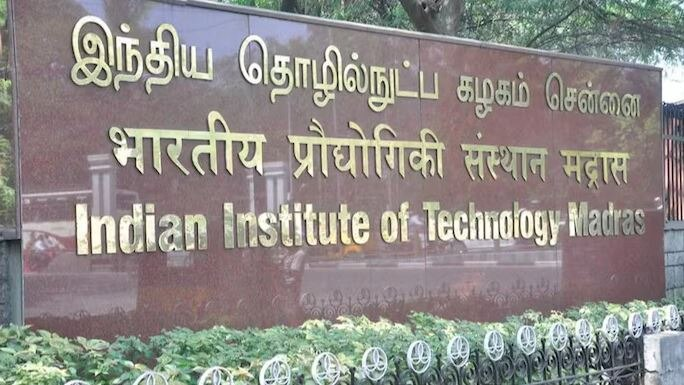
Indian Institute of Technology Madras has taken a major step toward globalizing India’s deep-tech ecosystem by launching its first-ever center in the United States.
The new facility, established through the IIT Madras Global Research Foundation, is located in Menlo Park, at the heart of Silicon Valley’s innovation network. The institute has also announced plans for a second center on the US East Coast, signaling a broader international expansion strategy.
While Indian universities have increasingly built global partnerships over the years, IIT Madras’s move is notable because it goes beyond academic collaboration. The center is designed to function as a launchpad for deep-tech commercialization, startup incubation, venture capital access, and global research partnerships.
In other words, IIT Madras is not simply exporting education.
It is attempting to plug India’s innovation ecosystem directly into the world’s largest technology and investment networks.
Why IIT Madras chose Silicon Valley
The location is no accident.
Menlo Park sits near the center of Silicon Valley, home to many of the world’s most influential technology companies, venture capital firms, research institutions, and startup accelerators.
For deep-tech startups, proximity matters enormously.
Unlike consumer apps, deep-tech companies working in areas such as
- Artificial intelligence
- Semiconductor technologies
- Robotics
- Aerospace
- Quantum computing
- Clean energy
- Advanced manufacturing
Often require:
- Long-term funding
- Specialized mentorship
- Research partnerships
- Access to global markets
- Regulatory guidance
- High-end engineering talent
Silicon Valley remains one of the few ecosystems globally where all those ingredients exist at scale.
By establishing a physical presence there, IIT Madras is effectively giving Indian startups and researchers a bridge into that environment.
What the new IIT Madras center will actually do
According to IITM Global, the Menlo Park facility will focus on both research advancement and commercialization.
The center is expected to support:
- Deep-tech startup incubation
- Industry-academia collaboration
- Venture capital engagement
- Technology transfer
- Global research partnerships
- Commercial scaling of innovation
The initiative was developed in collaboration with CA Startups and backed by a total investment of $7.5 million, including $4.5 million in greenfield investment from IITM Global itself.
The phrase “lab to market” appears central to the strategy.
India has produced a large number of highly skilled engineers and researchers for decades. But converting academic research into globally scalable businesses has historically remained a challenge.
This center aims to close that gap.
Why India is pushing harder into deep-tech now
The timing reflects a broader shift happening across India’s technology sector.
For years, India’s startup ecosystem was dominated by:
- E-commerce
- Food delivery
- Fintech
- Consumer internet platforms
Now, both government institutions and private investors are increasingly focusing on deep-tech industries viewed as strategically important for the future economy.
Several forces are driving that transition.
AI and semiconductor competition
Countries worldwide are racing to strengthen domestic capabilities in AI chips, computing infrastructure, and advanced manufacturing.
Geopolitical supply chain shifts
Global companies are looking beyond China for engineering talent and technology partnerships.
India’s growing research ambitions
Indian institutes are pushing to move beyond producing talent for foreign firms and instead create globally competitive intellectual property and startups domestically.
Capital availability
Indian venture capital and government funding for research commercialization have expanded significantly in recent years.
The IIT Madras center fits directly into that larger ambition.
Why IIT Madras is particularly well-positioned for this move
Among Indian engineering institutions, IIT Madras has emerged as one of the country’s most aggressive players in research commercialization and startup incubation.
The institute has built a strong reputation in areas including:
- Deep-tech entrepreneurship
- Mobility innovation
- Space technologies
- Artificial intelligence
- Energy systems
- Advanced engineering research
It has also produced a growing number of startups through its incubation ecosystem.
By creating a US presence, IIT Madras gains something Indian institutions have historically lacked: direct integration with global venture and commercialization networks rather than relying solely on partnerships from afar.
That could help Indian startups:
- Raise international funding faster
- Access enterprise customers
- Build global collaborations
- Recruit internationally
- Expand into US markets more efficiently
Why the East Coast expansion matters too
IIT Madras’s planned second center on the US East Coast reveals that this is not a symbolic one-off initiative.
The East Coast strategy appears designed to complement Silicon Valley’s startup ecosystem with connections to:
- Financial institutions
- Policy networks
- Research universities
- Government agencies
- Enterprise technology ecosystems
Together, the two centers could create a broader American innovation footprint for IIT Madras.
That dual-coast strategy mirrors how many global technology companies structure their US presence:
- Silicon Valley for venture capital and startups
- East Coast hubs for finance, policy, academia, and enterprise partnerships
What this says about India’s global innovation ambitions
The launch also reflects India’s changing role in the global technology economy.
For decades, India’s tech identity was heavily associated with IT services and outsourcing.
That model generated enormous economic value, but India now wants greater influence in foundational innovation and intellectual property creation.
Opening a deep-tech center in Silicon Valley sends a symbolic message:
India no longer wants to be seen only as a supplier of engineering talent.
It wants to compete as a creator of globally scalable technologies and research-driven companies.
That ambition aligns with broader national priorities around:
- Semiconductor manufacturing
- AI development
- Startup expansion
- Research commercialization
- Strategic technology independence
The challenges ahead
Despite the excitement, success is not guaranteed.
Building globally competitive deep-tech ecosystems is difficult and expensive.
Major challenges include:
- Long research timelines
- High capital requirements
- Regulatory hurdles
- Competition from established US and Chinese firms
- Commercialization risks
Deep-tech startups often require years before becoming profitable, unlike faster-moving consumer internet businesses.
Still, creating direct access to Silicon Valley infrastructure and investment networks may significantly improve the odds for Indian ventures trying to scale globally.
Why this move matters beyond IIT Madras
The broader significance of the Menlo Park center extends beyond a single institution.
If successful, it could become a model for how Indian universities engage internationally in the future.
Rather than focusing only on student exchanges or academic memorandums, institutions may increasingly pursue:
- Global incubation hubs
- Venture partnerships
- Cross-border startup ecosystems
- International commercialization centers
That shift could help Indian research institutions play a larger role in the global innovation economy.
The IIT Madras center is effectively an experiment in turning an Indian university into a globally networked deep-tech platform.
And Silicon Valley is where that experiment will now be tested.
TL;DR
IIT Madras has launched its first US center in Menlo Park, California, to help Indian deep-tech startups access global funding, mentorship, partnerships, and commercialization opportunities. Backed by a $7.5 million investment, the center reflects India’s growing push into advanced technology innovation and global research ecosystems. A second US East Coast center is also planned.