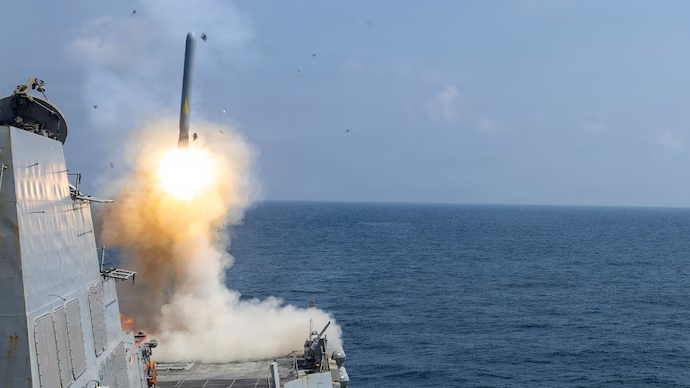
Iran says it has used a newly developed air defense system called Arash-e-Kamangir to shoot down a US MQ-9 Reaper drone near the Strait of Hormuz — a claim that, if verified, could signal a notable shift in Tehran’s evolving military strategy and regional deterrence posture.
According to Iranian state-backed media, the American surveillance drone was intercepted near Qeshm Island earlier this week using what officials described as a system with “hidden capabilities.” Tehran framed the operation as both a military achievement and a geopolitical message aimed at Washington and its regional allies.
“This operation, which was carried out using a system with hidden capabilities, is a clear and decisive message from Iran,” Iran’s Fars News Agency quoted unnamed officials as saying.
The US military has not publicly confirmed the loss of an MQ-9 Reaper drone at the time of writing.
What Is the Arash-e-Kamangir Air Defense System?
Iran has released very few technical details about the newly named system, making independent verification difficult. But analysts believe the Arash-e-Kamangir may represent an evolution of Iran’s broader strategy: using mobile, lower-cost air defense systems designed to counter expensive Western drones and aircraft.
The name itself carries symbolic weight.
The Mythological Origin Behind the Name
The system is named after Arash the Archer — known in Persian folklore as Arash-e Kamangir — a legendary figure associated with sacrifice, resilience, and national identity.
According to Iranian mythology, Arash climbed a mountain and fired an arrow that traveled an extraordinary distance to define the border between Iran and Turan, a historical region associated with Central Asia. The act reportedly cost him his life, turning him into a symbol of self-sacrifice in Persian culture.
Iran frequently uses historical and religious symbolism in military branding, especially for missile and drone programs, to reinforce narratives of national defense and resistance.
Why the MQ-9 Reaper Matters
The MQ-9 Reaper is one of the United States’ most recognizable military drones.
Built by General Atomics, the aircraft is used for:
- Intelligence gathering
- Surveillance missions
- Precision strikes
- Maritime monitoring
- Counterterrorism operations
Depending on configuration and equipment, an MQ-9 Reaper is estimated to cost between $16 million and $30 million.
Why the Drone Is Strategically Important
The drone is particularly valuable in regions like the Persian Gulf because it can:
- Remain airborne for long durations
- Monitor shipping lanes
- Track military movement
- Operate without risking pilot casualties
The Strait of Hormuz — where Iran claims the interception occurred — is among the world’s most sensitive maritime chokepoints, handling a major share of global oil shipments.
Any confrontation involving military assets in that area immediately attracts global attention because of its potential impact on energy markets and regional security.
Iran’s Broader Air Defense Strategy
Military analysts say the reported interception fits into Iran’s long-term effort to build layered, asymmetric defense systems capable of challenging technologically superior adversaries at lower cost.
Rather than matching US military spending directly, Iran has increasingly focused on:
- Drones
- Mobile missile systems
- Electronic warfare
- Swarm tactics
- Short-range interception systems
This approach aims to create operational complications for larger military powers while remaining financially sustainable.
Smaller Systems, Bigger Pressure
According to analysts cited by Al Jazeera, some of Iran’s newer systems are designed so interceptors can loiter in the air until a target appears.
These systems may:
- Operate at shorter ranges
- Cost less than traditional missile batteries
- Be easier to manufacture quickly
- Reduce exposure to enemy strikes
That matters because modern warfare increasingly favors distributed systems over large, static defense platforms.
How Shahed Drones Fit Into Iran’s Military Doctrine
Iran’s drone program has become central to its military strategy in recent years.
Shahed drones, in particular, have drawn international attention because of their:
- Low production cost
- Long operational range
- Ability to overwhelm defenses in large numbers
These drones are designed to fly at relatively low altitudes, making them harder to detect and intercept.
Iran and allied groups have used drone swarms to target:
- Military bases
- Energy infrastructure
- Radar systems
- Shipping routes
The broader idea is simple: overwhelm advanced defense systems with volume.
The Economics of Modern Drone Warfare
One of the biggest strategic advantages of low-cost drones is economic imbalance.
In many cases:
- A relatively cheap drone can force an opponent to use extremely expensive interceptor missiles.
- Defensive systems often cost far more to operate than the attacking drones themselves.
That dynamic has become increasingly visible in conflicts across the Middle East and Eastern Europe.
Could Iran Really Have Shot Down an MQ-9?
At this stage, independent confirmation remains limited.
Iran has previously claimed successful interceptions of US drones, including the 2019 downing of a US RQ-4 Global Hawk surveillance drone, which sharply escalated tensions between Tehran and Washington.
Defense analysts caution that state media claims during periods of geopolitical tension often serve both military and political purposes.
Key unanswered questions include:
- Whether the drone was fully destroyed
- What interception method was used
- Whether radar or electronic warfare played a role
- Whether debris or imagery will be released
Without independent evidence, the full details remain unclear.
Why This Matters Beyond Iran and the US
Even if the exact details are disputed, the incident highlights a growing reality in modern warfare: relatively inexpensive systems are increasingly capable of threatening high-value military technology.
That shift is changing how countries think about:
- Air superiority
- Drone warfare
- Maritime security
- Regional deterrence
The rise of AI-assisted targeting, drone swarms, and mobile air defense systems is lowering the barrier for countries seeking to challenge advanced military powers.
A Broader Trend in Global Conflict
Recent conflicts have shown that:
- Cheap drones can damage critical infrastructure
- Air defense saturation is becoming a serious problem
- Traditional military advantages are being tested by asymmetric tactics
Iran has become one of the most closely watched players in that transformation.
TL;DR
Iran claims it used a newly developed air defense system called Arash-e-Kamangir to shoot down a US MQ-9 Reaper drone near the Strait of Hormuz.
The system reportedly features “hidden capabilities,” though Tehran has revealed few technical details.
The incident reflects:
- Iran’s growing emphasis on low-cost asymmetric warfare
- The rising importance of drones and mobile air defenses
- Increasing military tensions in one of the world’s most strategically important waterways
The US has not publicly confirmed the reported drone loss.