
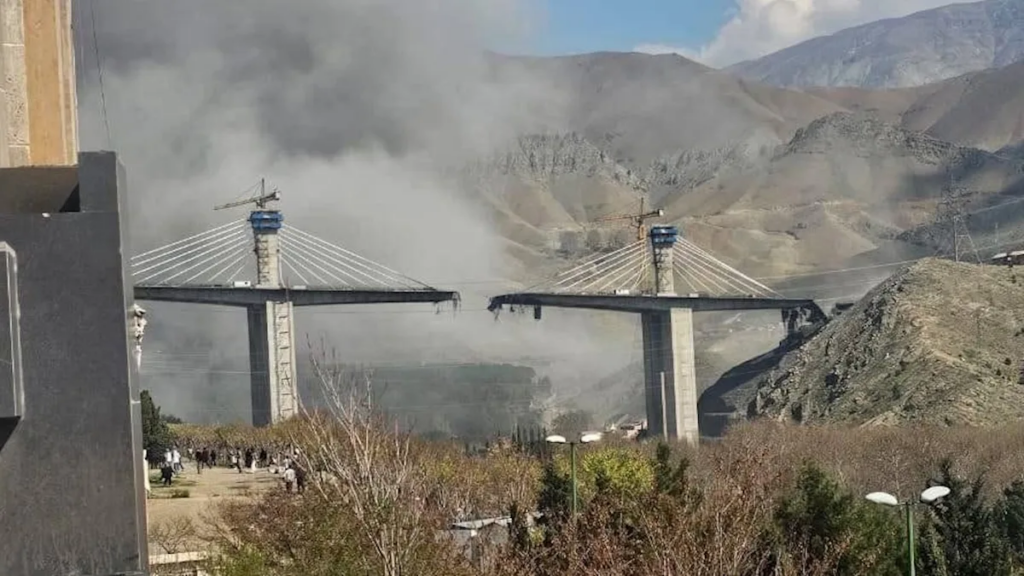
Tensions between Iran and the United States appear to be entering a dangerous new phase. A day after U.S. forces reportedly destroyed a major highway bridge near Tehran, Iranian media signalled potential retaliation—publishing a list of strategic bridges across the Middle East that could become targets.
The development raises urgent questions about escalation, infrastructure warfare, and the broader risks to regional stability.
What Happened in the U.S. Strike on Iran’s Bridge?
According to reports, American forces targeted a key highway bridge—referred to as the B1 highway bridge—connecting Tehran to the nearby city of Karaj. The strike reportedly resulted in at least two fatalities and caused significant structural damage.
The attack marks a notable escalation:
- It targets civilian infrastructure, not just military installations
- It disrupts transport and logistics near Iran’s capital
- It signals a willingness to expand the scope of conflict
Why Infrastructure Is a Strategic Target
Bridges are not just physical connectors—they are economic lifelines. Destroying them can:
- Cripple transportation networks
- Disrupt supply chains
- Create psychological pressure on civilian populations
What Bridges Has Iran Identified as Potential Targets?
Iran’s semi-official Fars News Agency reported that the Islamic Revolutionary Guard Corps (IRGC) could target major bridges in Gulf nations and Jordan.
Here are the eight bridges named:
- Sheikh Jaber Al-Ahmad Al-Sabah Bridge – Approximately 36 km long
- King Fahd Causeway – About 25 km long
- Sheikh Zayed Bridge – 842 meters
- Al-Maqta Bridge – 300 meters
- King Hussein Bridge – Around 80 meters
- Damiya Bridge – About 120 meters
- Sheikh Khalifa Bridge – 1,400 meters
- Abdoun Bridge – 425 meters
Why These Bridges Matter
These are not random selections. Each plays a critical role in:
- Regional trade and connectivity
- Military mobility and logistics
- Symbolic national infrastructure
For example, the King Fahd Causeway is a vital link between Saudi Arabia and Bahrain, heavily used for both commerce and daily commuting.
Why Is Iran Signaling These Targets Now?
The timing appears deliberate. Publishing a list of potential targets serves multiple purposes:
1. Strategic Deterrence
By naming high-value infrastructure, Iran signals:
- It has the capability to retaliate
- It can expand the conflict beyond its borders
2. Psychological Warfare
Publicly identifying targets creates anxiety among:
- Governments in Gulf nations
- Investors and businesses are dependent on regional stability
3. Message to the U.S. and Allies
The move underscores that any further escalation could:
- Draw in multiple countries
- Disrupt critical economic corridors
What Did Donald Trump Say?
Following the strike, U.S. President Donald Trump took a hardline stance, emphasising American military strength and warning Iran to act quickly.
In public statements, he:
- Praised the U.S. military as unmatched globally
- Suggested further strikes could target infrastructure like bridges and power plants
- Urged Iran to reach a deal “before it is too late”
What This Signals
The rhetoric suggests a strategy of:
- Maximum pressure through both military and psychological means
- Escalation dominance, where the U.S. sets the pace of conflict
Could This Escalate Into a Wider Regional Conflict?
The risk is real—and growing.
Key Factors Driving Escalation
- Geographic spread: Potential targets span Kuwait, Saudi Arabia, UAE, and Jordan
- Economic stakes: Many of these bridges support oil routes and trade networks
- Alliances: Attacks on Gulf infrastructure could trigger broader military responses
Worst-Case Scenario
If even one of these bridges is attacked:
- It could prompt retaliatory strikes from affected countries
- It may draw in international coalitions
- Global markets—especially oil—could see immediate disruption
Why Infrastructure Warfare Is a Global Concern
Targeting infrastructure is not new—but its scale and visibility are changing.
A Shift in Modern Conflict
Recent conflicts have shown a trend toward:
- Attacks on energy grids
- Destruction of transport systems
- Cyber and physical hybrid warfare
Why Bridges Are Especially Vulnerable
- They are fixed, high-value targets
- Difficult to defend over long distances
- Their destruction has an immediate, visible impact
What Should the World Watch Next?
Several developments will be critical in the coming days:
Immediate Indicators
- Military movements in the Gulf region
- Security upgrades around key infrastructure
- Diplomatic responses from targeted countries
Longer-Term Signals
- Whether Iran follows through on its threats
- U.S. escalation or restraint
- Involvement of international organisations like the United Nations
TL;DR
- The U.S. reportedly destroyed a major bridge near Tehran, escalating tensions.
- Iran responded by naming eight key bridges across the Middle East as potential targets.
- These bridges are critical to regional trade, mobility, and infrastructure.
- The situation raises serious risks of a broader regional conflict.
- Global attention is now focused on whether threats turn into action.