
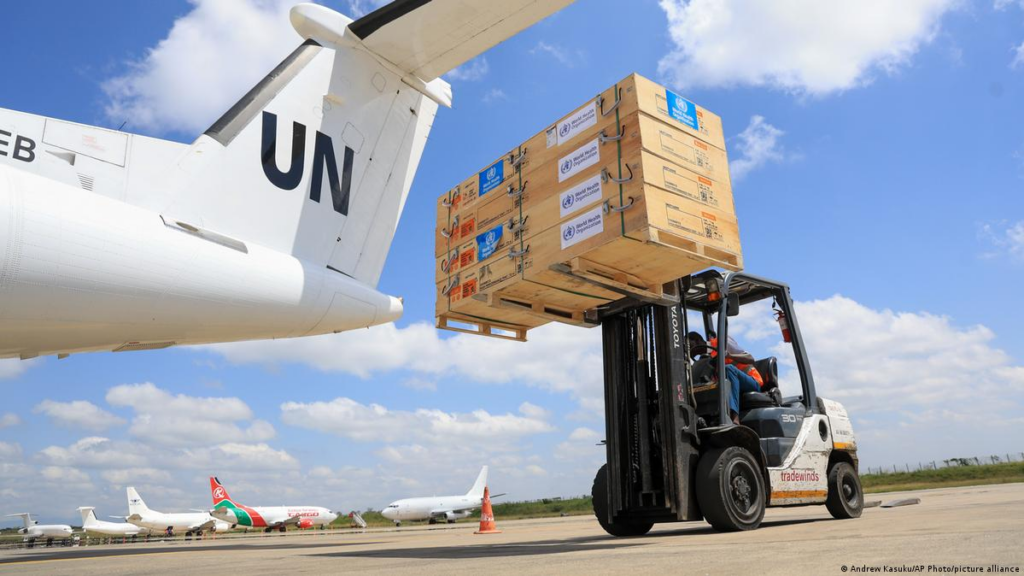
Judge cites public safety concerns as temporary treatment center faces legal setback
A Kenyan court has halted a controversial Trump administration-backed plan to establish a temporary Ebola quarantine facility for American citizens and personnel, dealing a significant setback to efforts aimed at managing potential Ebola exposures during the worsening outbreak in the Democratic Republic of Congo (DRC).
The ruling came just hours before the facility was scheduled to begin operations, raising fresh questions about public health preparedness, national sovereignty, and how governments should respond to cross-border disease outbreaks.
“Kenya is a sovereign republic, not a geopolitical isolation ward,” Davji Bhimji Atellah, the chief executive officer at Kenya Medical Practitioners, Pharmacists and Dentists Union, said on X.
The court temporarily suspended the project after determining that concerns about public safety and potential risks to nearby communities warranted further review.
What was the proposed Ebola facility?
According to reports, the temporary medical center was being established at a military-linked air base in Kenya with support from the United States government and military personnel.
The facility was intended to serve as a quarantine and stabilization site for American citizens, contractors, aid workers, and government personnel who may have been exposed to Ebola while working or traveling in Central Africa.
Officials reportedly planned for the center to accommodate up to 50 patients.
The project was designed as part of a broader strategy to manage potential Ebola cases before transferring patients to specialized treatment centers outside Africa.
Why were American Ebola patients being sent to Kenya?
The proposal emerged amid growing concerns about the Ebola outbreak in eastern Democratic Republic of Congo.
Public health experts have long emphasized the importance of isolating potential Ebola cases as quickly as possible to prevent further transmission.
Under the reported plan:
- Americans exposed to Ebola would be monitored in Kenya.
- Patients would undergo initial medical evaluation and quarantine.
- Individuals requiring advanced treatment could later be transferred to specialized facilities abroad.
- The system was intended to reduce logistical challenges associated with direct transport from outbreak zones.
Supporters argued that the approach could provide faster medical intervention while limiting unnecessary travel from active outbreak regions.
Why did the Kenyan court block the project?
The court’s decision centered on concerns regarding public safety and potential health risks.
While details of the legal challenge remain limited, the ruling suggested that judges believed additional scrutiny was necessary before the facility could become operational.
Key concerns raised by opponents
Critics of the proposal reportedly questioned:
- Whether local communities had been adequately consulted.
- Potential risks associated with handling Ebola patients.
- Emergency response preparedness.
- Transparency surrounding the project’s implementation.
- The impact on nearby residents and workers.
The court concluded that these issues warranted further review before allowing the facility to open.
The suspension remains temporary pending additional legal proceedings.
How serious is the Ebola outbreak in Congo?
The Democratic Republic of Congo has experienced multiple Ebola outbreaks over the past two decades, often in remote regions where healthcare access is limited.
The current outbreak has prompted concern among regional governments and international health agencies due to the possibility of cross-border transmission.
What is Ebola?
Ebola is a severe viral disease that can cause:
- High fever
- Internal and external bleeding
- Severe weakness
- Organ failure
- Death in serious cases
The virus spreads through direct contact with infected bodily fluids and requires strict infection-control measures.
While Ebola is highly dangerous, health experts note that it is significantly harder to spread than airborne diseases such as COVID-19.
Proper isolation procedures can dramatically reduce transmission risks.
Why Kenya matters in regional outbreak response
Kenya occupies a strategic position in East Africa and serves as a major transportation and logistics hub for humanitarian operations across the continent.
The country hosts:
- Major international airports
- Humanitarian aid networks
- Regional health coordination centers
- Military and diplomatic facilities
Because of this role, Kenya often becomes involved in international disease response efforts even when outbreaks occur elsewhere.
Authorities have already increased screening and preparedness measures at ports of entry as a precaution against potential Ebola cases.
What happens next?
The court’s decision does not necessarily mean the project has been permanently canceled.
Several outcomes remain possible:
The facility could be approved later
If government officials address concerns raised by the court, the project could eventually move forward.
The United States could appeal
American and Kenyan authorities may seek legal remedies to overturn the suspension.
Alternative locations may be considered
Officials could decide to relocate quarantine operations to another country or facility.
At the time of publication, the Trump administration had not publicly outlined its next steps.
Why the ruling matters beyond Kenya
The dispute highlights a broader challenge facing governments during infectious disease outbreaks.
Countries must balance:
- Public health preparedness
- International cooperation
- Community safety concerns
- National sovereignty
- Emergency response capabilities
The case also underscores how public acceptance can become just as important as medical planning when governments attempt to establish quarantine facilities.
Even when health officials believe risks are manageable, local opposition can significantly influence policy decisions.
What experts say about quarantine facilities
Public health specialists generally agree that quarantine and isolation facilities are essential tools for containing dangerous infectious diseases.
However, experts also emphasize that such facilities require:
- Strong safety protocols
- Public transparency
- Community engagement
- Independent oversight
- Clear emergency response plans
Without those safeguards, public trust can quickly erode, regardless of the scientific rationale behind a project.
TL;DR
- A Kenyan court blocked a US-backed Ebola quarantine facility that was scheduled to open this week.
- The center was intended to house Americans potentially exposed to Ebola during the outbreak in the Democratic Republic of Congo.
- Judges cited public safety concerns and ordered a temporary suspension.
- The facility reportedly had capacity for up to 50 patients.
- Kenya plays a critical role in regional public health and humanitarian operations.
- The Trump administration has not yet announced whether it will appeal the ruling.
- The case highlights tensions between disease preparedness efforts and local community concerns.