
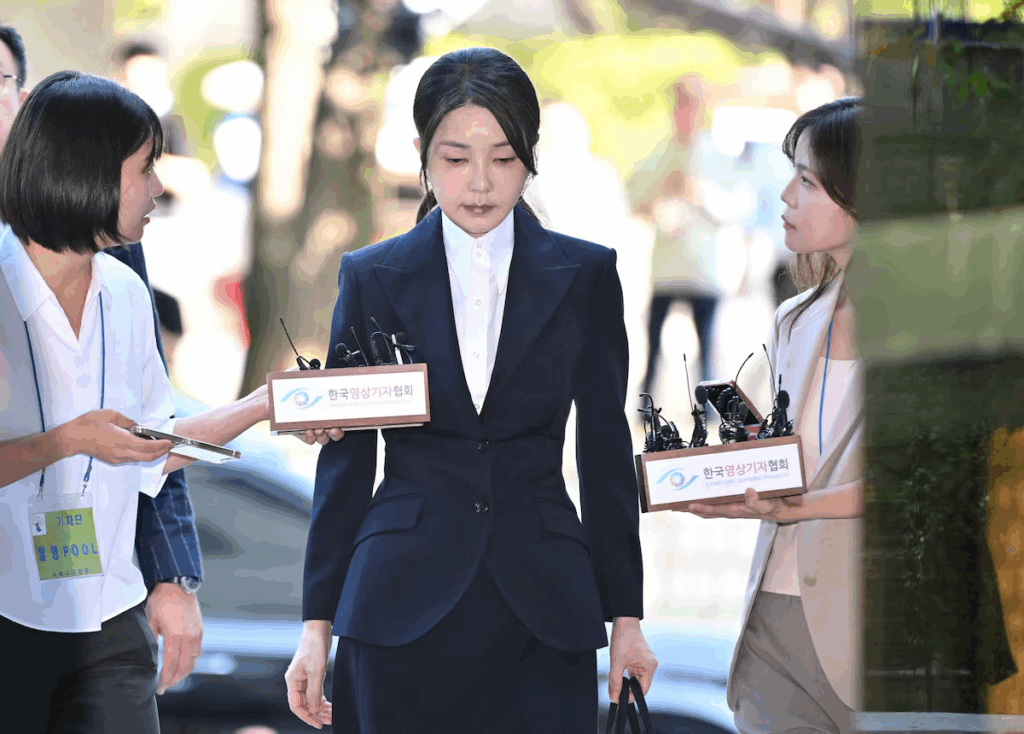
Seoul | Sep 24 — South Korea’s former first lady Kim Keon Hee, wife of ex-president Yoon Suk Yeol, appeared in court on Wednesday (Sep 24) to face multiple corruption charges, including stock manipulation and accepting bribes. This marks the first time in South Korea’s history that a presidential couple is simultaneously standing trial.
While Yoon is currently on trial for attempting to declare martial law, Kim is facing a series of allegations that could have major political and legal ramifications for the former first couple. Legal experts also suggest they could face further questioning regarding their alleged attempts to influence parliamentary elections.
Charges Against Kim Keon Hee
Kim Keon Hee appeared at the Seoul Central District Court in a black suit, her first public appearance since being arrested in August and assigned inmate number 4398.
The charges against her include:
- Stock manipulation in connection with a major financial scandal.
- Violating political fundraising laws by soliciting a power broker to conduct free opinion polling.
- Accepting bribes from the controversial Unification Church, which has long been accused of exerting political influence in South Korea.
Her lawyer has denied all allegations, arguing that no substantial evidence has been presented.
According to WION’s coverage, the trial could significantly impact the nation’s political landscape, particularly as it comes so soon after Yoon’s presidency.
The Dior Bag Scandal
Among the controversies linked to Kim, the “Dior bag scandal” remains the most infamous. A hidden camera recording revealed her receiving a luxury Dior handbag from a pastor.
- The footage sparked public outrage and became one of the defining scandals of Yoon Suk Yeol’s presidency.
- The pastor’s actions were allegedly orchestrated by Han Hak-ja, a Unification Church leader later jailed for directing bribes to the first lady in exchange for political favors.
The scandal intensified calls for accountability, but during his presidency, Yoon vetoed parliamentary bills seeking an independent probe into allegations against his wife.
Trials of the Former Presidential Couple
- Yoon Suk Yeol: Currently facing trial over his alleged attempt to declare martial law while in office.
- Kim Keon Hee: Standing trial on corruption charges, with potential implications for further election-related investigations.
This unprecedented development has placed South Korea’s former first couple under intense legal and public scrutiny.
Why This Matters
The simultaneous trials of Kim and Yoon represent a historic moment in South Korean politics, raising serious questions about corruption, abuse of power, and the role of religious groups in governance.
Observers say the cases could reshape public trust in political institutions, particularly as the country prepares for future elections.